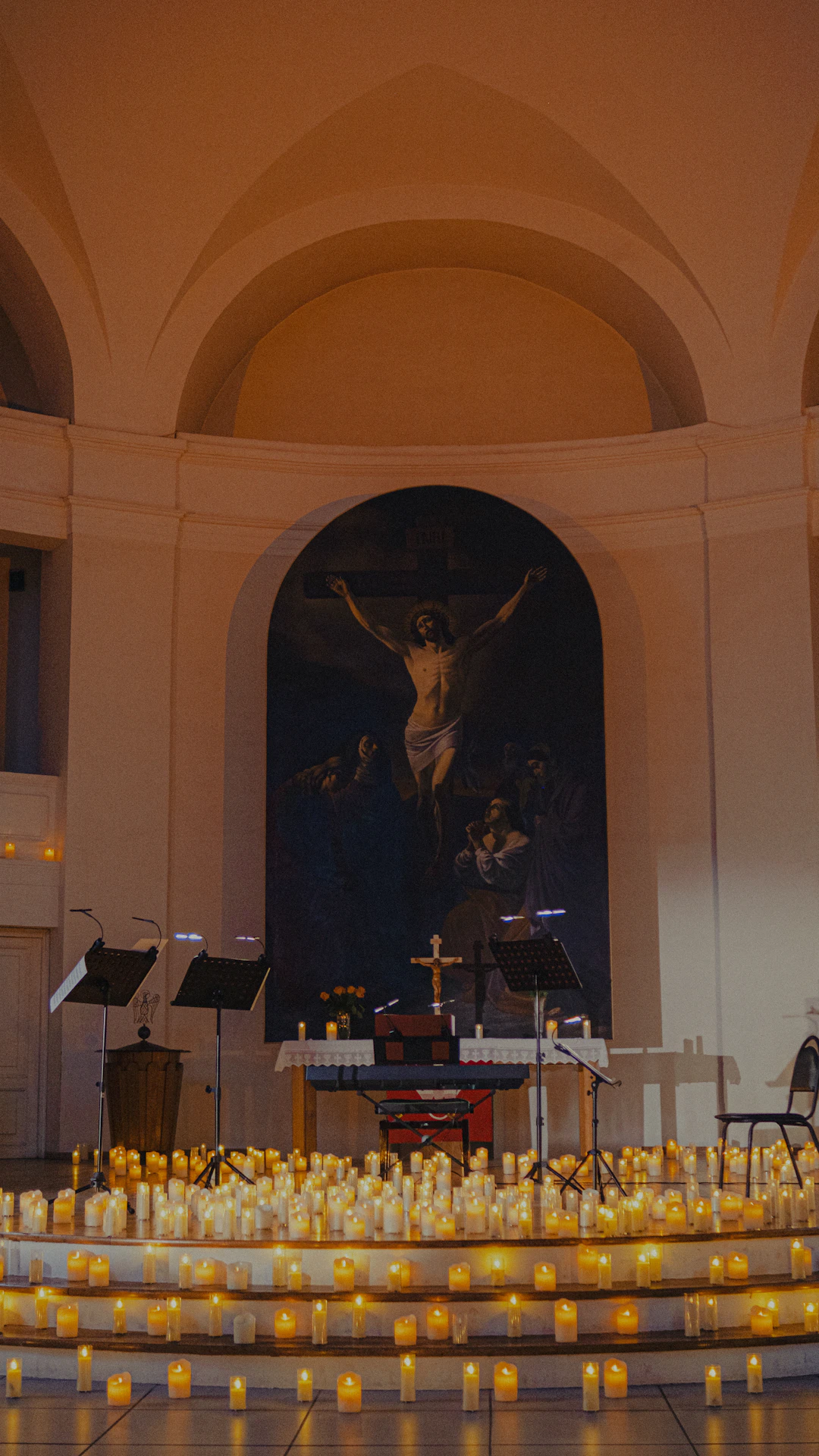
Do you want to know what the Bible says about love and peace?


“Peace I leave with you; my peace I give you. I do not give to you as the world gives. Do not let your hearts be troubled and do not be afraid.”
(John 14:27)
Have you ever woken up tired?
It's not physical tiredness. It's that exhaustion of the soul.
You sleep... but it feels like you haven't rested.
You try to keep going… but inside you feel a tightness in your stomach.
And the worst part is: sometimes you don't even know how to explain it.
You just feel it.
Anxiety, haste, fear, constant worry, thoughts that won't stop.
And on the outside, you even "function." You work. You respond. You smile.
But inside, it feels like my heart is always racing.
If you identified with this, I want to tell you something simple:
Maybe you don't need more strength. You need peace.
And peace is not a spiritual luxury.
Peace is a blessing from God for weary people.
Today, this article is about that: the blessing of peace.
That peace that doesn't depend on everything going right.
Peace that doesn't require a perfect life to exist.
The peace that enters even when the storm hasn't passed.
The real human problem: why have we lost our peace?
Let's be honest?
We live in a world that does everything to steal our peace.
- Notifications all the time
- Pressure to produce
- Comparison on social media
- Fear of the future
- Financial instability
- Difficult relationships
- Bad news every day.
- And that constant feeling of: "I should be doing better"“
Have you ever felt that way?
Peace has become a rare thing.
And we try to solve it the wrong way.
We seek peace in:
- control (wanting to dominate everything)
- Distraction (scrolling through the feed for hours)
- Food and addictions
- approval of people
- overwork (so I don't feel it)
- perfectionism (so as not to fail)
But none of that brings true peace.
It only brings a pause... and then it all starts again.
And then you ask yourself:
“"Why can't I rest even when I stop?"”
Historical context: why did Jesus say that specifically there?
John 14 is part of what we call Jesus' "farewell discourse.".
It's the last night before the crucifixion.
The atmosphere was heavy.
The disciples were confused and afraid.
They had left everything to follow Jesus, and now he was saying he was going away.
Imagine this:
You love someone, you trust that person… and suddenly they say:
“"I'm leaving. You're staying."”
That was a shock.
And in this scenario, Jesus doesn't offer a strategic plan.
He gives a blessing.
Peace.
But it's not the kind of peace the world offers.
At that time, the word used for peace was "shalom" (Hebrew).
Shalom doesn't just mean "absence of war.".
Shalom means:
- integrity
- fullness
- complete well-being
- inner rest
- aligned life
It's inner peace, even when things are out of place.
In other words, Jesus was saying:
“"You are going to go through something terrible. But I will leave within you a peace that will never die."”
This is much deeper than it seems.
The blessing of peace is not world peace.
Jesus makes it clear:
“"I don't give it to you as the world gives it."”
And how does the world bring peace?
The world brings peace in this way:
- “"when you solve everything"”
- “"when you have money"”
- “"when you control everything"”
- “"when no one criticizes you"”
- “"when life is stable"”
But that's a lie.
Because life doesn't stay stable forever.
Therefore, world peace always depends on something external.
And that's why it always ends.
The peace of Jesus is different.
She does not depend on:
- results
- people
- circumstances
- approval
- guarantees
It depends on presence.
That's why you can be living in chaos... and still have peace.
No peace of mind, no "everything's fine" attitude.
But the peace of "God is with me.".
Why is peace so difficult to find today?
Because we spend our lives trying to control what we can't control.
And the lack of peace is almost always a symptom of two things:
- excessive worry about the future
- failure to deliver
The truth is harsh:
We want God in our hearts... but we want to be God in our lives.
We want Him to take care of us, but we don't want to let go.
We want peace, but we don't want to give up control.
Peace and total control cannot coexist in the same place.
Peace and anxiety: when the mind won't switch off.
Anxiety today is a silent epidemic.
You get nervous for no clear reason.
He keeps imagining catastrophes.
He keeps anticipating conversations.
Reviewing scenes.
Creating futures that don't even exist.
And that consumes.
Biblical word applied to the problem
Paul wrote an instruction that seems simple, but it is a spiritual and emotional strategy:
“Do not be anxious about anything, but in every situation, by prayer and petition, with thanksgiving, present your requests to God. And the peace of God… will guard your hearts and your minds.”
(Philippians 4:6-7)
Do you see? Peace doesn't come from nothing.
She comes from one path:
- recognize anxiety
- transform anxiety into prayer
- practice gratitude
- surrender to God
Human reflection
- Have you been carrying burdens that God never asked you to carry?
- Have you been trying to predict everything because you're afraid of suffering?
Concrete action (very practical)
When anxiety strikes today, do this in 3 minutes:
- Name what you are feeling:
“"I'm anxious about it."” - Delivered aloud:
“"God, I can't control this."” - Choose a phrase to repeat:
“"Jesus, give me your peace."”
It doesn't solve everything at once.
But it changes the state of the heart.
Peace in decision-making: when you don't know what to do.
There's a kind of lack of peace that comes from indecision.
You are faced with a choice.
And any path seems risky.
And then you freeze.
You stay:
- asking for signals
- waiting for complete certainty
- postponing
- afraid of making a mistake
But peace is not an absolute certainty.
It's driving with confidence.
Biblical word applied to the problem
“Trust in the Lord with all your heart… He will make your paths straight.”
(Proverbs 3:5-6)
The text was written in a context of practical wisdom.
It wasn't theory. It was guidance for everyday life.
Practical reflection
- Do you want God to speak... or do you want God to confirm what you've already decided?
- Are you asking for direction... or for a guarantee?
Concrete action
An attitude for this week:
- Make a decision based on three simple criteria:
- Does this bring me closer to God or further away from Him?
- Does this bring me peace or just excitement?
- Is this consistent with my values?
And then pray sincerely:
“"God, if this isn't meant for you, close the door. If it is, give me peace."”
Peace in relationships: when the home became a battlefield
Some people lose their peace at home.
Fights, passive-aggressive remarks, coldness, silence, burnout, accumulated resentment.
And the heart lives on alert.
It's tough.
Biblical word applied to the problem
“"If possible, as far as it depends on you, live at peace with everyone."”
(Romans 12:18)
The Bible is realistic: "if possible".
Because it doesn't always depend solely on you.
But it always depends on your attitude.
Human reflection
- Have you been nurturing peace... or war?
- Are you trying to win... or rebuild?
Concrete action
This week, make a choice:
✅ don't react impulsively
✅ To replace accusation with conversation.
✅ to ask for forgiveness for a harsh word.
✅ Set limits where there is abuse. (peace is not tolerating violence)
The blessing of peace is not about remaining silent to avoid conflict.
It is about building a path of reconciliation with truth and love.
How to experience this blessing today (without complicating things)
Here are some simple, real-world practices to put into action:
1) Start the day with a short prayer (morning prayer)
Instead of picking up your cell phone, say:
“Lord, bless my day with peace.
Guard my mind and my words.
I surrender what I cannot control. Amen.”
This changes your attitude.
2) End the day by giving what's left over (evening prayer).
“"God, I did what I could.".
What I couldn't achieve, I'll give to you.
"Give me rest and peace. Amen."”
3) Use the Lord's Prayer as a daily practice.
The Lord's Prayer is a school of peace.
- “"Thy will be done" → surrender
- “"Our daily bread" → trust
- “"Forgive" → lightness
- “"Deliver us" → protection
You can pray the Lord's Prayer slowly, thinking about each phrase.
What to avoid (this steals your peace)
If you want peace, avoid these traps:
- feeding catastrophic thoughts
- Living by comparing your life to others.
- Trying to solve everything alone
- Consume content that fills you with fear.
- doing everything "in a rush"“
- never rest
- confusing peace with escape (Peace is not about avoiding responsibility)
An attitude for this week: the 7-day peace challenge.
To turn this article into a series (and have continuous content), here's an idea:
7 days to experience the blessing of peace.
- Day 1: 5 minutes of prayer in the morning
- Day 2: Cut out a source of anxiety (news, social media, comparisons)
- Day 3: Asking for forgiveness or granting forgiveness
- Day 4: Take a mindful break during the day.
- Day 5: Go to bed earlier (yes, this is spiritual too)
- Day 6: Be grateful for 3 simple things.
- Day 7: Bless someone with a message of peace.
Small, but transformative.
A short prayer for now (very human)
Jesus, I need your peace.
My mind is tired.
My heart is heavy.
I surrender to You what I cannot resolve.
Keep my thoughts safe.
Calm my body.
Help me to trust.
Even if the storm continues,
May your peace sustain me from within.
Amen.
In conclusion: peace is a silent miracle that God performs within you.
We think that peace is when everything is resolved.
But the peace of Jesus is when the heart finds rest even without an immediate solution.
Peace is not the end of the struggle.
It is the presence of God in her midst.
So I ask you:
Do you want to live with less weight?
Do you want to breathe again?
Do you want to sleep without a war on your mind?
The blessing of peace is available.
And it begins with a choice:
deliver.
Content created with Artificial Intelligence Assistance