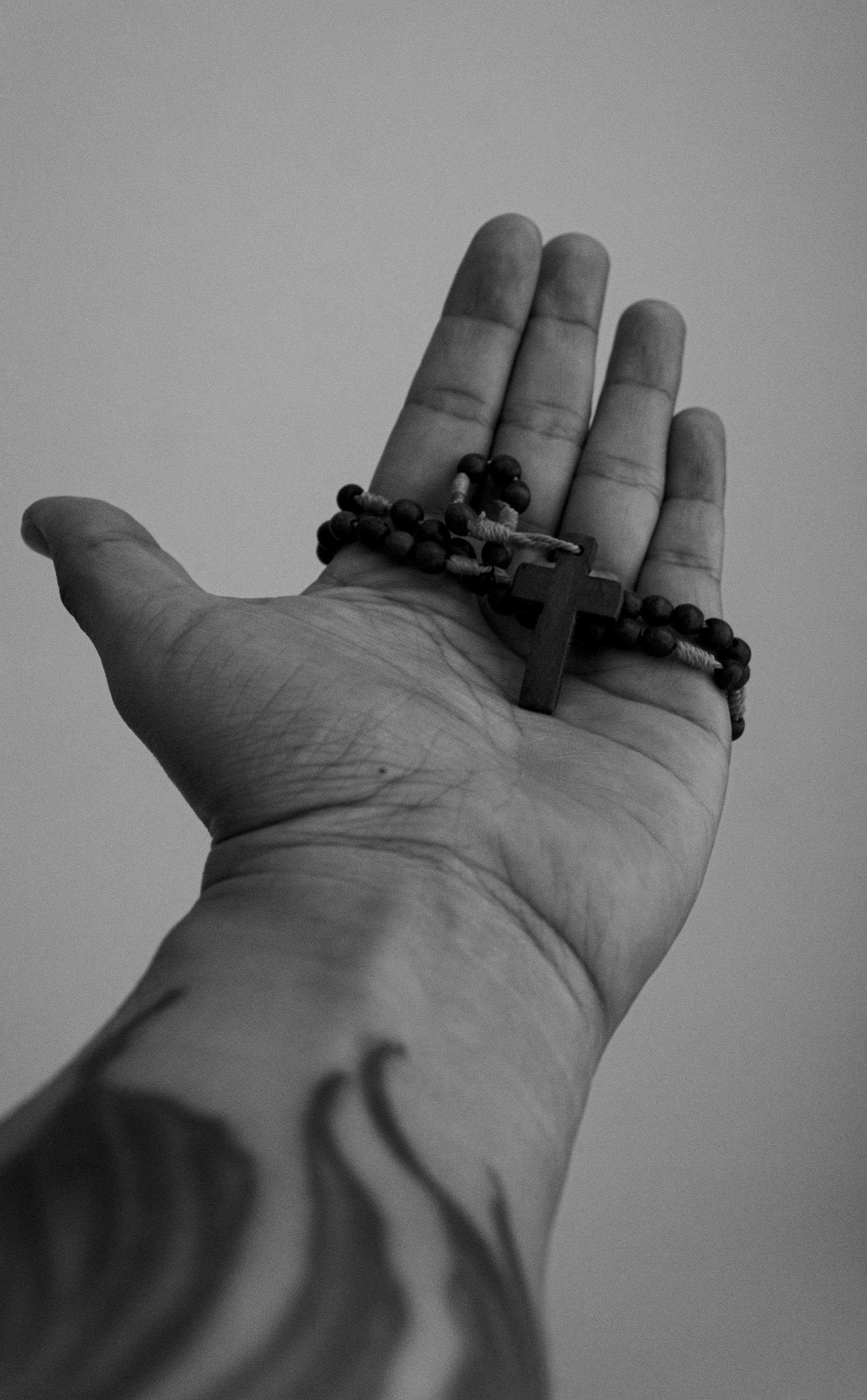
Gospel (Mc 3,1-6): Again Jesus entered the synagogue, and a man with a withered hand was there. They watched him closely to see if he would heal him on the Sabbath, so that they might accuse him. Jesus said to the man with the withered hand, «Stand up! Come here!» Then he asked them, «Is it lawful on the Sabbath to do good or to do evil, to save life or to kill?» But they remained silent. Looking around at them with anger, grieved at the hardness of their hearts, he said to the man, «Stretch out your hand.» He stretched out his hand, and it was restored. Immediately the Pharisees and the Herodians went out and plotted with each other how they might destroy Jesus.
There are passages in the Bible that we read and think, "Okay, I understand." And there are others that we read and feel as if Jesus is looking directly at our routine, at our small decisions, at our very current dilemmas. Mark 3:1-6 is one of those. It's short, intense, and takes place in a very common setting: a synagogue, a Sabbath day, people observing, expectations in the air… and a man with a withered hand right there in the middle.
If you've ever felt that sometimes doing the right thing bothers someone—or that kindness can become a reason for criticism—this passage will speak to you. And it will speak without "cutting corners," because Jesus doesn't soften the tension. He enters into it with courage, with love, and with a clarity that even gives you chills.
Let's walk through the text together, calmly, and let it illuminate real life.
The setting: a Saturday, a synagogue, and a disguised test.
Mark recounts that Jesus entered the synagogue again, and there was a man there whose hand was withered (paralyzed, atrophied, without strength—like someone who had lost movement and autonomy). And the Pharisees watched Jesus closely to see if He would heal on the Sabbath, intending to accuse Him.
Notice how the atmosphere was already "set up" from the start. It wasn't an innocent encounter. There were people there who weren't seeking God—they were looking for a mistake. And that's very human, isn't it? Sometimes some people approach not to learn, but to find a reason to criticize. It's not about the truth; it's about winning an argument.
And the "topic" of the day, it seems, was Saturday. Saturday was (and is) a holy day, set apart, a sign of God's covenant with his people. The problem wasn't honoring the Sabbath. The problem is when the heart uses the Sabbath as an excuse not to love.
Because, think about it: if a "religious" rule prevents you from helping someone, what kind of spirituality is that? That's exactly the question Jesus is going to put on the table, but in His own way: direct, without aggression, but impossible to ignore.
Jesus calls man to the center: faith is not shameful, and need is not filth.
The text says that Jesus spoke to the man with the withered hand: “Rise and come into the middle.”.
This is very powerful. Jesus doesn't heal "in the corner," as if human pain were a social inconvenience. He brings the person to the center. He gives dignity. He makes the need visible, because God's love is not ashamed of vulnerable people.
How many times does life make us hide our "withered hands," right? Those things that aren't working well: an emotional area, a broken history, a fear, an old guilt, a limitation. We learn to disguise it, to smile on the outside, to follow the ritual on the inside… but feeling "less.".
Jesus does the opposite: He calls you to the center. Not to expose you through cruelty, but to restore you with honor. For Jesus, the center is a place of healing.
And notice: the man obeys. He gets up and goes. Sometimes that's the hardest part: taking a step toward Jesus when everyone is watching. But the man's simple obedience paves the way for a miracle that is not just physical—it's existential.
The question that dismantles hypocrisy: to do good or to do evil?
Then Jesus asks the religious leaders a question:
“"Is it lawful on the Sabbath to do good or to do evil? To save life or to kill?"”
What a question, huh? Jesus isn't "fighting for the sake of fighting." He's revealing what's hidden. Because if you can do good and choose not to, that's also a moral choice. It's not neutrality. It's omission.
And here's a very practical point: in that context, the Sabbath became a battleground of interpretations. But Jesus steers the conversation back to the heart of the Law: God didn't give commandments to prevent mercy; God gave commandments to form a people in His own image.
Jesus' question is a kind of mirror: "Do you really want to honor God... or do you want to preserve your own system?"“
And the text says something very powerful: they remained silent.
Their silence was not reverence. It was refusal. It was the silence of those who do not want to yield. Of those who know that the right answer dismantles their own stance. Because the obvious answer is: of course it is lawful to do good. Of course it is right to save. But if they said that, they would have to accept the healing. And, accepting the healing, they would have to acknowledge who Jesus is.
And there are times when we also "remain silent" before God. Not because we don't know what is right, but because we know too much... and we don't want to change. That's why this passage isn't about ancient Pharisees. It's about a human heart that, if not vigilant, loves control more than compassion.
The gaze of Jesus: anger and sadness in the same face.
Mark says that Jesus looked around angrily, saddened by the hardness of their hearts.
This verse is incredibly profound. Because it shows a Jesus who feels. He is not cold. He is not indifferent. He is not "political." He is holy and human at the same time.
And notice the balance: He feels anger… and sadness. The anger is against injustice, against religion without love, against the harshness that prevents good. The sadness is because He sees what harshness does to people: they close themselves off, become incapable of joy, incapable of celebrating a healing, incapable of recognizing the Messiah himself.
There's something beautiful here: Jesus doesn't hate the sick man. He has compassion for the needy and firmness with those who use faith as a weapon. This is a sign of spiritual maturity. Jesus' mercy is never weak; and His firmness is never cruel.
The miracle: "Stretch out your hand"“
Then Jesus said to the man, “Stretch out your hand.”.
And the man stretches out, and his hand is restored.
Do you realize that Jesus is asking for something that seems impossible? How can someone with a withered hand extend it? It's the kind of command that only makes sense when the one giving it is God himself. Because when Jesus commands, He also empowers.
This really speaks to us. Sometimes the Lord asks us to take steps that seem beyond our strength: forgiving someone, starting over, asking for help, abandoning a pattern that holds you back, returning to sincere prayer, making a commitment to God, serving someone you used to avoid… “Reaching out your hand” could be your “step of faith” today.
It's not that Jesus ignores limitations. It's that He doesn't let limitations have the final say.
And there's another detail: Jesus heals on the Sabbath. He does this "in front" of those who wanted to accuse him. He doesn't hide. Because He is not violating the Sabbath; He is fulfilling the purpose of the Sabbath: life, true rest, restoration, encounter with God.
Saturday wasn't made to hold you back; it was made to remind you that God sustains everything—and that His Kingdom is a Kingdom where people are restored.
The Pharisees' reaction: when religion becomes a threat to life.
The text ends in a heavy way: the Pharisees leave and, together with the Herodians, begin to plot how to destroy Jesus.
Look at the irony: Jesus asks if it is lawful to save or to kill… and they choose to kill. He heals a hand… and they plot murder. This reveals the level of their blindness: the healing did not soften their hearts. On the contrary, the healing threatened their power.
And here's a loving (but firm) warning: when faith becomes a tool for status, control, and "I'm right and you're wrong," the heart begins to harden. It's not automatic, but it's a real danger. A person can continue attending church, talking about "God," quoting texts... and still be distant from love.
God has called us to a living faith. A faith that bears fruit. A faith that doesn't lose people to protect rules.
What does Mark 3:1-6 teach you in practical life?
Let's bring this down to earth, without rushing.
1) God doesn't call you to hide your weaknesses.
The man's withered hand was visible. Jesus didn't make him hide. Jesus called him to the center. You don't need to approach God with spiritual makeup. He already knows you—and He truly loves you.
2) Doing good never “spoils” God’s will.
Jesus' question is very clear: doing good is always consistent with the Father's heart. Sometimes we overcomplicate what is simple. If it is love, if it is mercy, if it is life, if it is restoration, it smells of the Kingdom.
3) Silence in the face of truth hardens.
The Pharisees remained silent. Silence can be a dangerous choice when it's an escape. God speaks to us not to humiliate, but to liberate. When He points something out, it's because He wants to heal.
4) Jesus is good — and also firm.
He is saddened by harshness. He is angered by hypocrisy. This is part of His holiness. And honestly? It's a relief to know that God takes seriously that which destroys life. He doesn't turn a blind eye to evil.
5) Healing happens in the step of obedience.
“Reach out your hand.” The man obeys. And restoration comes. Sometimes healing begins with a simple gesture: a yes, a step, a sincere prayer, a return.
A question to take with you today.
If Jesus were to enter the "synagogue" of your routine today—your home, your workplace, your heart—which "withered hand" would He call to the center?
And, most importantly: what is He inviting you to extend?
It could be the hand of trust, which you withdrew because of disappointments. It could be the hand of service, which you stopped because you grew tired. It could be the hand of forgiveness, which you closed for protection. It could be the hand of worship, which became timid because you feel unworthy. It could be the hand of reconciliation, which you thought you would never open again.
Jesus isn't asking this to expose you. He's asking because He wants to restore you.
And He remains the same: the one who places wounded people at the center with dignity, the one who confronts systems that crush people, the one who chooses good even when criticized, and the one who heals with a word.
May Mark 3:1-6 remind you of something very simple and very powerful: in the Kingdom of God, mercy is not the exception—it is the rule. And Jesus is deeply committed to life.
If you'd like, I can also write a devotional version of this article (with a prayer at the end and questions for reflection), maintaining the same friendly and respectful tone.
Content created with Artificial Intelligence Assistance