
“"That day Jesus went out of the house and sat down by the Sea of Galilee.".
And a large crowd gathered around him. Then Jesus got into a boat and sat down, while the crowd stood on the shore.
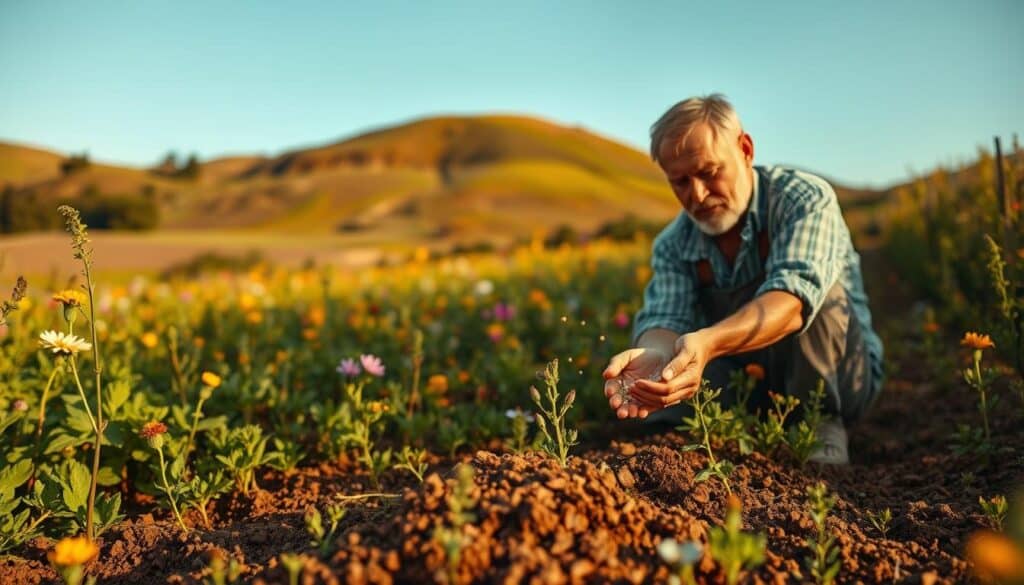
He told them many things in parables: 'A sower went out to sow.
Some seeds fell by the wayside, and the birds came and ate them.
Others fell on rocky ground, where there was not much soil; they sprouted quickly because the soil was shallow.
But when the sun came up, they withered, and since they had no root, they dried up.
Others fell among thorns, which grew and choked the plants.
But other seeds fell on good soil and produced a crop: some thirtyfold, some sixtyfold, and some a hundredfold.
"He who has ears to hear, let him hear!"’ Gospel – Matthew 13:1–9
A Parable of the Sower It talks about how we receive the message of Kingdom of Heaven. Jesus He tells this story to show how different people react to his words. It's a reminder that we should be ready to welcome what is divine.
In this study, we will explore each part of the parable. We will talk about the types of soil and what they represent about us.
Introduction to the Parable of the Sower
A Parable of the Sower It's an important story in Gospel of Matthew. She shows the seven parables of the Kingdom. This story is about a message of Jesus, easy to understand, which helps us see how the Kingdom of Heaven It grows. It shows that... Word of God, When heard, it can grow in different ways in people.
Understanding this parable is crucial. It's not just the seed What matters is where it falls. This story tells us that the way we receive it... message God's influence affects what she does in our lives. Knowing what this parable means can change how we live our lives. faith. It makes us think seriously about our faith and how dedicated we are to it.
The Importance of Parables in Jesus' Message
To the parables are fundamental in teaching of Jesus. These are short stories that convey important lessons. Jesus used everyday life to make faith seem more real to those who followed him. In this way, his messages touched people. heart of the people.
With the parables, Each person can see their own spiritual condition. These narratives reveal truths about the Kingdom of God. They encourage... reflection And they help one to know oneself. Parables, then, are more than just stories. They are tools that Jesus used to teach, leading to a profound spiritual transformation.
The Historical and Cultural Context of the Parable
To understand the Parable of the Sower, we need to know the historical context It is cultural from the Palestine in the time of Jesus. A agriculture It was very important for the economy and the daily lives of the population. Farmers dealt with various types of soil, such as hard, stony, and fertile.
These different soil conditions not only affected the quantity of the harvest, but also symbolized the varied spiritual attitudes of the people.
The figure of sower, along with the birds and the thorns, it has a large meaning. They were powerful symbols for the people of that time, who had a strong connection to the land. Sowing went beyond a simple act. action; It served as a great metaphor for developing values and faith.
Matthew 13:1-9: The Text of the Parable
The text of Matthew 13,1–9 It tells a famous story about Jesus, known as Parable of the Sower. Jesus was teaching near the sea. He attracted many people who wanted to hear what he had to say. In the story, a farmer scatters seeds on various types of soil.
Some seeds fell in places where they could not grow. This shows people who do not understand the message of Gospel. Others fell where they could not last long, symbolizing those who give up quickly. There are seeds that do not survive among the thorns, representing those who are distracted by worries. But some fall on fertile ground, flourishing well. These represent the people who listen to the message and allow it to change their lives.
This parable is special because it teaches us important lessons. It invites us to think about the way we welcome... Word of God in our lives.
Who is the Sower in the Parable?
O sower The parable represents Jesus and all those who spread the Word of God. He uses the seeds to symbolize the lessons of gospel which should reach everyone. Every Christian, in their daily conversations, also has a role in sowing these truths.
O sower He is someone who is active and gives without expecting anything in return. He doesn't just choose good places to plant, but spreads his seeds across all types of soil. This shows that the message of faith is for everyone, no matter how prepared they are to receive it.
The Seed and its Spiritual Meaning
A seed It symbolizes the Word of God, capable of changing lives. Its power to bear fruit is enormous. But this depends on how ready we are to receive it. Luke 8:11 highlights that... seed It is the word of God, fundamental to our salvation.
The way we receive the Word influences what happens in our hearts. Just as a plant needs the right environment to grow, the spiritual seed needs a... heart receptive to flourishing. This connection between the seed and its spiritual value shows how vital it is to understand and live according to the Word. When the seed finds a heart Openness fosters significant spiritual and personal growth.
The Four Types of Soil
The parable of the sower illustrates four types of soil. They symbolize how the human heart reacts to the Word of God. Each soil shows a different way of responding to this message, affecting how the seed grows. Understanding these soils is important to know how faith evolves within us.
Soil by the wayside
This soil speaks of people who hear the Word but do not let it enter. Hard hearts do not allow the seed to sprout. This shows how Satan takes away the Word, preventing faith from being born. It is an example of how denying this message affects our spirituality.
rocky soil
Here, the seed starts well, but has nowhere to take strong root. If problems arise, faith in this soil dies quickly. This shows that initial enthusiasm fails in the face of difficulties, indicating weak spirituality.
Thorny soil
This soil has thorns that choke the seed. Worldly desires prevent faith from developing. It shows the conflict between the material and the spiritual, hindering our connection with God.
Fertile soil
The last kind of soil has a heart open to the Word, allowing it to grow and bear fruit. In it, the seed prospers, reflecting a sincere desire to follow Christ. This is true spirituality, which completely transforms life.
The Central Message of the Parable
The Parable of the Sower shows how crucial it is to be open to the Word of God. Each person is compared to a type of soil. And it is our heart that decides whether the divine message will grow within us.
This story makes us think about our readiness to listen to God. Is our heart open? Or do resistance and refusal prevail?
Those who truly embrace this message live a fuller and happier life. Spiritual growth becomes evident in their lives. Reflecting on this parable helps us better understand our connection with God and the effect of His words on us.
Jesus' Interpretation of the Parable
The way Jesus explained the parable of the sower is very special. He showed that understanding his message depends on people's hearts, as if they were different types of soil. Each type of soil reflects a way of reacting to the Gospel, and this highlights the need to listen and be ready to receive his words.
Jesus compared those who understand and accept the Word to rich, fertile soil that yields much fruit. But those who do not... importance Those who encounter obstacles are like stony ground or paths where the seed does not take root. He also spoke of how Satan tries to steal the Word so that it does not bear fruit.
Through this interpretation, Jesus wants us to think. It's not enough to just listen; it's necessary to embrace and live according to his teachings. This requires an open heart, ready to truly understand the Word. Thus, He invites us to reflect on how we are receiving and experiencing His message in our lives.
Practical Applications of the Parable in Our Lives
The Parable of the Sower makes us think about how we act and receive the Word. It shows how we can apply it in our daily lives. We should reflect on who we are internally and think about how we can be more open to Jesus' teachings.
To the practical applications This story touches on various aspects of life:
- Faith: Growing faith involves dedication and a willingness to follow the teachings every day.
- Prayer: Praying creates a deep connection with God, making the heart a fertile ground for spirituality.
- Study: Delving deeper into the Scriptures helps us understand them better, allowing the Word to resonate more powerfully within us.
- Service: Acting based on learning, helping and serving others, brings real and significant benefits.
Allowing God to work in us changes our lives and positively affects those around us. Practicing what the Parable teaches us is crucial. In this way, we can positively impact our daily lives and leave a legacy.
Personal Reflection: What Type of Soil Are You?
Reflecting on what kind of soil we are is crucial for our spirit. This idea suggests an inner journey in search of... self-knowledge. Analyzing how we respond to God's Word reveals much about our spiritual condition.
It is important to consider how we receive the teachings of Jesus. Questioning our reactions to the divine call helps in our introspection.
Recognizing our role in spiritual growth is essential. This helps us prepare fertile ground, ready to flourish. Such reflection It leads us to a deep understanding of ourselves, stimulating our spiritual development.
Conclusion
The Parable of the Sower is a call to action and change. How we listen to God's Word is essential because it can influence our spiritual future and what we are able to produce.
This story makes us think about growing spiritually. We need to act based on what we learn from God. It's not enough to just listen; we need to live according to His Word.
The lesson here goes beyond sowing seeds. It's an invitation to look within ourselves. We should strive to be fertile soil. By doing so, we can bear fruit and help expand the Kingdom of God.
FAQ
What does the Parable of the Sower teach us about the message of the Kingdom of Heaven?
The parable shows how different people react to the Word of God. It highlights the need for spiritual preparation. In this way, we can receive and nurture the divine message in our hearts. Kingdom of Heaven.
What types of soil are mentioned in the parable, and what do they represent?
The types of soil represent different people's reactions to the Word of God. The soil by the wayside is like closed hearts. The rocky soil represents those who give up easily. The thorny soil shows those who are distracted by worries. And the fertile soil is like hearts that accept and cultivate the Word, producing good fruit.
How can I be "fertile ground" for the Word of God?
Being fertile ground involves being open to learning. This includes praying, reading the Bible, and practicing the teachings of Jesus every day.
What is the role of the sower in the parable?
The sower represents Jesus and the Christians entrusted with spreading the Word of God. It motivates us to share the Gospel every day.
What does the parable tell us about expecting results in the spiritual life?
The parable shows that openness to teaching Divine action brings spiritual fruits. Even though results vary, all have their value in the growth of the Kingdom of Heaven.
How can understanding the Parable of the Sower impact my spiritual life?
Understanding the Parable leads us to reflect on our response before God. This fosters our personal growth and a more productive life in the Spirit.
Why did Jesus use parables in his teachings?
Jesus used parables to make spiritual truths easier to understand. He used everyday stories to help people reflect on and apply his teachings.
What does Satan's action in the Parable of the Sower mean?
A action Satan's message shows how resistance can prevent God's message from growing. It highlights the importance to be attentive and vigilant.
Content created with Artificial Intelligence Assistance