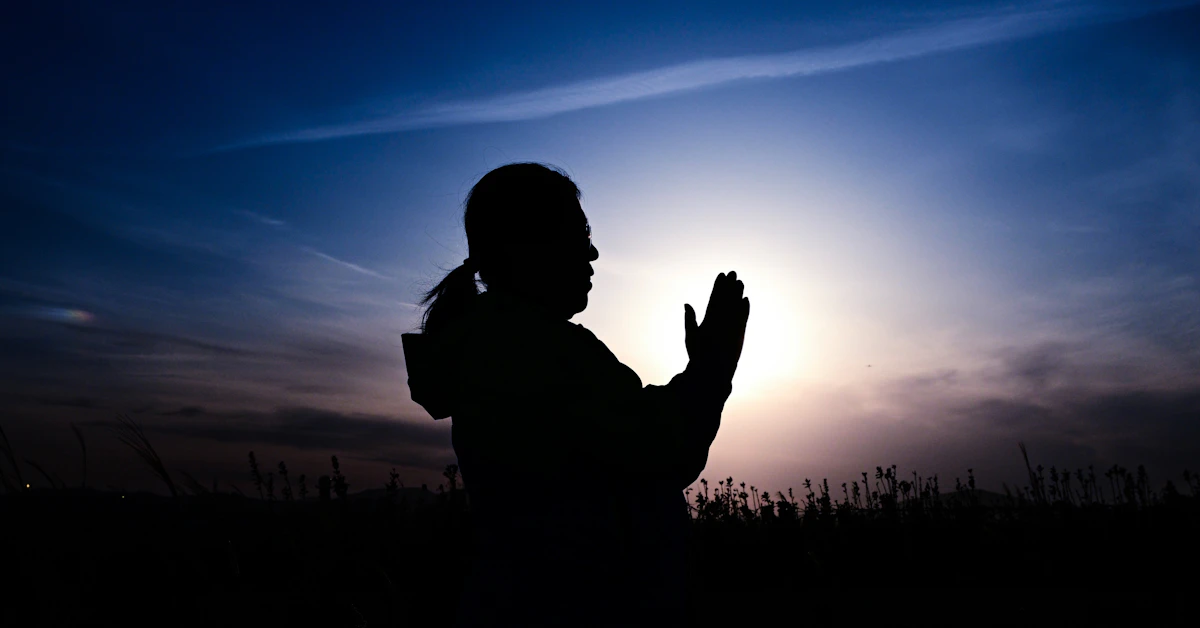
Gospel (Mt 6,7-15): «"And when you pray, do not keep on babbling like pagans, for they think they will be heard because of their many words. Do not be like them, for your Father knows what you need before you ask him.".
»"Therefore, you should pray like this: Our Father in heaven, hallowed be your name, your kingdom come, your will be done, on earth as it is in heaven. Give us this day our daily bread, and forgive us our debts, as we also have forgiven our debtors. And lead us not into temptation, but deliver us from evil. For yours is the kingdom and the power and the glory forever. Amen. For if you forgive others their trespasses, your heavenly Father will also forgive you, but if you do not forgive others their trespasses, neither will your Father forgive your trespasses.".
The Lord's Prayer, mentioned in Matthew 6,7-15, This shows us how to pray simply and deeply. Jesus teaches us to avoid meaningless words. And he emphasizes that God already knows what we need even before we ask.
This passage prepares us to understand better. Matthew 6,7-15. It highlights the importance of the Lord's Prayer in liturgy, teaching, and spiritual life. It is a prayer found in various celebrations and is used in moments of personal reflection, demonstrating its importance for Christians.
We will analyze the Lord's Prayer throughout this text. We will see what it says about our relationship with God and with others. We seek to provide a reading that inspires and educates about Matthew 6,7-15.
Biblical and historical context of the Lord's Prayer.
To understand the Lord's Prayer, we need to study the Gospel of Matthew carefully. Matthew 6:7-15 shows us how we should pray. It warns us against talking too much and teaches us to make requests that matter to everyone.
Reading of the text in Matthew 6:7-15
The text warns us against repeating meaningless prayers. It presents a prayer that has become essential in the Christian faith. It explains that we should avoid pagan customs and begin the prayer with "Our Father who art in heaven." It also tells us to ask for bread, forgiveness, and protection from evil, as well as reminding us of the importance of forgiving others.
Use in liturgy
- The Lord's Prayer is used in homilies and readings every day.
- It is a teaching tool for parishes.
- It inspires songs and prayers made in groups.
Context of the Sermon on the Mount
The Lord's Prayer is part of the Sermon on the Mount, found in Matthew 5–7. This sermon teaches us to be true to our faith.
Theme of the Sermon on the Mount
- It contains instructions on how to pray, fast, and do good. This changes our hearts.
- It teaches us to prefer a conversion of the heart rather than simply following rules.
- It shows that the ethics and spirituality of the Kingdom go hand in hand.
Reception throughout the Christian tradition
The Lord's Prayer has been studied since the earliest times of the Church. Saint Thomas Aquinas said it is the perfect prayer. The Catechism of the Catholic Church also uses this text to teach important values.
Tradition and theology
- The Lord's Prayer is an important part of liturgies, teaching, and personal spirituality.
- Preachers use this text to talk about faith, hope, and love.
- There are commentaries that analyze prayer by combining devotion and careful study.
Historical interpretation
Studies show that the prayer originates from first-century Judaism. They note similarities to other prayers of the time and how this one stands out for its focus on fellowship. Research helps to understand Matthew's choices in placing the prayer in the Sermon on the Mount.
Pastoral approaches
- There is a connection between the history of prayer and its practice in communities today.
- Training materials balance biblical teaching with spiritual application.
- It is used for teaching in Sunday schools and faith study groups.
Meaning of the beginning: "Our Father, who art in heaven"“
The opening of the Lord's Prayer is very special and has great theological value. It guides how we should pray, showing whom we call upon and how we should present ourselves before God.
Revelation of divine filiation
When we say "Father," we are showing a bond of sonship with God. Jesus invites us to see God as Father, in a real sense of friendship and dependence, not just as a distant figure.
Because we are children of God, we have rights and an intimate relationship with Him. When we pray, it's not as outsiders. It's as children who trust and eagerly await an answer.
Transcendence and closeness to God
“Who art in heaven” reminds us that God goes beyond what we can understand. He is not limited by what is human; His holiness is greater than our minds can grasp.
Even so, God is near to us. Even though He is beyond us, He knows us, cares for us, and answers us. This mystery allows us to pray with confidence and respect.
Community dimension: "our" instead of "mine"“
Using “our” instead of “my” in prayer creates a connection between Christians. It means we are not alone in our faith. It shows that all believers have responsibilities toward one another.
This encourages us to look after the needs of others, promoting solidarity and care. Prayer becomes a community action, helping one another.
Hallowed be thy name, and may this be for the Kingdom and the will of God.
The beginning of this request changes how we view prayer. It's not just about praising with words. It wants us to acknowledge the divine name with our actions, words, and choices every day.
This request calls us to personal sanctification. It means living in a way that honors God's name. This requires moral consistency, repentance, and following the commandments.
The suggested moral code wants the community to demonstrate the holiness it demands.
There is a mission in this request as well. When prayer is combined with witness, hope is born. Hope that more people will come to know Jesus as Lord and that God's glory will reach others.
The second petition looks to the future with hope. To cry out for "Your Kingdom come" is to desire a new time. A time of complete justice and peace.
This hope keeps us from standing still. Waiting for the Kingdom means acting now. Doing justice, practicing charity, and creating relationships that reflect the society we desire.
The final request is about an inner choice. To say "thy will be done" is to have faith. It is to surrender to the unknown, accepting that God guides our lives and the community.
Being a Christian doesn't mean being a servant. Freely accepting God's will gives us courage. Courage to obey out of love, to seek the truth, and to be responsible for our actions and for helping others.
Petitions concerning needs and provision: "Give us this day our daily bread"“
The request for bread shows the relationship between body and spirit. It is an invitation from Jesus to ask for what is essential. Thus, we live without the anxiety that paralyzes us. This act of faith impacts how the community acts.
Bread as a material and spiritual necessity.
Bread symbolizes daily food and nourishment for the soul. Ancient and modern teachings say that bread represents more. It includes sacraments, gifts of the Spirit, and reading the Bible with the heart.
Asking for bread is seeking what the body and soul need. This perspective allows us to see prayer beyond just our own requests. It leads to a life guided by faith, hope, and love.
Trust in Providence and social responsibility
Asking for bread means trusting that God knows what we need. This prayer helps us to be free from endless worries. It teaches us to depend on God.
On the other hand, this does not leave us inactive. There is an obligation to act for justice and to help the poor. Prayer and action work together.
By saying "our daily bread," the community makes a promise to help one another. This leads to more sharing and support for policies that combat hunger. In this way, everyone lives with greater dignity.
Forgiveness and reconciliation: "Forgive us our trespasses as we forgive those who trespass against us."“
The Lord's Prayer teaches us about forgiveness. It connects humanity with the divine. Asking "forgive us our trespasses" shows that we need to be ready to forgive others as well.
Reciprocal condition of forgiveness
In the Bible, forgiving and being forgiven are linked. This means that to receive mercy, we must forgive others.
This makes us responsible. The phrase "if you forgive, your Father will forgive you" invites us to act correctly.
Conversion of the heart and sacramental practice
Forgiveness requires inner change. If you truly repent, God will show you mercy. But if your heart is closed, it prevents grace.
In the Church, confession is a way to follow this path. Confession helps us learn how to forgive and to follow the example of Christ, as it says in Colossians 3:13.
Implications for community life
Forgiveness is fundamental to living together. Without it, relationships break down and bonds weaken in families and communities.
To promote reconciliation, practices such as confession and dialogue are necessary. This heals wounds and strengthens the bond between people.
- To promote mutual forgiveness in religious groups and schools.
- To value the sacrament of reconciliation as an instrument of healing.
- To encourage conversion of the heart through retreats and spiritual direction.
Protection against temptation and evil: "And lead us not into temptation, but deliver us from evil."“
The prayer asks to keep us from making mistakes. It acknowledges that we can all fail and asks for help to avoid sin. This request also speaks of repentance and forgiveness. It shows that daily effort and God's grace are necessary to avoid making the same mistake again.
The nature of temptation and human frailty.
Temptation tries to lead us to choose bad paths. To live as a Christian is to acknowledge our weaknesses and ask God for strength. Paul He said he feels strong with Christ, which helps him have confidence in the face of challenges.
Deliverance from the Evil One and confidence in Christ's victory.
The “Evil One” is the one who tempts us to evil. When we ask “deliver us from evil,” we want protection from it. Asking for help is staying close to Christ, who conquered evil. This gives us hope that good will prevail in the end.
Spiritual practices for strengthening
Activities such as praying, reading the Bible, participating in the sacraments, and fasting help fight temptation. They create a defense against evil.
- Short prayers throughout the day to maintain vigilance.
- Regular Bible reading as a source of discernment.
- Fasting and physical discipline to strengthen the will.
- Pastoral care and community support to prevent isolation.
Following these steps strengthens our faith and reduces our vulnerability to evil. Thus, we live more firmly against temptations.
Conclusion
When studying the summary of Matthew 6,Verses 7-15 show the value of the Lord's Prayer. It addresses our relationship with God, the pursuit of a better world, and our daily conduct. It shows how our faith should shape our actions and thoughts.
The message of the Lord's Prayer is clear. It's not just a sequence of words, but a guide for our lives. It invites us to change from the inside out, to expect improvements, and to act with love.
This prayer also teaches about sharing what we have. Thus, living the prayer for our daily bread goes beyond ourselves. It involves helping others and being fair in our society.
In the practice of faith, the Lord's Prayer holds an essential place. It should be present in our worship and in our daily lives. By uniting ourselves in the word and in the sacraments, we become a stronger and more united community.
Finally, this study shows that the Lord's Prayer guides our lives. Following it leads us to be better individually and together. It transforms our words into actions of faith and love.
Content created with Artificial Intelligence Assistance