
A strong tower is the name of the Lord; the righteous will run to it, and will be in high refuge.Proverbs 18:10
On top of a mountain or on a plane, I cry out to the Lord, a source of blessing, love and compassion. The strong Tower is the name of the Lord, seek shelter in God, my eternal fortress forever and ever. Thus, my God and faithful Father, I approach you, surrendering to your magnificent and exalted presence, forgive me, O eternal God. Also forgive, Lord God, that relative of mine who is unfortunate due to the works of the enemy, free him, help him to accept your forgiveness and find you high refuge.
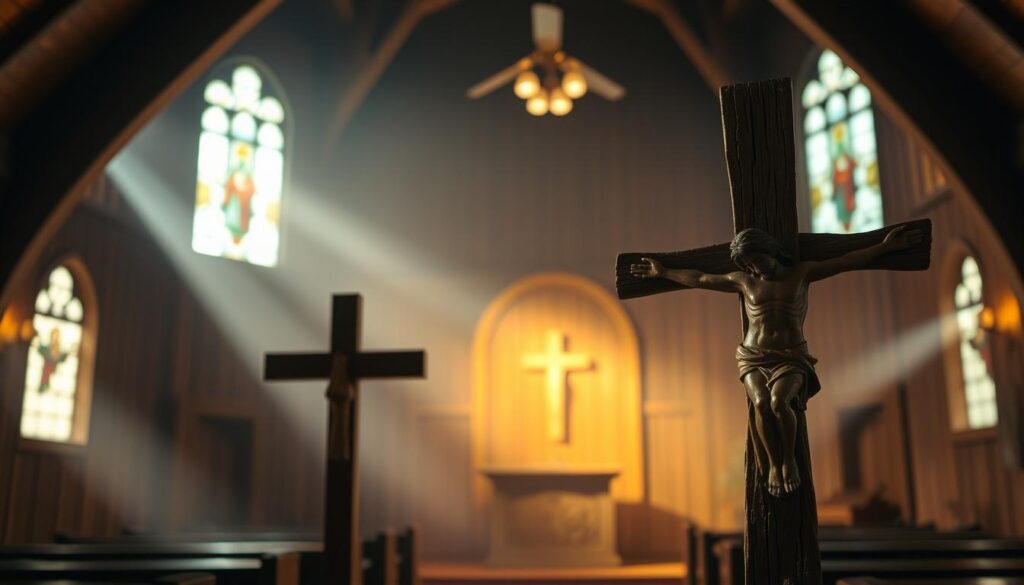
Compassionate God, from eternity to eternity you are holy, eternal rock that was present in our lives through your beloved son, Jesus Christ. In view of this, I look at the Cross and I see my salvation, I see the transformation of my life, I see how my character can be molded and transformed into your image and likeness, O Father.
My God, you are my shelter When I am going through suffering and my soul is greatly afflicted, I look to the sky and I know where my help is. O Lord my God, stand around me as the mountains were around Jerusalem. Who could I look for, isn't it just you who gave your son and with your arms stretched out on the cross hugged me? The answer to all my concerns lies solely in you, O God who must be praised before all the domains of infinite space, because even the stars, the moon and the sun bow before your greatness and immense majesty.

O God, the Lord embraces human beings in moments of depression, as He embraced Elijah when he fled from Jezebel, and once again set him on his path. It was the Lord, my God, who kept Daniel in the lions' den, it was exactly the Lord, a strong tower that protected Daniel's friends in the fiery furnace.
O God, great Father, that in the furnace of affliction of my emotional, financial, affective and health problems, may I not be singed by these flames. So Father, the people you will see that the God of Israel of the past is the same God of Israel of the present, he is the God of the pact and alliance with all those who accepted your saving grace for humanity.
At this moment, God, even if some of the people I pray for are not on your path, protect each one of them, be a shelter, but at the same time shake their heart so that they come to recognize your greatness and accept your forgiveness.
O Father, in this prayer of those who seek shelter in God, only those who accept you as a high refuge make it. The Lord is a strong tower, so even if the enemy's arrows hit me, the Lord is in my heart, guarding it, taking it completely into your hands, for it is your property.
In the shelter of the Rock I hide, I ask for the Lord's protection, because the Lord hears me and heals me and makes me see much more than I could imagine. When my tears, O God, fall, dry them for me. Lift my gaze to see your arm outstretched, raised to show you are with me. So eternal Father, I will rise and move forward, even if I am bloodied by the struggles of life, I will be a faithful soldier who seeks the high refuge, strong tower and fortress for all those who trust in you.
So Father, I once again surrender my heart to you, may my entire being live in sanctification, take it in your hands, help me to be a channel of blessing for my family and that through me, by your power, we may all come to live in the promised land. I ask and thank you for your great blessing, in the name of Jesus. Amen!
The Psalms offer comfort and teachings about finding refuge in the Lord. They use imagery such as a strong tower and an eternal rock to describe God. This helps those who seek refuge. prayer for protection.
The prayer begins with “I awoke sheltered by You, O my God.” This reminds us to seek divine protection every day. It asks for inner light, strength for the day, and protection for the family.
The Psalms are full of promises that God protects those who trust in Him. Stories like that of Daniel among lions show how real these promises are.
The intention here is to encourage the practice of prayer for protection. We show how the Psalms and faith provide a foundation for prayers of refuge filled with hope.
Meaning and origin of the expression "refuge in God"“
The idea of "refuge in God" combines prayer, poetry, and theology. This expression signifies protection and has been used since the early Church and continues to this day. Understanding this concept helps to comprehend images that comfort those who fear or doubt.
In the Psalms, we discover how "refuge in God" came about. Psalm 91 speaks of being under God's protection. A famous verse says that God protects us like a bird protects its chicks.
Many biblical hymns reiterate the idea of refuge. Psalm 46 calls us to see God as our shelter. Others, such as Psalms 16 and 121, emphasize that God is our help. All these texts are used for prayer and in ceremonies.
Certain images, such as shadows and wings, symbolize affection and direct protection. The "strong tower" mentioned in Proverbs 18:10 suggests security. These symbols are powerful in literature.
Metaphors of refuge bring faith closer to everyday life. Rocks and towers represent solidity; wings and shadows, comfort. They inspire both prayers and religious art.
Practices of faith use simple actions to feel faith. Reading Psalms, praying morning and night, and calling upon God. Thus, communities and individuals use these images in their prayers.
In preaching, being invited to trust in God is essential. Knowing about "taking refuge in God" helps in creating prayers that touch the soul. This blends images of strength and care in spiritual life.
Prayer of Shelter in God
This text is a prayer that helps you find refuge in the promises of the Bible. It combines teachings from the Psalms with heartfelt requests. It can be used as inspiration for your own prayers.
Prayer text inspired by the Psalms
Lord, You are my refuge and strength. In the morning, I seek Your presence and ask for protection. May Your angels guard my path and deliver me from dangers.
I pray for my family, for those who are afflicted, and for all who suffer. May repentance transform hearts. I thank You for Your faithfulness and love, in the name of Jesus.
Theological elements present in prayer
- Praise and recognition of divine protection, God as a safe refuge.
- Requests for security, using defensive metaphors such as shields and towers.
- Trust in God's promises, found in sacred texts such as Psalm 91.
- Calling on the name of Jesus, showing faith and surrender.
- A word of thanks, concluding the prayer with hope and gratitude.
When and how to pray this prayer.
Pray in the morning, at night, or during difficult times. Read Psalms, keep silent, and express your faith. Before traveling or making big decisions, seek safety and protection in the words of this prayer.
To guide your day, recite: "Protected by You, illuminate my path." In challenging times, invoke help to overcome financial, emotional, and health obstacles. End with surrender and gratitude.
This prayer shows us how to practice our faith in everyday life. Knowing when and how to pray strengthens our relationship with God and nourishes our hope.
Psalm 91 as a basis for praying for protection.
Psalm 91 is perfect for those seeking protection in their prayers. It teaches us to live protected by the Almighty and to be safe with Him. It is excellent for difficult times and fears.
Reading and memorizing Psalm 91 strengthens the soul. It promises to save us from dangers and illnesses, showing that angels protect us.
Analysis of key verses
“You are my refuge and my fortress” shows the strength of our faith. By repeating it, our prayer becomes stronger.
Words about being safe under divine wings bring peace. They are perfect for calming anxiety and fears at night.
The phrase "Because he has set his love upon me… I will deliver him" highlights our connection with God. It is fundamental when using Psalm 91 in moments of devotion.
Practical applications in everyday life
- Use the Psalm 91 prayer for protection when facing epidemics or health concerns, declaring the protection against illness while practical care measures are being taken.
- Recite verses Psalm 91 Take this before bed to combat nighttime fears and achieve peace of mind.
- To proclaim the promises of the psalm in times of conflict or persecution to remember the shield of God that accompanies the believer.
In church, the psalm is read at services and used to comfort the sick. It demonstrates the power of prayer and the protection of angels.
Thus, the community grows in faith. It learns to trust in the power of Scripture to face challenges, keeping hope alive.
Psalm 27 and trust amidst fear.
Psalm 27 offers words of strength For those who are afraid, He says: “The Lord is my light and my salvation; whom shall I fear?” This creates a foundation of faith that helps in difficult times. This confidence remains, even when surrounded by enemies and doubts.
The psalm expresses the desire to always be in the house of the Lord. It speaks of the comfort of feeling sheltered and protected by Him. “In the day of trouble he will keep me safe in his dwelling” offers a guarantee of protection.
The Lord is presented as the guiding light, diminishing fear. Recognizing Him as light brings security and helps to face challenges and uncertainties.
The text concludes by encouraging us to wait on the Lord with a steadfast heart. This shows that waiting is also an act of faith. Hope transforms into strength to renew the spirit.
There are devotional practices that come from Psalm 27. These include reading the psalm at important times and asking for protection in group prayers. They inspire... courage in prayer and maintain faith in the goodness of the Lord.
- Recite key phrases to reinforce Psalm 27 trust.
- Meditate on the phrase "in the day of adversity he will hide me in his pavilion" to seek Psalm 27 protection.
- To ask for presence and clarity from Lord, light and salvation. in critical moments.
- Practice silence and active waiting to develop courage in prayer.
Psalm 27 is a powerful prayer against fear. It motivates those who seek God to act in faith. The confidence that comes from reading the psalm inspires action and courage to pray, even in the face of fear.
Psalm 40 and the patient wait for divine help.
Psalm 40 is about waiting in a way that changes us. “I waited patiently for the Lord; he turned to me and heard me” reveals how trust can lead to transformation. It moves one from a difficult situation to a position of strength and praise.
Biblical testimony of liberation and renewal
Psalm 40 tells how surrender leads to freedom. By acknowledging our weakness, God listens to us and gives us a “new song.” This change shows that God acts by renewing life and inspiring praise for salvation.
Incorporating active waiting into shelter prayer
- Practice prayer active waitingCombine heartfelt petition with moments of praise, acknowledging that the divine assistance It may take a while, but it will arrive.
- Give testimony: when the liberation Psalm 40 If praise is expressed, record it. This strengthens the community and confirms the faith.
- Include periods of silence and reading from Psalm 40 waits patiently; Allow the word to solidify trust before resubmitting requests.
Simple actions can strengthen patience and faith. By practicing gratitude during prayer, we create space for active waiting to flourish. In this way, divine help becomes a reason for public celebration.
Psalm 46 and the perception of God as a stronghold.
This verse paints a powerful picture: “God is our refuge and strength, an ever-present help in trouble.” It makes us think about difficult times with a new perspective. There, mountains tremble and rivers cause chaos, but God brings us security.
When we pray with these images, we feel not only escape, but also welcome. God becomes a protected city, a firm support in adversity. His reliable presence gives us strength, even when everything seems to be falling apart.
The psalm invites us to pause and acknowledge God: “Be still, and know that I am God.” Speaking this softly helps us to anchor ourselves in faith and peace.
- Guided breathing: Inhale counting to four, exhale four, repeating a phrase from the psalm. Great for relaxing before bed or upon waking.
- Reading in a low voice: Choose short verses from Psalm 46 and read them three times, visualizing this fortress.
- Contemplative silence: After reading, remain silent for two minutes. Feel the peace and calm your heart.
- Meditation with repetition: Choose a phrase like "God is our refuge" and repeat it slowly. Let the message comfort you.
Practicing these activities reduces anxiety and transforms prayer into peace. Combining the Bible and simple techniques helps to trust in God. This aligns body and mind in the pursuit of serenity.
In prayer groups, Psalm 46 unites people. Singing or reading together increases the feeling of mutual care. It shows that God's help is tangible in the community.
Psalm 121 and the Lord's continued protection.
Psalm 121 shows how to trust in the Lord, who made heaven and earth. It teaches that God is always watching over us and protecting us at all times. This idea is important for those who practice simple and direct prayers.
Constant vigilance: "neither dozing nor sleeping"“
One verse says that the protector of Israel is always alert, never sleeping. This idea brings peace when we are afraid or insecure. Remembering this shows us that God is always ready to help.
Daily prayer for safe going out and coming in.
Saying a prayer when leaving and entering your home is an act of faith. Ask for protection when leaving. Give thanks for safety when returning. Doing this as a family increases trust among everyone.
- Save important parts of Psalm 121 to recite while traveling.
- Take a moment before leaving or entering your home.
- Help the children say a phrase of faith.
Using Psalm 121 in daily life strengthens faith in... divine assistance. A quick prayer before something important brings calm. The daily practice of this prayer is a constant reminder of the Lord's protection.
References in Proverbs: A strong tower as a refuge
“"The name of the Lord is a strong tower; the righteous run to it and are safe." This proverb gives us a powerful image of how to pray. It teaches us to trust in God, who is our refuge during fear and doubt.
Proverbs 18:10 and security in the name of the Lord
Proverbs 18:10 speaks of how the name of the Lord acts as a protection. This security does not come from our own actions, but rather from God's faithfulness. God welcomes the righteous and offers them a safe place.
In sermons, this passage is often used to encourage believers to have more faith. Saying this phrase aloud can soothe the heart when things get tough.
How to use this image in personal and community prayers.
- Formulate a strong tower prayer In short, declaring: "The name of the Lord, my refuge.".
- In worship services, integrate the image of the tower in liturgy through songs and moments of confession.
- In intercession, ask for protection for the vulnerable, using the metaphor of the tower to encourage the congregation.
Adopting these simple practices can enrich our spiritual life. Reading the Bible and then remaining silent helps the message affect our daily lives. In this way, the community is strengthened and gains courage to live the faith actively.
Biblical testimonies and examples of shelter (Daniel, Elijah)
The stories of Daniel and Elijah provide powerful examples of God's protection. They show how God cares for those who have faith, especially in difficult times. These stories are important for those seeking comfort and security in faith.
The story of Daniel Being thrown into the lions' den is a powerful sign of divine care. It shows God acting to save Daniel, encouraging prayers for protection. This moment teaches about the power of faith and divine help in times of danger.
Regarding Elias, He also received direct help from God. In a moment of weakness, in 1 Kings 19, he was fed and restored by God. This shows how God cares for his servants in difficult times.
- Daniel's friends, when thrown into the furnace, were not burned, reinforcing the idea of divine protection.
- After facing challenges with Jezebel, Elijah was protected and renewed, demonstrating God's care.
These biblical stories are used to comfort people today. Pastors and leaders use them in sermons to give hope. In study groups, they help to discuss trust in God and emotional strength.
They can be applied in various ways:
- Prayers for those facing danger, remembering how God protected Daniel.
- I use these stories in Bible studies to strengthen faith in divine help, as in the case of Elijah.
- Support for those going through crises, showing that God can help, as He did with Daniel and Elijah.
These biblical narratives strengthen faith and help us see how God works in real life. They prove that biblical tradition still guides and protects people today.
How to compose your own shelter prayer
To create a prayer for shelter, be simple and sincere. Use references and images from the Psalms. This way, your prayer will be easy to understand and full of meaning. Here are some tips for making a prayer that works well both alone and in a group.
- Opening praise: begin by thanking God for being your refuge. For example, “Lord, You are my rock” is based on the Psalms.
- Clear request: ask for protection using words from Psalms 91 and 27.
- Personal surrender: say "I surrender my heart to You" and have faith in the protection of the Psalms.
- Thanksgiving: conclude with recognition and a promise of praise.
Phrase and invocation templates
- “"You are my refuge; under Your wings I find rest." (based on Psalm 91)
- “"Be my strong tower and rock, protect my family and transform hearts." (personal request)
- “"Lord, guide my steps; I entrust my anxieties to You." (inspired by Psalm 5 and 27)
Tips for making prayer personal and communal
- Begin with a short hymn of praise. Use verses before your requests to ground your prayer in the Bible.
- When asking for something, be clear and simple. This helps when praying in a group.
- In groups, read aloud and share experiences. Encourage intercession and conclude with thanksgiving.
- Make sure your prayer has a balance between praise, petition, surrender, and gratitude.
By following these tips, you can create a prayer of shelter that is true to the spirit of the Psalms. It will be valuable in daily life and during group prayer times.
Prayer for Refuge in God in Daily Life
Believing that God is our refuge makes small daily rituals moments of calm. It doesn't take much to live prayer in everyday life. All it takes is an open heart and readings that make the day worthwhile.
Morning and evening protection rituals
At sunrise, a simple prayer inspired by Psalm 5 can guide our choices and ask for wisdom. This moment of devotion at dawn is perfect for the family.
Before going to bed, reciting Psalm 91 or Psalm 121 brings security to end the day. These morning and evening practices help maintain peace of mind.
- Morning: short reading, prayer of surrender, simple song.
- Afternoon: a pause for silence and a plea for protection.
- Night: recite Psalms of protection and thanksgiving.
How prayer strengthens faith in times of crisis.
In difficult times, prayer helps us cope with fear and uncertainty. Requests made with a sincere heart for health and peace transform our despair into hope.
Praying regularly makes us stronger. Reading Psalm 40 while patiently waiting makes us grateful, even when the solution takes a long time to arrive.
Integration with Bible readings and songs
Mixing Bible readings and hymns enriches our time with God. A good practice is to read Psalms, remain silent for a moment, and then sing.
Praying for those in need strengthens our connection to the community. Remembering the cross as a symbol of salvation motivates us to live our faith in a practical way.
- Choose two or three Psalms for the week.
- Choose a song that will make it easier to remember the prayer.
- Create protective rituals when leaving and returning home.
Daily practice transforms prayer into a true refuge. Faith and daily life intertwine, providing strength and calm to overcome challenges.
Conclusion
The Psalms teach that God is our refuge and strength. They show that trusting in Him gives us security and hope. This helps to keep our hearts steadfast, even in difficult times.
Praying upon waking and before sleeping strengthens our faith. Asking God to illuminate our inner selves is important. Using biblical imagery in prayers brings peace to our lives.
The stories of Daniel and Elijah show how trusting in God makes a difference. By opening our hearts and giving thanks for Jesus, we connect more deeply with God. The invitation is clear: pray, memorize Psalms, and create your own prayer. In this way, we will live with greater faith and trust in God.
FAQ
What does the expression "Prayer of Refuge in God" mean?
The expression "Prayer of Refuge in God" speaks of praying to God as our safe haven. It uses imagery from the Bible, such as God being our rock or shade. These prayers express our confidence that God always takes care of us.
Which Psalms are most commonly used as the basis for this prayer of protection?
Psalms such as 91, 27, 46, 40, and 121 are frequently used. They speak of God protecting and helping his children. These Psalms are the foundation for creating powerful prayers of faith and trust in God.
How do the images of "wings," "tower," and "rock" relate to each other in the sentence?
“Wings” symbolize affection, “tower” signifies security, and “rock” represents stability. These images help express our desire for emotional and spiritual protection. Thus, they enrich our prayer, showing various forms of God's protection.
When is it appropriate to pray the Prayer of Shelter in God?
This prayer is ideal for various moments: upon waking, before sleeping, before traveling, or during times of crisis. It is also excellent during vigils or when we wish to strengthen our faith in God's protection.
How can I create a personal prayer for the shelter following the tradition of the Psalms?
Begin by praising God and quoting verses that speak of protection. Ask for safety and provision, trusting in God's promises. Including words like "the Lord's name" and biblical imagery makes the prayer more powerful.
What theological elements should appear in prayer?
Include praise to God, requests for protection, faith in God's promises, and thanksgiving. This unites prayer with our faith and the tradition of the Psalms.
Can Psalm 91 be used literally as a prayer?
Yes. Psalm 91 is a powerful prayer of trust in God. It is used in times of fear or danger. Adding personal requests makes it even more special.
How can the Prayer of Shelter be integrated into liturgical and family practices?
Use Psalms in worship services, bless your home with Psalm 121 or 91, memorize verses to pray as a family. These practices help maintain faith at home and in the community.
What biblical examples strengthen confidence in this prayer?
Stories like Daniel in the lions' den and Elijah protected by God show His faithfulness. They are examples of how God cares for us in difficult times.
How does patient waiting relate to the prayer of shelter?
Patient waiting, as in Psalm 40, teaches us to trust while we wait on God. This waiting teaches us to trust God more and strengthen our faith.
What practices help to "quiet the heart" during this prayer?
Silence, repeating verses, deep breathing during prayer, and meditation help to calm down. These are ways to focus on God and trust Him more.
Is it appropriate to pray for protection for relatives and the community as well?
Yes. Praying for others shows our concern and strengthens unity. Asking for protection for everyone reflects God's love.
Can I combine hymns and Bible readings with the Shelter Prayer?
Yes. Mixing Psalms, songs, and silence enriches our devotional practice. It helps us remember God's promises and apply His protection to our lives.
How can we make prayer more Christ-centered without losing the foundation of the Psalms?
Connect the images from the Psalms with Jesus as our rock and savior. Conclude by invoking the name of Jesus, thanking Him for His protection and love.
Are there shorter models to wear when waking up?
Short designs, like those inspired by Psalm 5, are good for starting the day feeling protected by God. They are quick and strengthen confidence from the very beginning of the day.
What practical advice is there for memorizing protective verses?
Choose simple verses and repeat them every day. Associating the verses with daily routines helps with memorization. This strengthens your faith and trust in God.
Content created with Artificial Intelligence Assistance