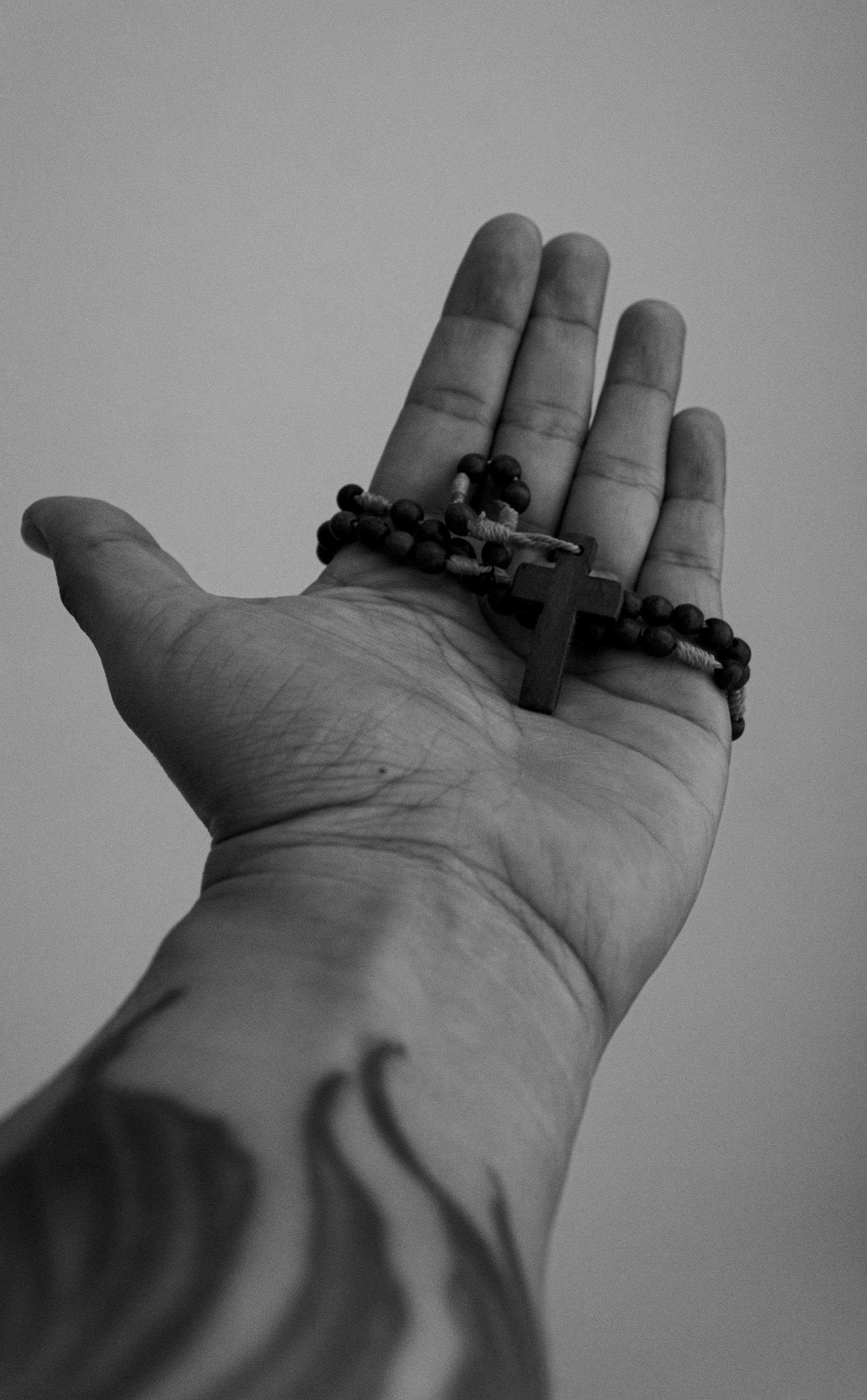
Gospel (Mc 5,21-43): Jesus crossed over again to the other side of the lake, and a large crowd gathered around him. He was by the sea. Then one of the synagogue leaders, named Jairus, came. Seeing Jesus, he fell at his feet and pleaded earnestly with him, «My little daughter is dying. Come and put your hands on her so that she may be healed and live!» Jesus went with him. A large crowd followed him and pressed around him on all sides.
There was a woman who had been subject to bleeding for twelve years and had suffered much at the hands of many doctors. She had spent all she had, and instead of getting better, she grew worse. When she heard about Jesus, she came up behind him in the crowd and touched his cloak, saying, «If I just touch his clothes, I will be healed.» Immediately her bleeding stopped and she felt in her body that she was freed from her suffering. At once Jesus realized that power had gone out from him, and turning around in the crowd, he asked, «Who touched my clothes?» «You see the people crowding against you,‘ his disciples said, ’and yet you ask, »Who touched me?«» But he looked around to see who had touched him. Then the woman, trembling with fear when she heard what had happened to her, came and fell at his feet and told him the whole truth. Then Jesus said to her, “Daughter, your faith has healed you. Go in peace and be freed from your illness.
While he was still speaking, some people came from the house of Jairus, the synagogue leader, saying, «Your daughter is dead. Why bother the teacher any more?» Hearing what they said, Jesus told him, «Don’t be afraid; just believe.» He did not let anyone follow him except Peter, James, and John, the brother of James. When they arrived at the synagogue leader’s house, Jesus saw the commotion, with people weeping and wailing loudly. Entering the house, he asked them, «Why all this commotion? Why are you weeping? The child is not dead but asleep.» And they began to laugh at him. After putting the crowd aside, he took the child’s father and mother and the disciples who were with him, and he went in where the child was. He took her by the hand and said to her, «Talitha koum!« (which means, »Little girl, I say to you, get up!”). Immediately the girl got up and began to walk around—she was twelve years old. At this they were completely astonished. Jesus strongly advised that no one should know about what had happened and told them to give the girl something to eat.
Mark 5,Verses 21-43 contain two incredible moments: the story of a woman healed of a hemorrhage and that of a girl brought back to life. These stories show the miracles of Jesus, which generate wonder and questions. They speak about the importance of faith and hope according to Mark.
This part of the Bible shows an interesting contrast between exclusion and acceptance. The sick woman lives on the margins of society because of her condition. Jairus, a well-known man, desperately seeks Jesus to save his daughter. In both stories, Jesus' intervention transforms sadness into new possibilities. It shows the power of the Kingdom of God, which breaks rules and brings healing.
Analyzing Mark 5,In verses 21-43, we learn about the power of perseverance and trust. Authors such as Carlos Mesters, Mercedes Lopes, and Felipe Oliveira Perez see a community value in these events. The stories of healing and resurrection are more than miracles for individuals. They are a call for everyone to practice inclusion and show true compassion.
The story begins with details that capture attention and the meaning of the phrase "Talitha cumi," showing Jesus' power over life. This beginning invites us to see how Jairus' daughter and the woman suffering from hemorrhaging represent a living faith. A faith that extends to touch, heal, and change lives.
Historical and literary context of the Gospel of Mark
The Gospel of Mark was born in a difficult time for Christian communities. It is important to understand who wrote Mark and when, in order to grasp its significance. These details help us to see how the first Christians viewed themselves and remembered their history.
Author and probable date
It is believed that John Mark, a friend of Peter and Paul, wrote the Gospel. Recent studies suggest that the community that preserved Peter's teachings may have contributed.
Experts say it was written between 60 and 70 AD, after the death of Jesus. This explains the sense of urgency and the focus on demonstrating authority and bearing witness.
Recipient communities and social tensions of the time
The first readers were a mix: Jews and pagans who converted to Christianity. They were all trying to adapt to new rules of coexistence. At the time, there were many discussions about what was right to do in the religion and who belonged to the community.
The conflict between Jews and Gentiles is a major theme in the Gospel of Mark. Stories about Jesus healing people and challenging exclusion illustrate these differences. They reflect real debates about following the law and accepting new members.
The evangelist's purpose in recounting miracles.
The miracles in the Gospel serve several purposes. They demonstrate that Jesus is the Messiah and strengthen faith during difficult times. Furthermore, they highlight the importance of love and justice amidst conflict and persecution.
Healing stories teach important lessons. They speak of compassion, breaking down barriers, and questioning old rules. Thus, Marcos presents a vision of a more just and compassionate world.
- The author of Mark: a connection to apostolic testimonies and the Petrine tradition.
- Gospel date: post-Passion context, 60s–70s AD.
- Historical context: internal conflicts and external pressure on communities.
- Jewish-pagan tension: a recurring theme that guides disputes about purity and inclusion.
- Narrative purpose: to affirm messianic identity, consolidate faith, and promote social justice.
Detailed reading of Mark 5:21-43
The passage deals with urgency and intimate encounters. It tells a moving story involving a large crowd, illness, and healing. It highlights the importance of small details, such as gestures and words. It also shows how crucial faith is in these moments.
Summary of the text: sequence of episodes
Jairus, a respected leader, seeks Jesus to save his sick daughter. He and Jesus go together, hurried by the crowd surrounding them.
A woman, suffering from bleeding, touches Jesus hoping to be healed. Her action pauses the journey. This triggers a conversation that reveals Jesus' compassion.
Messengers bring news of the girl's death. But Jesus encourages Jairus to keep the faith. Upon arriving, Jesus revives the girl with the words "Talitha cumi".
Main characters: Jairus, the girl, the woman with the hemorrhage, and Jesus.
- Jairus: a man of influence who demonstrates great faith in seeking Jesus.
- The girl: she is twelve years old, symbolizing a transitional phase. Her situation reveals the thin line between life and death.
- The woman with the hemorrhage: anonymous, she struggled with her illness for twelve years. She faced social ostracism without finding a cure with doctors.
- Jesus: the central figure who heals, showing compassion and valuing people's faith.
Narrative elements and Marcano language
Marcos uses a fast-paced narrative full of contrasts to create suspense. He prefers direct language, with actions in the recent past and short sentences.
The number twelve is a symbol that marks history. Aramaic expressions like "Talitha cumi" bring depth to the narrative.
The author focuses on intimate encounters amidst large crowds. He connects the characters' faith to the success of miracles. This allows the reader to connect with the story in a unique way.
Mark 5:21-43: a theological and pastoral analysis
This text presents powerful images that aid in theological understanding and pastoral application. It discusses healing, resurrection, and human interactions. It shows the main themes of Mark's theology and how they can be applied today.
The meaning of miracles as a sign of the Kingdom.
Miracles are signs of the Kingdom of God, overcoming social and religious barriers. They demonstrate divine action that welcomes the excluded, combating marginalization.
For Mark, Jesus' power shows that there is life beyond death and a place for everyone, without exclusion. This calls the community to see God in acts that restore dignity.
The relationship between faith, fear, and hope in the message of Jesus.
The story depicts a struggle between fear and the call to trust. While some laugh skeptically, others are encouraged to be courageous.
Faith is seen as a bridge between despair and divine help. Hope becomes the foundation for pastoral practices, encouraging prayer, trust, and perseverance in difficult times.
Pastoral implications for contemporary communities
Today's communities must seek to include the marginalized and question the rules that exclude them. They must create welcoming environments that restore people's dignity.
It is essential to encourage the continuation of faith and the pursuit of spiritual support through prayer, Bible study, and mutual help. Being together as a community can be healing in times of crisis.
- To promote care networks that integrate excluded people.
- To train leaders capable of translating the sign of the Kingdom into concrete actions.
- To encourage practices that cultivate faith and hope in everyday experiences.
The woman with hemorrhage: exclusion, courage, and healing.
This story tells of a woman who lived in isolation for twelve years. The law of Leviticus considered her condition an impurity, causing her social exclusion. She tried to find a cure with many doctors, but nothing changed her situation.
Her act of seeking healing was very courageous given the rules of the time. Touching someone could cause impurity to be passed on. So, she bravely broke the rules by appearing in public. This helps us see how her gesture defied religious and cultural norms.
H3: Context of ritual impurity and social marginalization
- Leviticus stated that bleeding made someone unclean, forbidding them from participating in religious services.
- Exclusion was measured by the lack of access to rituals, public spaces, and financial support.
- The twelve years of isolation reflect the personal and collective impact of this exclusion.
H3: The attitude of faith: touching the hem of Jesus' garment
The woman, hidden and courageous, touches the hem of Jesus's garment. This simple act had great significance. She believed that just touching it was enough to heal her. Her action shows faith and defiance of the rules of purity and the differences between people.
- The simple touch was a prayer and a protest against exclusion.
- She showed her faith in Jesus in a discreet way, without drawing attention to herself.
- His actions prove that faith and courage can overcome obstacles imposed by society.
H3: Jesus' Response: Acceptance, Dignity, and Restoration
When Jesus feels someone touch him, he asks who it was. By calling the woman "my daughter," he gives her a name and a place again. His reaction brings recognition and dignity to her, challenging the idea of impurity.
He attributes the power of the miracle to her faith. With the words "Go in peace and be healed of this disease," he not only confirms her physical healing but also promotes her social reintegration. The woman becomes part of a community of compassion and acceptance.
Jairus' daughter: despair, trust, and resurrection.
Mark's account blends tension and hope, telling the story of an important family. It shows that Jesus can heal everyone, regardless of their social standing.
Who was Jairus and what was the importance of his social position?
Jairus was an important leader in the synagogue, respected by many. His search for Jesus shows that, although powerful, he faced problems like anyone else. He demonstrated great faith, even though he was a public figure.
The girl's crisis and her search for Jesus amidst the crowd.
Jairus' twelve-year-old daughter was very ill. This left her father desperate and the community shaken. Jesus was delayed in arriving because of the crowd and another healing.
Upon learning of his daughter's death, Jairus loses hope. But Jesus encourages him to have faith. Then, Jairus trusts in Jesus, even in the face of such a difficult situation.
“Talita cômi”: word, gesture, and power over death
Jesus said “Talitha cumi” to make the girl get up. This act showed that He had power over death and a special bond with life. The resurrection in this story is a sign of hope and inclusion for the girl and her community.
This miracle also challenged ancient rules about purity. Jesus touched the girl, showing that love transcends these rules. The miracle was a sign of social and personal renewal, changing lives for the better.
Cross-cutting themes: women, exclusion, and role reversal.
The episode in Mark 5,Verses 21-43 depict important conflicts. The story addresses social problems and rules, highlighting women in the stories of Jesus.
Female presence and leadership
Mark highlights women in important moments. The woman with the hemorrhage fights for herself with faith. Jairus' daughter receives attention and is brought back into the company of everyone. These moments present women in an active role in Mark's Gospel.
Women are also important in other parts of the text, such as the woman with the perfume and the generous widow. They show that the Kingdom of God values those who are left aside and calls women to participate and act.
Disobedience to the rules of purity
Breaking the rules of purity is an act of liberation. The woman who touches Jesus changes the rules of who can approach him. Jesus accepts her and also breaks rules by touching the girl, defying old boundaries.
This gesture challenges exclusion based on outdated laws. It prioritizes mercy and inclusion. Going against these norms is a way to regain respect and standing in society.
Twelve years as a symbolic element
The number twelve in the text is very significant. It represents the woman who suffered for twelve years and the twelve-year-old girl. This number recalls the twelve apostles and all of God's people.
Understanding the number twelve as a sign of crisis and renewal reveals the promise of restoration for all. The change of these twelve suggests a greater redemption, where Jesus' compassion embraces the entire community.
- Marcos presents women as agents of faith and change;
- Breaking with purity norms emphasizes inclusion and care;
- The symbolism of the number twelve broadens the interpretation of the episode for the people of God.
Practical and contemporary applications of the passage
The account in Mark 5 teaches much about life in the church and in society. It shows the importance of urgency, courage, and restoration in our actions today.
Lessons on faith, persistence, and hope in suffering.
The story of Jairus and the woman with the hemorrhage speaks of active faith. It shows that trusting means taking a step toward what we hope for. It is about being persistent, even when afraid, and never losing hope.
This teaching appears in activities such as the study of spiritual disciplines and prayer groups. It is also present in sermons that speak of faith and resilience. Pastors like Pascoal Queiroz make us think about how to apply faith and persistence in our lives.
Implications for pastoral care and social inclusion
History calls us to welcome those on the margins and to change rules that exclude them. Pastoral care is shown in concrete actions, such as working with health and providing community support.
- To ensure that everyone has access to medical and psychological care.
- Create neighborhood networks and support for emergency situations.
- To prepare leaders to advise in an ethical and empathetic manner.
These initiatives show that caring goes beyond words; it's a real service to the community.
The relationship between faith and mental health: studies and testimonies.
Studies show how faith can contribute to well-being and resilience. Stories of those who have recovered link community support, prayer, and professional help.
We can include stories of overcoming challenges in our meetings, teach leaders about mental health, and refer them to specialists when necessary.
By putting Mark 5 into practice, churches can promote faith and care for mental health without ignoring professional help.
Thus, we translate ancient teachings into modern actions. This creates an environment of acceptance, practical and spiritual support, and reinforces hope in the face of life's difficulties.
Conclusion
Mark 5:21-43 shows how two miracles come together, teaching about the Kingdom of God. It speaks of inclusion, healing, and victory over death. These events reveal the importance of active faith, which moves Jesus to act. This brings a powerful message of hope and restoration, both for individuals and communities.
From a theological standpoint, this text challenges rigid rules and highlights the importance of women. It suggests a path of mercy and acceptance for churches. This teaching encourages the integration of spiritual care with emotional and social support, promoting inclusion.
Jesus invites us to maintain our faith, support those on the margins, and believe in God's power to transform lives. His words — "Do not be afraid; only believe" and "Talitha koum" — are a call for us to rise up, restore our dignity, and live the hope proclaimed in the narrative.
Content created with Artificial Intelligence Assistance