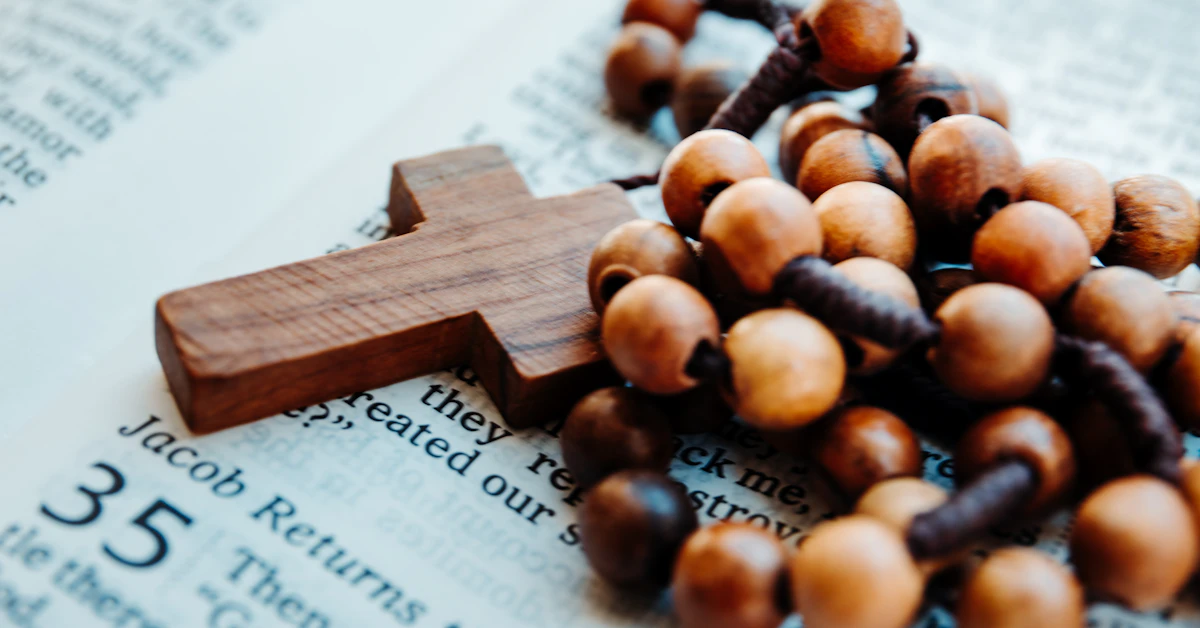
The Gospel (Lc 2,22-35): When the time of their purification according to the Law of Moses had been completed, Joseph and Mary took him up to Jerusalem to present him to The Lord And to offer a sacrifice in keeping with what is said in the Law of the Lord: “a pair of doves or two young pigeons”.
Now there was a man in Jerusalem called Simeon, who was devout and righteous. He was waiting for the consolation of Israel The Spirit of the Lord was upon him. It had been revealed to him by the Holy Spirit that he would not die before he had seen the Lord’s Christ. Moved by the Spirit, he came to the temple. Then Simeon took him in his arms and praised God, saying: “Now, Sovereign Lord, you have granted your servant to go away in peace as you promised.
The child’s father and mother marveled at what was said about him. Simeon blessed them and said to Mary, his mother: “This child is destined to cause the falling and rising of many in Israel, and to be a sign that will be spoken against, He will be a sign of contradiction — and you, a sword will pierce your own soul with it”! — so that the thoughts of many hearts will be revealed.
Luke two,22-35 describes an important but brief moment in Jesus’ life – his presentation at the temple. Following the Law, Mary and Joseph make the required offering and dedicate the newborn to God. They follow the guidelines of Ex 13,2 and Lv 12.
The story gets even richer with the appearance of Simeon. He is righteous and lives by the Spirit. Holding Jesus, Simeon makes a powerful prophecy that we call the Nunc dimittis. He speaks of the salvation that Jesus will bring and its significance for all peoples.
The account makes no secret of the challenges ahead. Simeon foretells that Jesus will face opposition and that Mary will feel deep pain. This prophecy highlights the mixture of joy and pain on the way to salvation.
In the liturgical reading of this passage, as in the Octave of Christmas, we reflect on surrender, hope and the action of the Holy Spirit. This passage invites us to meditate on how Jesus’ presentation links up with his universal mission.
Historical and liturgical context of the passage
The presentation scene puts Jesus at the center of ancient religious practices. This story connects with the Law of Moses. It speaks of the giving up of a firstborn and the rites of purification for the mother. This tradition makes Mary and Joseph’s action part of something larger, linked to the Tradition of Israel.
The Fulfillment of the Mosaic Law at Jesus’ Presentation
Formerly 13,2 and Lev 12 are important texts to understand the presentation in the temple. They show that Jesus is part of the history of his people. The attitude of his parents shows obedience and recognition that Christ is fulfilling an important promise.
Cleansing Practices and Offering – Meaning of the Scrolls and Pigeons
Lev 12 talks about how mothers are to be cleansed and what they should offer if they have little resources. Roosters and doves symbolize poverty, but they are accepted by Scripture. These symbols reinforce family humility and the connection between law, worship and daily life.
The Christmas Season and the Liturgical Tradition (Eighth of Christmas)
During the Octave of Christmas, this story is told in the liturgical calendar. The presentation links Jesus’ birth to his future mission. This period invites a joint reflection on history and theological significance.
Main characters: Mary, Joseph and Simeon
This account brings to light unique and deeply significant characters. Mary and Joseph are shown as a devout couple, faithfully following the rules of the day. They bring their firstborn to the temple according to tradition. Their course of action demonstrates not only respect for religious practices but also confidence in a higher purpose.
Mary and Joseph – Obedience and Trust in the Law
In presenting offerings at the temple, Mary and Joseph complied with Scriptural guidelines in Leviticus and Ex 13. Her act reflects respect for traditions and the decision to dedicate her son to God. This moment emphasizes their faith, even in the face of an unexpected situation with his son’s recognition.
Simeon – A Profile of a Righteous and Godly Man
Simeon stands out for his righteousness and waits patiently on God’s promise. His character is described as devout, awaiting the consolation of Israel. When Simeon finds the boy, he sees in him the fulfillment of ancient prophecies.
The Role of the Holy Spirit in Narrative
The Holy Spirit is essential to this story. It was He who showed Simeon that he would meet the Messiah before his death. That same spirit led him to the temple that day. This shows how the faith of Mary and Joseph and Simeon’s expectation are connected by divine intervention.
- Mary and Joseph demonstrate their faith by obeying the Law and trusting in its arrangements.
- Simeon represents faithful expectation of the fulfillment of divine promises.
- The Holy Spirit reveals who the Messiah is and guides the actions of those involved.
Luke two,22-35: reading from verse to verse
I present a verse-by-verse analysis that takes us through the temple scene. The text links rite and prophecy, showing important theological and human aspects.
Verses 22 to 24 — presentation and bids in accordance with the Law
These verses speak of following the Mosaic Law in presenting the boy and making offerings. They mention the consecration of the firstborn, which recalls Exodus 13,2. And they highlight the simple offering of doves or pigeons, showing family humility.
Obedience and trust are evident in this ritual. This moment emphasizes the value of consecration and the importance of belonging to the people of Israel.
Verses 25 to 27 — Waiting and Action Moved by the Spirit
Simeon is presented as a man full of faith, awaiting Israel’s consolation. He is described as righteous and godly.
The Holy Spirit had promised Simeon that he would see the Messiah before dying. Led by the Spirit, he comes to the temple and recognizes the boy. History shows how waiting can be active and obedient to the Spirit.
Verses 28 to 32 — The Song of Simeon (Nunc dimittis) and its theological claims
Simeon holds Jesus and sings the Nunc dimittis, a praise full of hope and newness. This moment captures ancient promises and the salvation that comes.
The song declares that salvation has been seen and the child is a light to the nations. It emphasizes the universality of Jesus’ mission. It also confirms the hopes of the Old Testament.
Verses 33 to 35 — admiration of parents, blessing and the prophecy about suffering and contradiction
The child’s father and mother marveled at what was said about him. He blesses them and makes an important prophecy.
The prophecy says that Jesus will be a sign many won’t understand. He will bring about change and reveal people’s hearts. There’s also an announcement about suffering.
Simeon warns that Mary will feel deep pain, as if pierced by a long sword. This warning illustrates the suffering that accompanies Jesus’ mystery.
Theological and symbolic themes present in the text
Simeon brings us a profound vision using few words. It shows a salvation that goes beyond borders, setting the messiah’s mission as a light in the world. It makes us think about faith beyond our communities.
It ‘s the universal salvation “a light to lighten the nations”
Simeon describes the child as “a light to the nations”. This idea of salvation for all is seen in such texts as Isaiah 49. God wants to reach all people with his salvation, asking for a love that embraces everyone.
New covenant and fulfillment of Old Testament promises
The temple scene reminds us of the practices in Exodus and Leviticus. It unites the old and the new, initiating a new covenant. This shows how the old promises remain relevant and are renewed in salvation.
Sign of Contradiction and Revealing the Thoughts of Hearts
The prophecy speaks of opposition and restoration, showing that the Messiah will bring division. This sign of contradiction confronts us with moral and religious conflicts. At the same time, it reveals people’s true selves by showing our real intentions.
- The proclamation of salvation for all calls us to a faith that unites.
- The new covenant shows that the old traditions are completed in Christ.
- The contradiction sign teaches us about the challenges and glories of faith.
These themes are connected: the light for nations calls for a common responsibility. The ancient promises provide the basis for our faith. And the opening of hearts calls us to an inner change. Together, they display a faith that is lived out both publicly and privately.
Spiritual Reflections and Practical Applications
Simeon shows a way of seeing that changes lives. Moved by the Spirit, he saw in baby Jesus salvation. That encounter with Jesus changes feelings, hopes and actions.
Invite the Holy Spirit to look into your heart. See if you’ve ever had a real encounter with Jesus. Such a meeting brings deep peace, takes away the feeling of abandonment and makes us praise even in difficult days.
Simeon’s example teaches about waiting. He waited for a spiritual time in the temple, always without seeing immediate results. Such active waiting includes always praying, reading the Bible and following what the spirit suggests.
Faith requires you to keep believing, even when it’s hard. It is more than enduring; it is keeping hope alive. When all seems hopeless, continuing to believe turns waiting into a true encounter with God.
After contemplation comes action. Seeing Jesus truly leads us to give our lives for others, what we call total surrender. Giving of our time, abilities and resources makes sense when we feel that Jesus is with us.
Genuine love for others shows that we really know God. The first letter of John says that knowing God is seen in love for the brothers. Living this love proves that meeting Jesus really changed people.
- Persevere in prayer: Establish simple, consistent times.
- To live brotherly love: small, frequent and gratuitous actions.
- Offering one’s life: Viewing the Christian offering as an attitude of service.
These practices combine meditation and action: thinking of the encounter with Jesus gives us confidence, self-sacrifice leads to neighborly devotion, and love for neighbors shows our true faith. Thus the encounter with Jesus becomes part of our daily routine.
Marian implications and the sword that pierces the soul
Luke brings a brief but profound part of the story. Simeon makes a prophecy to Mary that shows pain and mission. This makes us think of Mary’s role in salvation.
The fact that a sword pierces the soul indicates intense suffering. This speaks to the pain Mary would feel with Jesus’ fate. She would also be part of the mystery of salvation, where her pain would help save.
Mary is seen as both mother and follower. She presents Jesus at the temple, follows the law and accepts his way. Thus Mary becomes an example for those who follow and obey God.
One sentence mentions the sword that pierces through the soul and speaks of highs and lows in the boy’s life. The contrast between joy and sadness is important. Mary’s pain is not only personal, but it is part of Jesus’ plan for salvation.
- Prophecy to Mary: sign of revelation about Jesus’ future.
- A sword that pierces the soul: an image of a mother’s grief at the fate of her son.
- Participation in the redemptive mystery: active participation in salvation work.
- Mary disciple: figure of obedience who embraces the oblation.
Church and early Christian texts emphasize this union between being a mother and a follower. They see Mary sharing Jesus’ mission. Thus his pain becomes an example of faithfulness and love.
Reflecting on that moment helps us to understand the cross as something central. The sword that pierces the soul shows the difficult side of sacrifice. But it also speaks of Mary’s part in the redemption.
Further reading and resources for in-depth study
To explore Luke two,22-35 more deeply involves texts and practices that reveal their biblical and liturgical meaning. These resources are great for better understanding Simeon’s song and the ritual and prophetic aspects of the story.
Essential Bible references
- Ex 13 sheds light on the consecration of the firstborn, a link with Jesus’ presentation.
- Lev 12 details the postpartum purification rules, which apply to Mary and Joseph.
- Isa 49 presents a Messianic vision that lines up with Simeon speaking of the light for all peoples.
- Micah 3 speaks of cleansing and redemption, subjects seen in the temple scene.
Patristic and liturgical texts
The Church Fathers and liturgical texts offer valuable insights into the Nunc dimittis. They help to understand the theological significance of the moment and its position in the prayer tradition.
Practices for Meditation and Prayer
For a spiritual journey, start by reading the text carefully. Then reflect and let it inspire your heart. Pray as a way to answer and be at peace in the presence of the divine. Translate that experience into acts of love.
Liturgical and devotional resources
- Add relevant reading during Christmas. Connect the temple visit with Christ’s global mission.
- Explore sermons and analyses of figures such as Leo Dehon. They deepen our understanding of Christ’s sacrifice and destiny.
- Before the Eucharist, say short Christmas prayers. Prepare your heart for the mystery.
Suggestions for Liturgical Meditation
Devote time throughout the day to liturgical meditation. This should call upon the holy spirit, strengthen your faith and motivate you to persevere in prayer. Focus on the Nunc dimittis’ experience of salvation as a basis for hope.
For in-depth study, include Bible readings (Ex 13; Lev 12; Isa 49; Mal 3) with patristic analyses and meditative practices. This balanced study, prayer and acts of love for one’s neighbor.
Conclusion
Luke two,22-35 highlights Simeon as an example for faithful ones. It shows the importance of recognizing Jesus, following the holy spirit, and actively waiting. THE “Nunc dimittis” carries a deep meaning. It illuminates our Christian hope and brings about changes that bring joy and change the way we view the world.
The text connects the old and new covenants. It presents Jesus as the fulfillment of ancient promises, light for all and a challenging sign. This passage teaches about faith patience, the importance of being docile to the Spirit, and warns of the pains that accompany Jesus’ mission.
In daily life, this passage calls us to be firm in our faith. We need to keep our hope alive, love our neighbor, and dedicate our life to God as Jesus did. Christmas readings and prayers encourage such reflection. They make our worship a true commitment to what we believe.
Content created with the assistance of artificial intelligence