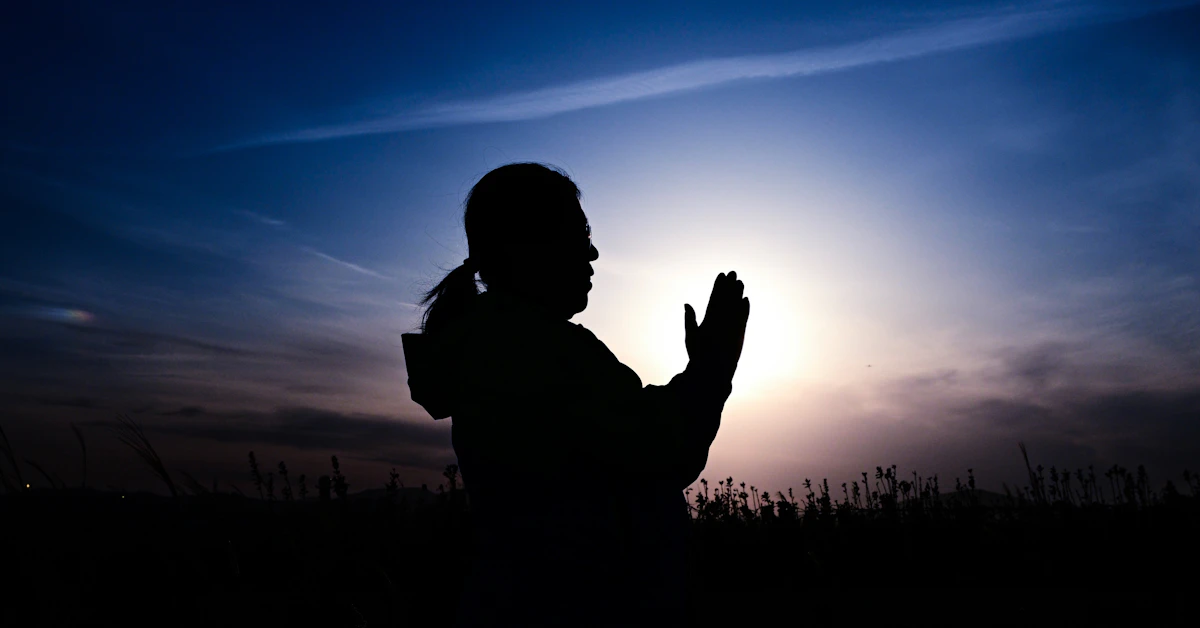
“Then Jesus asked, “What is the kingdom of God like? To what shall I compare it?”
It is like a mustard seed that a man planted in his garden. It grew and became a tree, and the birds of the air made nests in its branches.”.
Again he asked, “To what shall I compare the kingdom of God?”
It's like yeast that a woman mixed with a large amount of flour, and the whole dough was leavened.“.
Luke 13:18-21
The Importance of the Gospel of the Day
As Christians, we place a high value on God’s Word. It is through belief in the Word of God that we are saved (Rm 10:17). The Word of God then becomes our guide for life in all circumstances, whether in employment, in social life or even in the family circle. Our aspiration should be to live by the Word of God.
The excerpt of Luke 13:18-21 It's short, but it's one of those that carries an entire universe within. In just a few sentences, Jesus gives us two parables that seem as simple as a conversation in the kitchen—and, at the same time, as profound as an ocean: the parable of the mustard seed It is the parable of the yeast.
The text says:
“Then Jesus said, “What is the kingdom of God like? And to what shall I compare it?”
It is like a mustard seed, which a man took and planted in his garden; and it grew and became a tree, and the birds of the air perched in its branches.
He also said: "To what shall I compare the kingdom of God?"
It is like yeast that a woman took and mixed into about sixty pounds of flour until it was all leavened.” (Luke 13:18-21)
That's all. Four verses. But what Jesus is doing here is enormous: He is explaining How the Kingdom of God grows, how it manifests itself, how he transforms, and especially: Why you shouldn't despise small beginnings..
These two parables are both an embrace and a shock at the same time. An embrace because they give hope to those who are discouraged. A shock because they show that the Kingdom does not function like the world.
Let's walk through this passage calmly, like someone holding a seed in the palm of their hand, trying to understand the mystery that lies within.
1) Why does Jesus speak about the Kingdom of God in this way?
The first thing that catches the eye is Jesus' question:
“"What is the Kingdom of God like?"”
Jesus doesn't say, "This is the Kingdom of God, period."“
He says, "I'm going to compare."“
Because the Kingdom of God is not just an idea. It's not just a place. It's not just a doctrine. The Kingdom is... a way for God to act, a spiritual reality that pervades the world, transforms people, and changes history.
And how can we explain something so big? Jesus uses images that everyone understands: seed, garden, tree, yeast, flour.
In other words, Jesus is saying:
“"The Kingdom is spiritual, but it manifests itself in everyday life."”
He's not just speaking to philosophers. He's speaking to ordinary people: farmers, women kneading bread, weary people, suffering hearts. And that's where the message becomes beautiful: the Kingdom is not reserved for the "great." The Kingdom grows among the humble.
2) The mustard seed: the blessing of a small beginning
Jesus says that the Kingdom is like a mustard seed.
At the time, it was known as one of the smallest seeds used in agriculture. Modern botanical precision is irrelevant here—Jesus is using a popular image. the smallest that becomes great.
And that contrast is the central point.
The seed is tiny. Almost insignificant. You could lose it between your fingers. You could look at it and think, "This won't amount to anything."“
But Jesus says: someone took that seed and planted it in a garden. And it grew. And it became a tree. And the birds made nests in its branches.
This is a direct lesson for our soul: God loves to start small.
We often don't love.
We want:
-
quick results
-
visible changes
-
immediate achievements
-
constant evidence
-
large signs
But the Kingdom of God is more like a seed than a fireworks display.
This parable is a cure for the anxious heart, because it says:
You don't need to see it as great now for it to be great later.
You just need to plant it.
3) “A man took some and threw it into his garden”: the Kingdom demands action.
Note: the seed doesn't grow on its own outside of its designated place. It's planted in the garden. This involves decision and action.
The Kingdom of God grows through divine initiative, yes, but it also involves our response: planting, sowing, obeying, beginning.
How many times has God placed a "seed" in your hand, and you waited to be absolutely sure before planting it?
-
“"I'll start when I have more time."”
-
“"I will serve when I am more prepared."”
-
“"I will ask for forgiveness when I have more courage."”
-
“"I'll change when I have more strength."”
-
“"I will return to God when my life is in order."”
But a seed doesn't wait for perfection. A seed waits for soil.
If you plant, God makes it grow.
Jesus is teaching a practical spirituality: The Kingdom begins with small acts of faith..
4) The growth is real: "it grew and became a tree"“
Jesus makes it clear that the seed grows. But it doesn't grow overnight. Growth involves a process.
And here comes one of the most valuable points of this passage:
The Kingdom grows silently.
You almost never realize it's happening.
When you look at a plant every day, you don't see it grow. But a month later… it's different. A year later… it's become something else entirely. Real growth happens in secret.
And this is very important for faith, because sometimes you are in a spiritual process and you think:
“"I'm not changing."”
“"God is doing nothing."”
“"I'm stuck."”
“"My prayers aren't working."”
But, in the logic of the Kingdom, growth is rarely noisy. It is steady.
You may be growing up without realizing it.
-
growing in patience
-
growing in maturity
-
growing in faith
-
growing in discernment
-
growing in self-control
-
growing in love
A mustard seed doesn't turn into a tree in a minute. But it does.
And God also makes things turn around.
5) “The birds of the air nested in its branches”: the Kingdom is a refuge.
Now this part is beautiful: when the tree grows, it becomes a shelter for birds.
This means that the Kingdom doesn't grow just to "look pretty." It grows to welcome.
When the Kingdom of God grows in someone, that person becomes:
-
shelter for the weary
-
comfort for the wounded
-
hope for the discouraged
-
Directions for those who are lost.
-
Food for those who hunger for meaning.
The fruit of the Kingdom is never just personal. It overflows.
The seed that becomes a tree doesn't exist only for itself. It becomes a home for others.
And this is very serious: God doesn't make you grow just so you feel good. God makes you grow so that your life becomes a blessing.
6) The parable of the yeast: the power of what is hidden
After the mustard seed, Jesus brings another image:
yeast.
And here, the message gains even more depth.
Yeast is small, but it changes everything. It's invisible once it's in the dough. It mixes in, spreads, and works from the inside.
Jesus says that a woman took yeast and hid Add three measures of flour, until everything is fermented.
The verb "to hide" is key.
The Kingdom of God often begins hidden.
-
hidden in the heart
-
hidden in small decisions
-
hidden within an internal change
-
hidden in silent prayer
-
hidden in a secret regret
-
hidden in a timid new beginning
And yet, he has power.
Yeast doesn't shout. It acts.
This is a message for those who are going through an internal process and feel that no one sees it. God sees.
And the work that God does within, sooner or later appears on the outside.
7) “Until it is all fermented”: the Kingdom transforms completely.
Jesus doesn't say that yeast only changes one part. He says: “"until everything is fermented."”
The Kingdom of God is not a "moral makeover." It's not a superficial reform. It's a total transformation.
It starts small and hidden, but the goal is to reach the entire mass.
This means that God doesn't just want to change one area of your life. He wants to transform everything.
-
your way of thinking
-
your way of loving
-
your way of dealing with money
-
your way of reacting to pain
-
the way you treat people
-
your way of making decisions
-
your way of dealing with the past
-
your way of experiencing the future
The Gospel is not makeup. It is leaven.
And yeast transforms from the inside out.
8) The two parables together: the Kingdom grows and the Kingdom changes.
It's very beautiful to see how the two images complement each other:
-
O mustard seed It speaks of visible growth over time.
-
O yeast It speaks of an invisible transformation that is spreading.
The Kingdom of God is like this: it grows and it changes.
It grows in reach, influence, results, and maturity.
And it changes the essence: the mind, the heart, the desires, the values.
So, if you're expecting an "instant" change, Jesus gives you another perspective: Kingdom changes are consistent, profound, and inevitable—once the seed is planted and the leaven enters the dough.
9) What does this passage say to someone who is discouraged?
Luke 13:18-21 is almost a remedy for a weary soul.
Because there are days when we feel that:
-
our faith is small
-
our prayer is weak
-
our effort is insufficient
-
Our lives are very broken.
-
The world is in a very difficult situation.
And Jesus replies: The Kingdom is like a mustard seed.
In other words: don't despise your small faith.
Faith doesn't need to be great to begin with. It needs to be genuine.
What God does with a small, sincere faith is incredible.
And Jesus also says: The Kingdom is like hidden yeast.
In other words: if you are in an internal, invisible, silent process, keep going. God is working.
Yeast never fails. It does what it was born to do: transform.
10) What does God want to plant and nurture in you?
Now comes the more personal question:
What seed has God placed in your hand?
And what is the leaven that God wants to mix into your heart?
Perhaps it is:
-
the seed of forgiveness
-
the seed of courage
-
the seed of a new spiritual discipline
-
the seed of a calling
-
the seed of reconciliation
-
the seed of service
-
the seed of a life change
-
the seed of returning to God
And the yeast can be:
-
a new mindset
-
a new emotional pattern
-
an inner healing
-
an abandonment of vices
-
a transformation of character
-
a deeper love
God doesn't ask you to understand everything. He asks you to begin.
11) A prayer based on Luke 13:18-21
To conclude, here is a prayer inspired by this Gospel:
“Lord Jesus, I believe in your Kingdom.
Even when I only see small seeds and hidden processes, I trust.
Plant in me what comes from heaven.
Let your life ferment within me.
I surrender my haste, my anxiety, and my fear of things not working out.
I choose to remain faithful in small things.,
Because I know that your Kingdom is growing.
Make my life a welcoming tree,
and a mass transformed by your love.
May everything within me be touched by your Spirit.
Amen."”
Conclusion: Do not despise the small and do not doubt the hidden.
Luke 13:18-21 gives us a powerful insight: The Kingdom of God is already in motion..
It may start as a seed — but it grows into a tree.
It may enter like yeast — but it transforms everything.
So, if you're experiencing small beginnings, don't despise them.
If you are experiencing hidden processes, don't be discouraged.
Because in the Kingdom of God, the small one grows.
And what's hidden changes everything.
I would like to receive new Blessings?
Every day a beautiful text from the word of God for you to meditate on and talk to the Father.
Content created with Artificial Intelligence Assistance