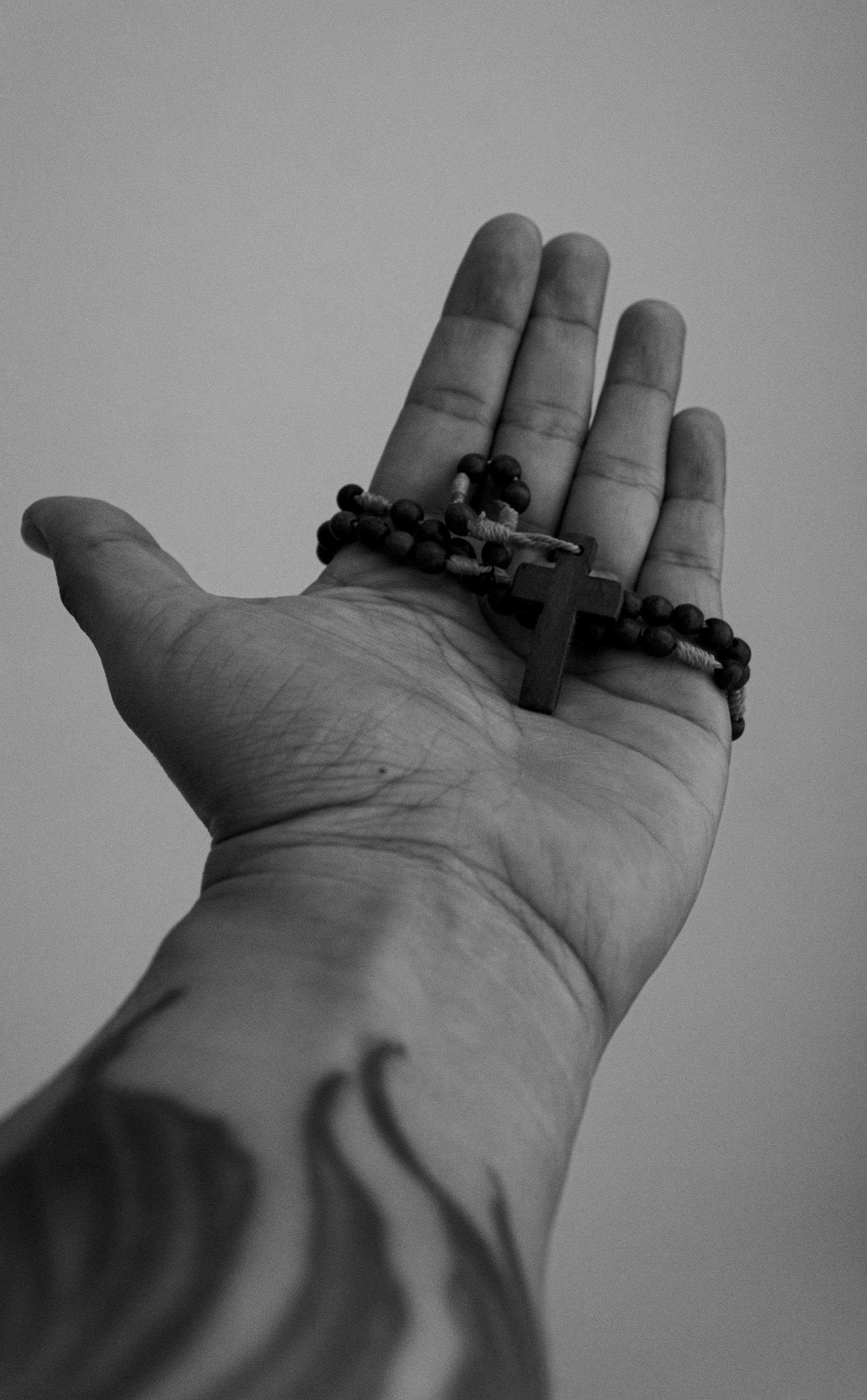
“Fear not, little flock, for it is your Father's good pleasure to give you the kingdom.
Sell what you have and give alms. Make for yourselves bags that do not age; treasure in heaven that never fails, where no thief approaches and no moth destroys.
For where your treasure is, there your heart will be also. Let your loins be girded, and your lamps burning.
And be like men who wait for their master when he returns from the wedding, so that when he comes and knocks, they can immediately open to him.
Blessed are those servants, whom, when the Lord comes, he will find watching! Truly I say to you, he will gird himself, and make them sit at table, and when he comes, he will serve them.
And if he comes in the second watch, and if he comes in the third watch, and finds them like this, blessed are those servants.
But know this: that if the father of the family had known at what hour the thief was coming, he would have watched, and would not let his house be broken into.
Therefore, be ye also aware; for the Son of Man will come at an hour you cannot imagine.
And Peter said unto him, Lord, dost thou speak this parable unto us, or also unto all men? And the Lord said:
Who then is the faithful and wise steward, whom the lord hath set over his servants, to give them their food in season?
Blessed is that servant whom his master, when he comes, finds doing this. Truly I say to you, he will set him over all his possessions.
But if that servant says in his heart, My lord delays his coming; and begin to beat the servants and maids, and to eat and drink, and to get drunk,
The master of that servant will come on a day when he does not expect him, and at an hour that he does not know, and will separate him and give him his portion with the unbelievers.
And the servant who knew his master's will, and did not prepare himself, nor do according to his will, shall be punished with many stripes;
But whoever did not know it, and did things worthy of being beaten, will be punished with a few stripes. And whoever is given much will be asked for much, and whoever has been entrusted with much will be asked for much more.“.
Luke 12:32-48
The Importance of the Gospel of the Day
As Christians, we place a high value on God’s Word. It is through belief in the Word of God that we are saved (Rm 10:17). The Word of God then becomes our guide for life in all circumstances, whether in employment, in social life or even in the family circle. Our aspiration should be to live by the Word of God.
I would like to receive new Blessings?
Luke 12:32-48 is one of those passages that seems to speak directly to the anxieties of any era—and, at the same time, stretch the heart toward a greater horizon. Jesus speaks tenderly (“little flock”), but also firmly (“be prepared”). He comforts, guides, warns, and calls to responsibility. It's as if He were saying: “Breathe. You are not alone. The Father cares. Now, live in a way that makes sense with this confidence.”
This Gospel is organized around three major movements: liberation from fear and trust in the Father; detachment and the search for the true treasure; and responsible vigilance, which translates into concrete fidelity in daily life. All of this is woven together by a central idea: the Kingdom of God is not a beautiful theory—it is a way of living, here and now, with the heart in the right place.
“"Do not be afraid, little flock": the cure for anxiety.
The passage begins with a phrase that is a remedy: “Do not be afraid, little flock, for your Father has been pleased to give you the kingdom.” Fear appears as the shadow that accompanies human life: fear of tomorrow, of losing, of lacking, of being insufficient, of not being able to cope. Jesus does not ignore this. He does not say “do not be afraid” as someone who minimizes the pain. He speaks as someone who gives a concrete reason for courage: the Father is pleased to give.
This image of the “little flock” is powerful. A small flock is vulnerable, easily threatened, dependent on care. Jesus chooses precisely this image to say: “You are small in the eyes of the world, but you are precious to God.” And the foundation of this security is not in the strength of the flock, but in the goodness of the Shepherd and the Father. The Kingdom is a gift, not a prize; grace, not a wage.
Here it's worth pausing: how often do we live as if the world is always about to collapse, as if everything depended solely on our control? Luke 12, in other verses before, already criticizes the obsession with accumulating and the attachment that stems from fear. When Jesus says that the Father "is pleased" to give the Kingdom, He is shifting the center of gravity of life: from self-protection to trust.
Trusting, however, is not about sitting idly by. Trusting is about living in a way that is consistent with the certainty that God is Father. It's about leaving "survival" mode and entering "childhood" mode. Children are not defined by the panic of losing everything; children are defined by the relationship with their caregiver. This changes the rhythm, changes the priorities, even changes the way of working and resting.
“"Sell your possessions and give alms": detachment that opens space for the Kingdom.
Soon after, Jesus says something that might be frightening: “Sell your possessions and give to the poor. Provide purses for yourselves that will not wear out, an unfailing treasure in heaven.” This is not a demonization of material things, as if everything concrete were impure. It is a re-education of desire and attachment. Jesus touches on a sensitive point: we transform possessions into walls, when they should be bridges.
The logic of the Gospel is clear: when the heart clings to what is fleeting, it lives in insecurity. The more I depend on what I can lose, the more I am a prisoner of fear. That is why Jesus proposes an economy of the Kingdom: sharing, relieving, letting go. Almsgiving, here, is not just a coin given out of obligation; it is a gesture that affirms: “I am not the absolute owner; I am a steward. I do not exist to accumulate; I exist to love.”
And then comes the phrase that sums it all up: “Where your treasure is, there your heart will be also.” The heart always resides somewhere. It always clings to something: status, money, approval, control, pleasure, career, security, image. Jesus isn't saying “don't love anything”; He's saying “love what doesn't enslave you.” Treasure isn't just what you keep in a safe. It's what guides your decisions when no one is watching.
A truly honest way to read this verse is to ask: “What do I protect tooth and nail?” “What steals my peace?” “What do I refuse to lose?” “What do I use to feel like someone?” The answers reveal where the treasure lies. And Jesus, with gentleness and demandingness, invites us to relocate our hearts: from accumulation to trust, from ego to the Kingdom, from fear to generosity.
“"Gird up your loins and light your lamps": the spirituality of readiness.
From there, the text changes tone and enters the language of vigilance: “Let your loins be girded and your lamps burning.” It is an ancient image: people ready to walk, as if waiting for the time to depart; and people with light, so as not to get lost in the night. Jesus speaks of an active waiting. It is not a passive waiting, of those who remain still; it is a waiting that organizes life.
He compares the disciples to servants waiting for their master to return from a wedding feast. The detail is beautiful: when the master arrives and finds the servants vigilant, He Himself sits down to serve them at the table. This is scandalous and revealing: in the Kingdom, God is not a cruel master, but a Lord who honors faithfulness, who surprises with generosity. Vigilance is not fear of punishment; it is a response of love to a greater love.
But Jesus also uses another image: the thief who can arrive at any time. Here, He doesn't mean that God is a thief. He means that life has an element of unpredictability—and that we often postpone what is essential. How many times does conversion become "someday"? How many times does forgiveness become "later"? How many times does time with God become "when I have more peace"? The promptness of the Gospel is an antidote to spiritual procrastination.
Vigilance, therefore, is not religious paranoia. It is lucidity. It is living awake. It is remembering that life is not infinite and that love should not be postponed. It is keeping the lamp lit: prayer, conscience, charity, truth, rectitude of intention. Not to gain points, but to avoid sleeping while the heart hardens.
The faithful servant and the unfaithful servant: responsibility in the face of time and gifts.
In the second part, Peter asks: “Lord, are you telling this parable to us or to everyone?” And Jesus responds with another parable—the faithful and prudent steward. This servant has a function: to give food to the others at the right time. Faithfulness is measured in concrete terms: feeding, caring, serving, sustaining. It is very interesting that Jesus does not define faithfulness as “making beautiful speeches,” but as “giving food at the right time.”.
This points to something essential: the Christian life is not just an interior experience. It becomes visible in responsibility. Whoever receives a mission in the Kingdom also receives a call to service. And here a weighty but necessary theme appears: power and authority. The steward has power over the household. And Jesus warns: if he uses this power to benefit himself, to oppress, to abuse, to live in luxury while others suffer, he becomes unfaithful.
The Gospel describes a servant who thinks, “My master is taking a long time to return,” and then begins to beat the servants, to eat, drink, and get drunk. This is a portrait of someone who loses their sense of accountability. When someone thinks that no one is watching, that there will be no consequences, that “I can do it my way,” ethics dissolve. The Lord's delay, in the language of the parable, tests the heart: do I serve because I love and believe, or do I serve only as long as it suits me?
This section is especially directed to those who lead: in the Church, in the family, at work, in society. Christian leadership is not a privilege; it is a responsibility. It is not a throne; it is a basin and a towel. And the uncomfortable question the text poses is: have I been feeding others "at the right time"? Have I helped life flourish around me? Or have I used positions, talents, and resources to inflate my ego and secure advantages?
“"To whom much has been given, much will be required": justice, conscience, and maturity.
The text ends with a sentence that resonates strongly: “To whom much is given, much will be required; and to whom much has been entrusted, even more will be demanded.” This is not a crushing threat. It is a truth about moral responsibility. Gifts are not ornaments; they are tasks. Time, health, intelligence, opportunities, influence, faith, knowledge—all of these increase the capacity to do good, and therefore also increase responsibility.
Jesus also distinguishes degrees of guilt: the servant who knows the master's will and does not prepare himself will be held more accountable than the one who does not know. There is a principle of conscience here: God is not unjust. He takes into account the light that each one has received. But, at the same time, this principle prevents the convenient excuse of those who know much and do little.
This verse speaks to our tendency to be overly spiritual and under-act. It's easy to say "Lord, Lord"; it's more difficult to manage justly, to be faithful in small things, to break destructive habits, to reorder priorities, to ask for forgiveness, to care for those who depend on us, to restore dignity with concrete actions.
Spiritual maturity is not just emotion in prayer; it's consistency in life. It's using gifts to nourish, not to dominate. It's transforming fear into trust, and trust into generosity.
How to live Luke 12:32-48 today: three practical attitudes
- Train your confidence daily.
Trust isn't born by decree. It's born through repetition: remembering that the Father "is pleased to give the Kingdom." This can become a simple prayer: "Father, I don't want to live guided by fear. Show me what really matters."“ - Review where the treasure is.
Take an honest look at myself: what has occupied my heart? What has guided my choices? Perhaps the Gospel calls for a concrete gesture of detachment: a donation, a simplification, a commitment to sharing, a decision not to live to accumulate. - Keep the light on consistently in the small
Vigilance is a well-lived daily life: fulfilling what is right, serving with joy, not abusing power, giving "food" to those in need — time, attention, care, listening, bread, words, presence.
Conclusion: The Kingdom as a gift and a mission.
Luke 12:32-48 is an invitation to a life with less panic and more purpose. Jesus begins with affection: “Do not be afraid.” And ends with responsibility: “Much will be asked of you.” In between, He outlines the spirituality of the Kingdom: trusting in the Father, detaching oneself from superfluity, living vigilantly, serving faithfully.
Ultimately, this Gospel says: God doesn't want to see you enslaved by fear. He wants your heart free to love. And true freedom doesn't come from having everything under control, but from knowing to whom you belong—and what you live for.
Every day a beautiful text from the word of God for you to meditate on and talk to the Father.
Content created with Artificial Intelligence Assistance