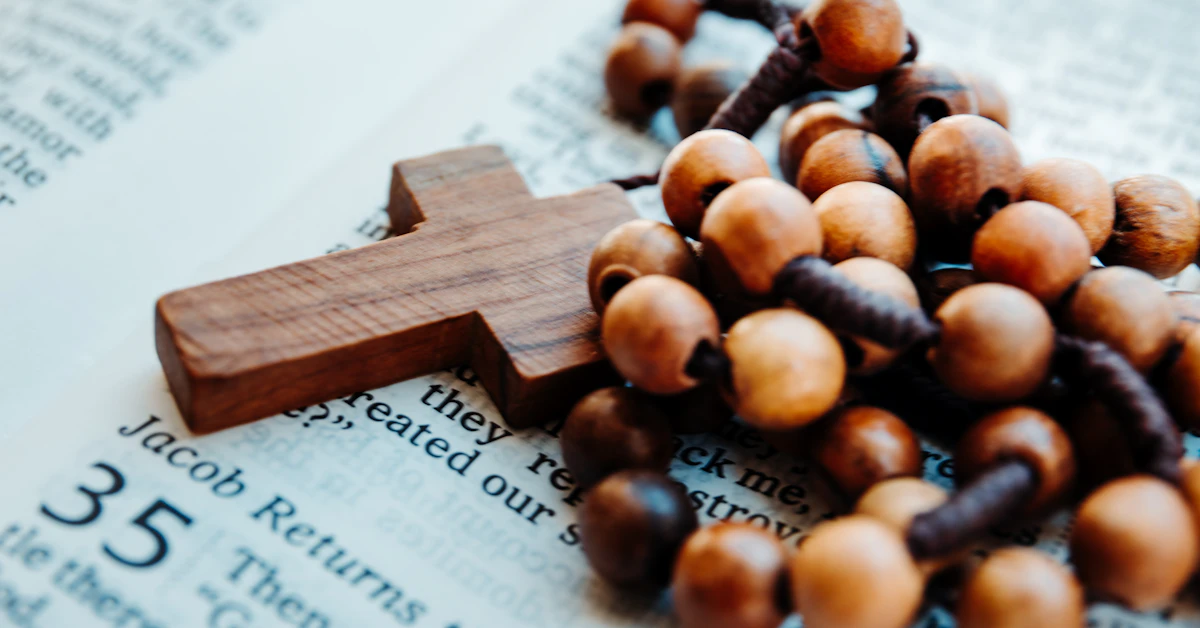
The section of Mc 8,14-21 in the Gospel of Mark shows an important scene. She talks about memory, mission and understanding the spiritual. Jesus, the disciples and a boat are central.
An article by Egídio Serpa in Diário do Nordeste reports that the disciples were worried about a lack of bread. They only had one on the boat. But Jesus speaks of the danger of Pharisees’ and Herod’s thinking. He asks: “Why are you arguing over your lack of bread?… Do you have a hard heart
The story mentions the multiplication of loaves that fed many people. Jesus wanted to show more than a miracle. He wanted to teach about the Bread of Life that comes from God and sustains faith.
Materials such as those on the Gospel Channel help to understand these ideas. The barge is seen as a space to fulfill the mission. It is an invitation to see the signs of God and trust in Him. And to always remember what Jesus did.
Let us explore how the thinking of the Pharisees and Herod can be bad for faith. And how remembering the miracles of bread helps you to trust God more. May this reading make us remember the signs of Jesus and end with a blessing from Father, Son and Holy Spirit.
Historical and literary context of Mc 8,14-21
This text is about Jesus’ action and how his followers didn’t understand everything. It is important to look at the author of Mark. He organized memories to teach important lessons.
Author and likely date of Mark’s Gospel
John Mark is designated as the author of this Gospel, having connections with Peter. Experts believe it was written between 65 and 75 AD.AND C. This period had persecutions and a great need to affirm the Christian faith. Understanding the date helps us to see why certain things were written as they were.
Disciples’ situation and mission in the context of the episode
The disciples were on a boat mission after witnessing Jesus’ miracles. The story shows how they played an important role, but felt insecure and forgot about the miracles. Marcos wants to teach about trust and attention during the mission.
Relation to the multiplication reports
This text reminds us twice of Jesus’ multiplying loaves for five and four thousand. These events are used to teach a lesson. They show how the disciples did not see what was clear. The story of the loaves wants to teach about the difference between seeing many miracles and really understanding what they mean.
Reading of the text:,14-21
The text of Mc 8,14-21 shows an intense conversation between Jesus and his followers. In it, there is concern over the lack of bread. Jesus takes the opportunity to remind his disciples of past miracles.
Transcription and recommended Bible version
The best way to read this passage is by using a liturgical version of Brazil, such as the Jerusalem Bible, Ave-Maria Bible or the CNBB Pastoral Translation. The Bible passage from Mc 8,14-21 summarizes that the disciples had only one loaf. Jesus warns them about the danger of “leaven”. They think Jesus is talking about bread, but he asks questions that make them remember the times when he multiplied the loaves, citing the twelve and the seven baskets.
Key words and important expressions in danger
Some important words are “leaven of the Pharisees”, “the yeast of Herod” and “hardened heart”. It also has expressions like “having eyes”… and having ears…And you do not understand. These words and expressions help us to understand the tension in a text.
Narrative elements: dialogue, questions and memories
The dialogue between Jesus and his disciples is central to the story. Jesus uses questions to make his disciples think.
These are important questions. They do not want new information but to show where the disciples are wrong in their interpretation.
Remembering the multiplication of the loaves is crucial. It highlights how past miracles teach about the faith needed in the present.
Meaning of “the leaven of the Pharisees” and that of Herod
Mark’s text is full of everyday imagery. They show spiritual and social hazards. The leaven changes the dough from inside out, not being a mere detail.
This metaphor allows us to think about falsehood and ambition. It touches the point of human calculation within faith.
Theological and symbolic interpretations
The leaven of the Pharisees is linked to outward worship that does not change the heart. This exposes falsehood and wickedness among those claiming to be close to God.
Catholic and Evangelical authors see leaven as a symbol of contamination of the faith. They remember that rituals without love and justice are meaningless.
Difference between formal religious concerns and political threats
Herod’s yeast has a different warning. He talks about outside influence and the fear that political power causes.
Understanding this helps us to see that problems go beyond religious ones. Political fear can affect mission when it replaces faith in Jesus.
Practical applications: how to identify ‘yeast’ today
In our coexistence, certain signs indicate contamination. Like fixation on rituals without charity and the valorization of material. These are signs of the Pharisees’ leaven in the church.
- Observe discourses that value the religious exterior, forgetting justice.
- Seeing fear or accommodation in the face of pressures indicates Herod’s leaven.
- Decisions based on interests, not values, show political influence.
Recognizing these leavenings requires humility and remembrance of God’s acts. Communities that remember mercy and engage in dialogue can change empty practices.
The Contrast Between Material Concern and Spiritual Faith
The episode in Mark shows a clash between what is seen and what isn’t. The disciples witness incredible miracles. But they think only of their immediate needs. This reveals a choice: trust in God or fear scarcity.
The message of the church makes us see this as an invitation to change what we value. In sermons and Bible studies, the multiplication of loaves is recalled. It shows that God cares about us. But it also teaches us to live by faith.
How the Disciples Demonstrate Insecurity Despite Miracles
Aegidius Serpa and Helena Colares Serp say that the disciples remain insecure even after seeing miracles. They forget miracles quickly when fear strikes.
Insecurity shows up in your quick questions. And the difficulty of remembering what God has already done. Shepherds use this to teach always remembering God’s deeds.
The Material “Bread” Versus the Bread of Life (the crystalline dimension)
Religious people today say that the common bread and the Bread of Life satisfy different hungers: those of body and soul. Jesus is described as the true food for a full life.
By comparing ordinary bread with the Bread of Life, we see that true healing goes beyond the physical. History makes us see Jesus as the source of all meaning and hope.
Pastoral Examples to Teach Trust in Godly Providence
Simple acts build community trust. It is faith-strengthening to recall accounts of how God has sustained people in difficult times.
- Celebrating stories of how God multiplied and shared food at Masses and gatherings.
- Create groups to write about times when God has provided, using letters or scrapbooks.
- Encourage food sharing as a way of learning to care for one another.
The church’s message links remembrance, ceremony and solidarity action. So we learn to trade fear for confidence. And trading our material anxiety for a service to others.
Pastoral dimension: Jesus’ questions and the training of disciples
Jesus takes a practical approach in Mark. He asks questions to stimulate memory and promote inner change. Such teaching helps the community to keep its faith active.
The pedagogical function of rhetorical questions
Jesus’ questions serve as teaching tools. They point out errors of attention without embarrassing the respondent. This method is useful in church activities such as meetings and retreats.
In sermons, direct questions stimulate thought. Using examples from community life helps in dialogue and understanding.
Hardening of Heart and the Call to Inner Conversion
The text warns of the danger of having a hardened heart. Religious leaders should realize this and suggest ways to improve. Changing from within involves self-examination and listening carefully.
Using retreats and moments of silence helps to soften the heart. These practices promote real change by mixing understanding with challenge.
Strategies to Teach the Memory of God’s Signs in the Community
- Telling testimonies: Encourage accounts of providence and miracles in celebrations and small groups.
- Revisiting biblical narratives: using the multiplication of loaves as a symbol in catechesis and formation.
- Digital resources: leveraging homily channels and podcasts to reinforce collective memories.
- Reflective exercises: applying Jesus’ questions in dynamics that promote listening and sharing.
- Ritual memory: creating liturgical moments that celebrate signs experienced by the community.
A pedagogy focused on the memory of God’s signs helps disciples to grow. Facing hardened hearts, the community learns to see God in everyday life.
Community and church implications of the text
The text of Mc 8,14-21 makes us think about the vision of ecclesial community. We need practices to keep the collective memory alive. The important thing is not to turn miracles into mere spectacle or meaningless words.
A close-knit community strengthens formation, linking miracles to Scripture and tradition. This helps to avoid superficial interpretations that we often see in the media. And it helps you respond wisely to life’s situations.
Following are suggestions to improve our pastoral and community outreach.
-
Recording and memory: At our meetings, we should remember and celebrate what God does for us. This can be done by witnessing in prayer and preaching.
-
The Living Liturgy: We need to revise our practices in the church so that they connect more with people’s lives. Thus, the Eucharist will become a place where we really feel and live the Bread of Life.
-
Catechism updated: We need new materials and methods for the faithful to understand miracles without getting carried away by media sensationalism.
-
Ethical training: It is essential to have programs that help us live a true faith, avoiding Pharisaism and valuing charity.
-
Shared Shepherding: to combine religious celebrations with real acts of solidarity shows how our faith is alive and active.
How the Community Interpret Miracles and Maintain Faith
Understanding miracles is a challenge that requires good catechesis. Using texts, testimonials and discussions helps the community see what is really a sign from God.
Catechetical resources should be practical and related to our context. Thus all can see the link between faith, church mission and social responsibility.
Risks of Hypocrisy and Outward Worship
The danger of Pharisaism is ever present: a faith that shows on the outside but does not change the heart. We must avoid practices that are only appearances.
Ongoing education focused on spiritual well-being and ethics helps to connect our faith with daily life. This keeps us away from false promises and empty ritualism.
Liturgical and catechetical practices that strengthen faith
Changes in liturgical practices can bring us closer to God and preserve the memory of his signs. Celebrating simply and with active participation prevents faith from becoming a spectacle.
Catechesis should combine church teachings with practical acts of helping others. Having up-to-date courses, study groups and content helps to see God’s signs without oversimplifications.
In short, the community grows in faith when liturgy, catechesis and ethics go together. This protects us from self-righteous attitudes and leads to a deeper understanding of miracles.
Personal Applications and Questions for Reflection
This text invites us to reflect in practice. He shows how the personal reflections in Mc 8,14-21 can change the reading into something more alive. It proposes self-evaluation, memory and practices to keep faith active every day.
Self-assessment: Where am I putting my confidence on a daily basis?
- Ask direct questions inspired by Helena Colares Serpa. Do you understand Jesus’ teachings from a spiritual standpoint? Do you fear running out of necessities in the future?
- Think about your priorities: What consumes more of your time and emotions, material possessions or prayer? Look for signs of insecurity that influence your choices every day.
- Write short answers for a week to find out how your confidence is doing in everyday life.
Sign Memory: How to Remember God’s Actions in Your Life
- Take brief moments to recall your personal blessings and miracles. This practice, recommended by digital preachers, helps to strengthen faith.
- Write down three situations in which you have felt God’s providence during the past six months. Explain how such experiences have affected your view of God’s care for you.
- Talk about these memories in a group conversation to see how you rely on God in your daily life.
Spiritual Exercises to Open Your Eyes and Listen to Your Heart
- A gratitude journal: Write every day about something you are grateful for. Refer to these notes when in doubt.
- Quick self-examination: Reflect on whether you place more value on material or spiritual things. Finish by deciding on something concrete for that day.
- Practice generosity by giving of your time, skills or food. See how that changes your confidence in everyday life.
- Meditating on Jesus as the Bread of Life and consciously experiencing the Eucharist helps us to focus inwardly and remember God’s deeds.
These suggestions blend theory with action. They are a good start to a journey that values remembering God’s deeds, builds daily trust and brings spirituality into the day.
Conclusion
The conclusion of Mc 8,14-21 brings a clear message: despite witnessing miracles, the disciples still doubted. Jesus warns them of the dangers “Fresh or chilled” It hardens the hearts and obscures faith. He calls us to keep our faith alive, with eyes wide open for the lessons of each day.
In practical life, homilies and programs such as those in the New Song inspire our reflection and strengthen our community. They help us to see Jesus as the Bread of Life. Thus we renew our faith in times of prayer together.
In a very direct way, we are invited to remember God’s deeds and stand firm with Christ. This is a time to show our faith through acts of hope and prayer. Following this course means trusting in the Father, Son and Holy Spirit at every moment of life.
Content created with the assistance of artificial intelligence