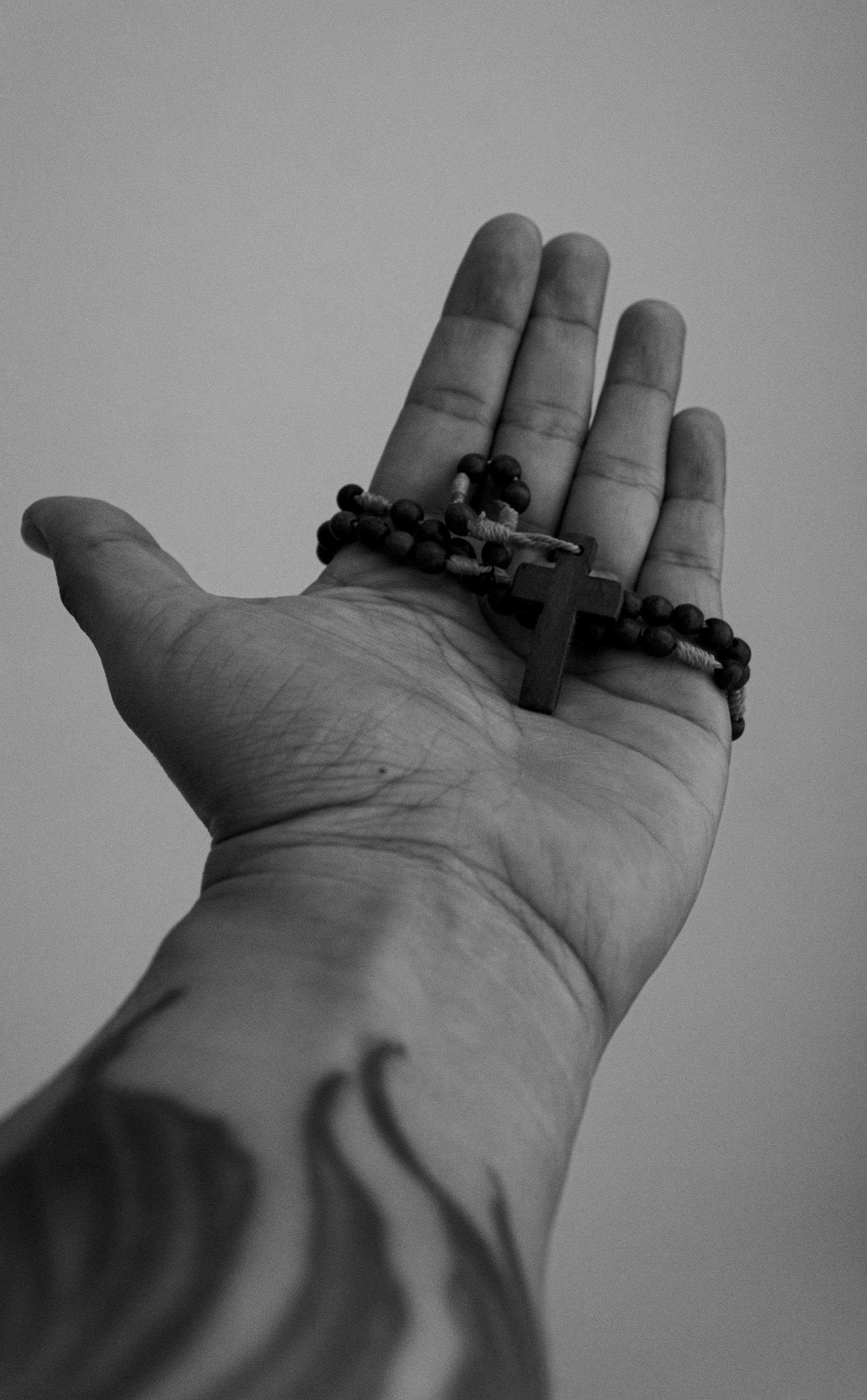
Gospel (Joe 8,1-11): Jesus went to the Mount of Olives. Early in the morning he returned to the temple, and all the people gathered around him. Sitting down, he began to teach them.
The scribes and the Pharisees brought a woman caught in adultery. Placing her in the middle, they said to Jesus, «Teacher, this woman was caught in the act of adultery. In the Law, Moses commanded us to stone such women. Now what do you say?» They were asking this to test him, so that they might have grounds to accuse him. But Jesus bent down and wrote on the ground with his finger. When they persisted in asking him, he stood up and said to them, «Let him who is without sin among you be the first to throw a stone at her.» And again he bent down and wrote on the ground.
Hearing this, they went out one by one, beginning with the older ones. Jesus was left alone with the woman standing in the middle. He stood up and said to her, «Woman, where are they? Has no one condemned you?» She said, «No one, Lord.» Then Jesus said to her, «Neither do I condemn you. Go, and from now on do not sin anymore.».
This text is about John 8,Verses 1-11, where Jesus forgives a woman accused of adultery, invite us to understand forgiveness. Let's prepare the way for a more in-depth analysis of this passage.
The Gospel Channel serves as a reference for us. There, we find content about the Gospel. We analyze the narrative as something special and full of meaning. The Gospels show the actions of Jesus with great theological force.
The scene depicts the human condition and how God responds with transformation. Discussing Jesus' forgiveness in John helps us connect the Bible to current issues, such as violence and conflict in Rio de Janeiro, highlighting the moral relevance of the narrative.
The main message here is clear: John 8,Verses 1-11 show the confrontation between God's love and condemnation. And it calls for conversion. In the following sections, we will elaborate on this message and apply it to community and social life.
Historical and literary context of the episode in John 8:1-11
The importance of the episode of John 8,Verses 1-11 grow in importance when we understand their place in the Gospel of John. This book presents Jesus as the Messiah and Son of God through signs and discourses. Jesus' miracles and teachings are linked to his main statements of identity.
This helps to understand the theme of forgiveness in this passage. It reflects the offer of life present throughout the gospel.
The Gospel of John speaks of light, living water, and being a child of God. These ideas create a context that justifies Jesus' actions in this story. Separating John 8:1-11 from the rest diminishes our understanding of the grace shown.
The episode takes place shortly after the Feast of Tabernacles, described in John chapter 7. During the event, Jesus speaks about living water, causing division among the people. This moment sets the stage for the woman's introduction to Jesus.
The Feast of Tabernacles makes the episode even more dramatic. In this festive context, Jesus' encounter with the religious leaders reveals social and religious tensions. The way John tells the story increases the impact of Jesus' actions before the crowd.
There is debate about the origin and place of the text known as Pericope Adulterae in the manuscripts. It has unique characteristics that do not completely fit with John's style. Despite this, its theological and pastoral significance is undeniable in the history of the church.
It is important to analyze the manuscripts and history of the Pericope Adulterae text. The way it was received by early Christians and used in the liturgy influenced its preservation. Studying these aspects helps us appreciate the message of forgiveness it conveys.
Detailed exegesis of John 8:1-11
This text discusses a careful analysis of the story of the adulterous woman in the Bible. It shows how gestures and silences help us understand the message of John 8. The story invites us to look closely at actions and words.
Reading verse by verse
Early on, in John 8:1-2, Jesus is shown teaching in the temple in the morning. This setting begins to prepare the ground for a story about confrontation and kindness. Then, in John 8:3-6, the religious leaders bring a woman accused of adultery into the scene. They want to test Jesus, using the law to corner him.
Next, in John 8:6b-8, Jesus responds in a unique way. He writes on the ground and then makes a powerful statement, challenging his accusers to look at their own errors. This moment blends teaching with care, breaking the usual dynamic of judgment.
In John 8:9-11, the accusers leave one by one. The woman only speaks at the end, receiving life advice from Jesus: “Go and sin no more.”.
Characters in the scene: Jesus, the woman, and the accusers.
Jesus is presented as a teacher who changes the role of a judge. He uses his authority to escape the trap but also to restore. This strategy reveals both truth and hypocrisy.
The woman is portrayed as someone publicly humiliated. The text describes her with a term that indicates adultery, pointing to her marital status. Her voice is only heard at the end, showing how it was used to attack her dignity.
The accusers, teachers of the law and Pharisees, want to use the law for their own purposes. The story points to an unfair selection process and a system that attacks women. The tension lies between religious power and compassion.
Relationship with Mosaic Law and Deuteronomy 22
The reference to Deuteronomy 22 speaks of the legal basis for stoning in certain cases. The ancient text details how testimonies and the trial process should be conducted.
In John's story, Jesus questions how the law is applied. He asks people to examine themselves before punishing others. This creates a discussion between following the law to the letter and acting with mercy.
The story in John 8, about the adulterous woman, shows how it is preferable to restore life than to punish in public. It suggests that communities should think about justice, shame, and support in a different way.
Central themes: forgiveness, mercy, and judgment.
This story highlights the struggle between law, compassion, and responsibility. It questions how society views forgiveness and justice, without simplifying their moral aspects.
Jesus' response: "Whoever among you is without sin..."“
Jesus' words change who can judge, showing our own fallibility. "Let any one of you who is without sin be put to shame." This causes the accusers to withdraw, beginning with the oldest.
This act shows what Jesus came to do: not to condemn, but to save. It's as it says in John 3:17. Forgiveness is presented as a chance to change, without ignoring the need for this transformation.
The symbolic act of writing on the ground.
By writing on the ground, Jesus shifts the focus of the discussion to the conscience of those involved. This gesture can be seen in many ways: a silence that teaches, an invitation to think, a sign of authority different from that of the scribes.
By not looking directly at the woman, Jesus draws attention to her accusers. This blocks any talk of punishment and highlights mercy as something that goes beyond the courtroom, reaching the heart.
Forgiveness that requires repentance: "Go and sin no more."“
Jesus expresses that he does not come to condemn, but to encourage genuine change. Forgiveness comes on the condition of transformation, without ignoring sin or erasing it without real change.
This message links forgiveness to moral responsibility. It balances mercy with the need to live holy lives. It shows that judgment and grace can coexist creatively.
- Personal self-examination in the face of sin;
- Forgiveness as restoration, not as a license to err;
- Jesus' authority was exercised through compassion, not legalistic rhetoric.
Pastoral and social applications for contemporary Brazil.
The story in John 8 teaches us to blend compassion with responsibility. In Brazil, churches should create support programs. They should help those who are suffering, without turning a blind eye to wrongdoing.
For forgiveness to truly happen, Christian communities need clear plans. They need to offer counseling, support for family reunification, and courses for spiritual growth. In this way, forgiveness becomes real with consistent support and well-defined rules.
We must fight against the misuse of women's images in public and religious places. The story in John 8 shows how female honor and bodies are manipulated politically. We need to combat sexism and support ministries that protect victims.
Leaders and communities must teach about equality and respect. Promoting equality means providing training, creating safety policies, and forging supportive partnerships. The important thing is to care for life and empower women.
The absence of men in this story makes us think about everyone's responsibility. To improve the situation, we need to understand the various roles in conflicts and seek solutions that involve everyone.
Cases of violence show that punishment alone does not solve the problem. A sensitive approach to cities seeks to address the root causes of the problem: education, employment, and social inclusion.
The debate between mercy and justice needs balance. Church practices should support the law when necessary, but also see the opportunity to change lives. Mercy and law work together when there are real options for a fresh start.
- To offer rehabilitation programs and emotional support for offenders and victims.
- Implement clear policies for welcoming and protecting people in churches.
- To promote theological training that confronts sexism and strengthens gender justice.
- To coordinate social actions that reduce violence in Rio de Janeiro through prevention and inclusion.
This agenda makes the church a social force that balances mercy and justice. Its mission is to change perspectives, institutions, and public policies. Thus, forgiveness in Christian communities becomes a source of justice and transformation.
Conclusion
John 8:1-11 shows us human nature marked by error. And the answer to this? The love of Jesus. He teaches us about the mercy that has the power to change lives. Reading these verses, we see the tense moment of confrontation and the grace-filled silence that comes before the woman is restored.
This passage reminds us that forgiveness doesn't eliminate the need for change. But it gives hope and a chance to start over.
The story in John 8:1-11 highlights that mercy is more important than condemnation. It challenges us to rethink how we treat others, especially women. And it makes us question the justice system. Ultimately, this narrative teaches about the ethics of giving a second chance.
Today in Brazil, this story calls us to act with justice and mercy. We need to reconsider our attitudes that cause pain and create ways to help that bring dignity. This means embracing the words of Jesus, looking at ourselves, and being promoters of forgiveness and social improvement.
May Jesus' story of forgiveness inspire us to transformative practices. It's not enough to simply receive grace; we must act. "Go and sin no more" should be our motto, as we strive for a better life. Let us dedicate ourselves to actions and relationships that bring hope and a new beginning for everyone.
Content created with Artificial Intelligence Assistance