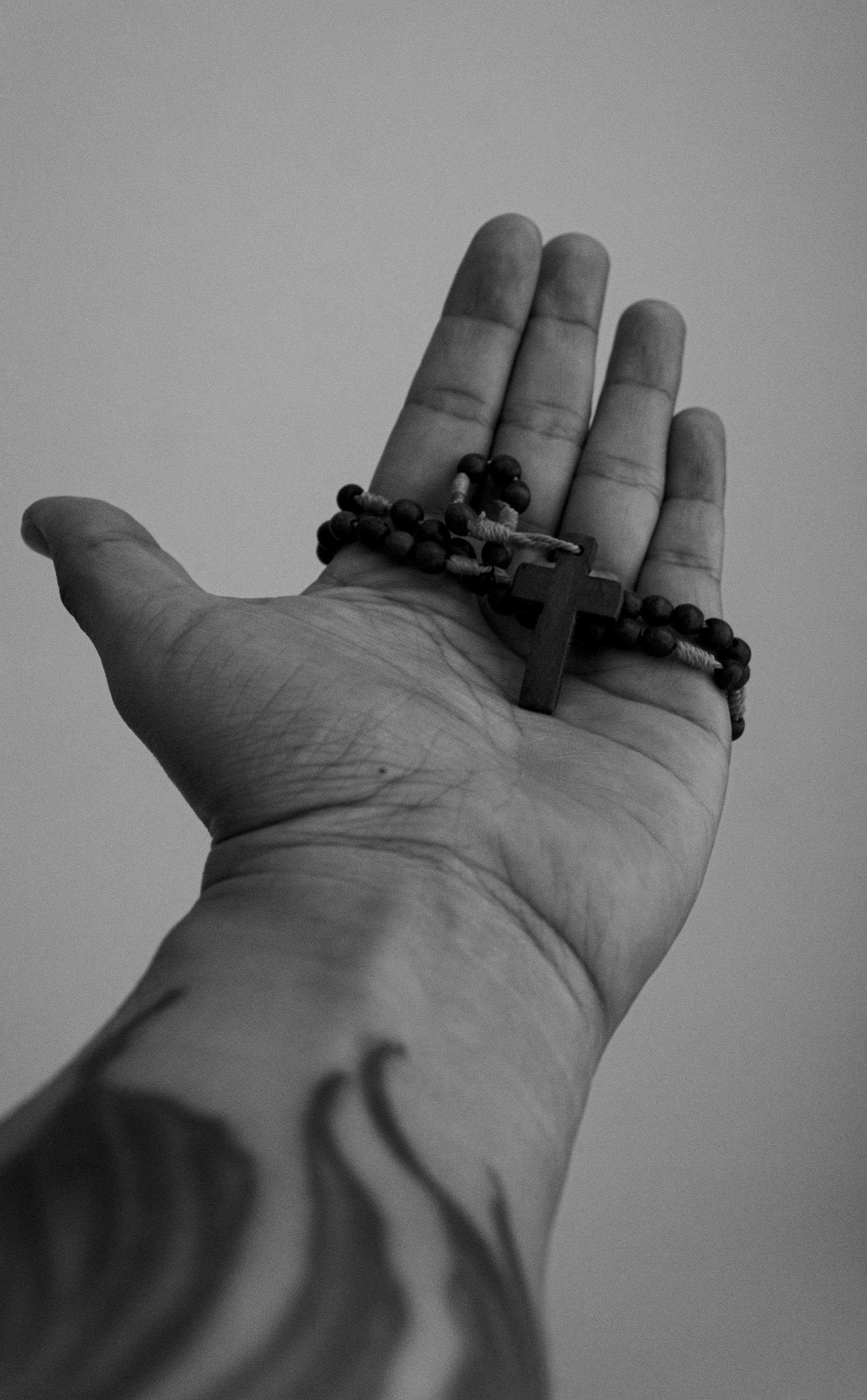
We invite you to explore the profound and theological narrative of Passion of Jesus. This moment is one of the central pillars of the Christian faith and reveals mysteries about divine love.
When we analyze the text of John 18:1–19:42, In this text, we discover a unique perspective on the suffering and glorification of the Messiah. The sacred author uses language rich in symbolism to guide us through each step of this sacred journey.
O Gospel of John It not only narrates historical facts, but invites the reader to intense spiritual reflection. Our goal is to offer an accessible and enriching read for all who seek a better understanding of this transformative event.
Key Learnings
- The Johannine narrative focuses on Jesus' sovereignty during suffering.
- The text highlights the divine glory present in the cross.
- Symbolic richness helps to deepen personal faith.
- Understanding this account is essential for Christian spirituality.
- The reading offers a unique perspective on the delivery of the Messiah.
The Theological Context of John 18:1–19:42
Understanding the narrative of passion requires a careful look at the theological context of John 18:1–19:42. This passage is not merely an account of suffering, but a profound revelation of Jesus' identity. Johannine theology It invites us to see beyond historical facts, revealing the divine purpose behind every gesture of the Master.
Johannine vision of glory on the cross
For the evangelist, the cross does not represent a humiliating defeat or a tragic end. On the contrary, it is presented as the supreme moment of exaltation and glory of Jesus. It is in total surrender that the Son of God fully manifests his love for the world.
In contemplating the cross, the reader is challenged to change their perspective on suffering. The sacrifice becomes a throne, where the kingship of Christ is finally recognized. This vision transforms pain into a act of spiritual victory that echoes throughout eternity.
The contrast between light and darkness in Gethsemane
The scenario of Gethsemane It serves as the initial stage for this sacred drama. There, the contrast between divine light and the darkness of betrayal becomes evident. Jesus enters the garden knowing exactly what awaits him, maintaining his faithfulness to the Father.
The darkness surrounding the moment of the arrest symbolizes human resistance to the truth. However, the light of Jesus remains unwavering, guiding his disciples even amidst the confusion. This spiritual struggle prepares the reader's heart to understand the... depth of redemptive sacrifice which unfolds on the following pages.
The Arrest of Jesus and the Confrontation with Authority
When the soldiers arrived at Gethsemane, They did not find a victim, but the sovereign of history. Jesus' arrest It was not an act of forced capture, but a moment of voluntary surrender that marks the beginning of... Passion of Jesus. This event reveals the profound clash between worldly power and the spiritual authority that emanates from Christ.
Jesus' sovereignty over the soldiers
When asked whom they were looking for, the soldiers retreated and fell to the ground upon hearing Jesus' answer. This gesture demonstrates that... religious authority At the time, he had no real power over him. Jesus remains the absolute protagonist, directing every detail of his own sacrifice.
“"I am. If it is me you seek, let these men go."”
The scene inverts the logic of power, where the prisoner dictates the conditions to his captors. divine sovereignty Jesus' light shines brightly, even amidst the torches and weapons of the Roman soldiers and temple guards.
The episode of Malchus' ear and obedience to the Father.
The moment when Peter reacts violently by cutting off Malchus' ear highlights the tension in the atmosphere. Jesus, however, intervenes immediately to restore order and heal the wounded man, reaffirming his mission of peace. This act is a clear testament to his... unwavering obedience to the Father's plan.
A Jesus' arrest It serves as a reminder that the sacrifice was not an accident, but a conscious choice. While the religious authority While some sought to silence the truth, Christ chose the path of total surrender. Passion of Jesus, It therefore begins with a gesture of mercy that transcends human violence.
The Interrogation of Jesus before Annas and Caiaphas
The Joanine narrative places face to face with religious authority and the absolute truth of Christ. After the arrest in Gethsemane, Jesus is led to the palaces of the Jewish leaders for a trial that seeks to legitimize his condemnation. This moment marks the beginning of a night of extreme trials.
Peter's denial in parallel with Jesus' testimony.
While Jesus stands firm before his accusers, the external scene reveals human frailty. Peter's denial This occurs simultaneously with the interrogation, creating a dramatic contrast between the Master's loyalty and the disciple's fear.
Peter, who had previously pledged absolute loyalty, succumbs to the pressure of the hostile environment. He hides in the shadows, trying to go unnoticed while his Lord faces the weight of judgment. This human failing serves as a reminder of our own vulnerability in times of crisis.
| Aspect | Jesus | Pedro |
|---|---|---|
| Posture | Courageous and direct | Fearful and evasive |
| Testimony | State the truth. | It denies knowledge. |
| Result | Mission accomplished | Deep regret |
The defense of truth before the high priest.
In the face of religious authority, Jesus does not bow to political games or intimidation. When questioned about his disciples and his doctrine, he points to the transparency of his public ministry. He challenges leaders to seek the testimony of those who have heard his words.
“I have spoken openly to the world; I always taught in synagogues and in the temple, where all the Jews come together, and I have said nothing in secret.”
This response from Jesus demonstrates that truth needs no secrets or conspiracies. Even at the risk of physical aggression, he maintains his integrity. Peter's denial, In contrast, he emphasizes that faithfulness requires a strength that goes beyond mere human intention, depending entirely on divine grace.
Jesus Before Pilate: The King of a Kingdom Not of This World
O Jesus' trial before Pilate It reveals the fragility of human structures in the face of the divine. This encounter in the praetorium is not merely a legal process, but a confrontation between two distinct worlds.
While the Roman governor represents the military and political power of Rome, Jesus embodies an authority that transcends time. The tension in the atmosphere is palpable, marking a decisive turning point in the narrative.
A dialogue about the nature of royalty.
During the interrogation, the central focus falls on the identity of Jesus. Pilate It questions whether he is truly a king, seeking to understand the threat that this could represent to the empire.
Jesus responds clearly, explaining that his Kingdom of God It has no earthly origins. He claims that if his kingdom were of this world, his followers would have fought to prevent his imprisonment.
- Jesus' kingship is based on truth, not on force.
- Political power is limited, while the Kingdom of God It is eternal.
- Jesus' mission is to bear witness to absolute truth.
The irony and fear of the Roman governor
The posture of Pilate It is marked by a profound irony. He holds the power of life or death, but feels visibly intimidated by the prisoner's serene presence.
The governor tries to maintain control of the situation, however, his fear grows as he realizes Jesus' innocence. The table below summarizes the main differences between their worldviews:
| Feature | Pilate's Vision | Vision of Jesus |
|---|---|---|
| Source of Power | Rome authority | Divine Truth |
| Objective | Maintain order | Revealing the Father |
| Feeling | Fear and hesitation | Peace and obedience |
In the end, the Jesus' trial exposes the confusion of Pilate. He seeks the truth, but cannot comprehend it, preferring to yield to crowd pressure to protect his own political position.
The Flagellation and the Crown of Thorns
The humiliation of Jesus reaches its peak with the scourging and the imposition of a crown of thorns. This moment of extreme physical pain serves as a stark contrast to the spiritual authority he had previously demonstrated.
Although the soldiers' objective was mockery, the attentive reader perceives a paradoxical royalty. Each wound and each insult only reinforces the unique nature of the Messiah in the eyes of his tormentors.
The symbolism of humiliated royalty
A crown of thorns, The purple robe placed on Jesus' head was intended to ridicule his claim to be king. However, the use of elements such as the purple robe and the crown transforms the scene of torture into a... ironic proclamation of its sovereignty.
Jesus' dignity remains intact, even under the weight of public ridicule. He does not react with hatred, but with a silence that defies the power dynamics of the Roman world.
Pilate's attempt to appease the crowd
Pilate He finds himself in a delicate political position, trying to balance justice with maintaining public order. He subjects Jesus to this harsh treatment in the hope that the sight of the suffering prisoner will be enough to quench the bloodlust of the crowd.
This maneuver reveals the Roman governor's fear of popular pressure. Pilate He believes that by showing Jesus humiliated, he will be able to prevent a larger revolt and protect his own position of authority.
However, the strategy of Pilate The governor fails by underestimating the determination of the religious leaders. He ends up trapped by his own decisions, revealing the fragility of earthly power in the face of the truth that Jesus represents.
The Final Judgment and the Death Sentence
The climax of The Trial of Jesus It reveals a tragic choice between earthly power and divine truth. At this moment, the multitude finds itself facing a dilemma that defines the destiny of human history. Religious authorities and the people are forced to confront the nature of... Kingdom of God in response to the demands of the empire.
The choice between Caesar and the Messiah.
Tensions reach their peak when loyalty to Caesar is prioritized over acceptance of the Messiah. By rejecting Jesus, the religious leaders declare that they have no king other than the Roman emperor. This fateful choice This demonstrates a preference for political power over spiritual salvation.
“"Anyone who makes himself king opposes Caesar."”
This dynamic reflects the constant tension between the values of the world and the Kingdom of God. The refusal to acknowledge Jesus' authority reveals a heart closed to the truth. Below, we present a comparison between the worldviews present in this confrontation:
| Aspect | Caesar's Vision | Vision of the Messiah |
|---|---|---|
| Source of Power | Force and Coercion | Love and Sacrifice |
| Final Objective | Political Domination | Human Redemption |
| Nature of the Kingdom | This World | Not of this world |
Jesus's surrender for crucifixion
After the unbearable pressure from the crowd, Pilate yields and hands Jesus over to the crucifixion. This act marks the beginning of the final fulfillment of the earthly mission of the Son of God. The verdict, though it may seem like a defeat, is the necessary path to the consummation of the divine plan.
O The Trial of Jesus It ends with the prisoner being handed over to the soldiers. crucifixion It is not merely a Roman punishment, but the moment when God's glory is manifested through total surrender. From this point, the course of events moves toward... Calvary, where the history of humanity will be forever transformed.
The Way of the Cross and the Crucifixion
Walking towards Calvary, Jesus carried the weight of a destiny that would change history forever. This journey was not merely a physical path, but a moment of total surrender where each step reflected an unwavering divine purpose.
The carrying of the cross and the place of the Skull.
The act of carrying the cross symbolizes absolute seriousness of the sacrifice that was about to occur. Upon arriving at the place known as the Skull's Place, the scene becomes a silent testament to human suffering transformed into redemption.
“"The cross is not merely an instrument of torture, but the altar where God's love meets the frailty of man."”
This place, marked by aridity and suffering, serves as the final stage for the Crucifixion. It is there that Jesus' humanity finds its physical limit, while his spiritual mission reaches its peak.
The division of garments and the fulfillment of Scripture.
Even in moments of greatest humiliation, the Johannine narrative emphasizes that nothing happened by chance. The division of garments among the soldiers was not a random act, but the literal fulfillment of ancient prophecies.
This detail reinforces the idea that God's plan remained intact, even under the gaze of the oppressors. The precision with which the Scriptures were fulfilled demonstrates divine sovereignty over the events of the time. passion.
| Event | Theological Significance | Spiritual Impact |
|---|---|---|
| Carrying the Cross | Obedience to the Father | Delivery example |
| Arrival at Calvary | Mission accomplished | End of suffering |
| Division of the Garments | The Veracity of the Scriptures | Confirmation of the prophecy |
By observing these events, we understand that the Crucifixion node Calvary It was a planned act. Every detail, from the path taken to the sharing of clothes, invites the reader to reflect on the magnitude of the love demonstrated that day.
The Death of Jesus and the Testimony of the Water and Blood
The Joanine narrative about the death of Jesus It concludes a cycle of revelation and profound love. In this solemn moment, the sacred author invites us to contemplate the culmination of the Messiah's mission on earth.
The final words and the giving of the Spirit.
In uttering his final words, Jesus demonstrates complete sovereignty over the event of his departure. He is not a passive victim, but someone who voluntarily fulfills the plan of salvation.
The text highlights that, by tilting his head, he deliver the Spirit. This gesture symbolizes the completion of his work and the beginning of a new era for humanity. Through this sacrifice, divine life becomes accessible to all who believe.
O Gospel of John It emphasizes that blood and water flowed from Christ's open side. These elements are powerful signs of purification and of the new life that flows from the cross to the Church.
A dignified burial by Joseph of Arimathea and Nicodemus
After death, Jesus' body is treated with honor and respect. Joseph of Arimathea, a hidden disciple, takes the initiative to ask the Roman governor for the body.
He enlists the help of Nicodemus, who brings a mixture of myrrh and aloes for the embalming. Together, they prepare the body with devotion, demonstrating that love for the Master overcomes fear of the authorities.
This dignified burial is not only an act of charity, but a testament to faith. It sets the stage for the hope of the resurrection, which will transform mourning into eternal joy.
Conclusion
The journey through the events narrated in Gospel of John It reveals the depth of divine love. Every detail of Jesus' sacrifice invites the reader to a new understanding of faith and sacrifice.
This analysis provides a solid foundation for your biblical spirituality. When we contemplate the cross, we realize that Johannine message transcends time and reaches the human heart with a renewing force.
A detailed study of Jesus' final moments allows for a theological reflection which transforms the view of suffering and glory. The cross ceases to be merely a historical symbol and becomes a beacon of hope in daily life.
We hope this content has served as a guide for your personal growth. Christ's message remains alive and available to all who seek to understand the true meaning of complete surrender.
How do you apply these teachings in your daily walk? Share your insights and continue exploring the scriptures to strengthen your connection with the divine.
FAQ
What makes John's Gospel perspective on the Passion so special?
John's narrative is unique because it presents Jesus' suffering not merely as a sacrifice, but as the supreme moment of his glorification. In the text of John 18,1-19,42, We see a Messiah who maintains divine sovereignty and total control over his sacrifice, transforming the cross into a throne of spiritual majesty.
What is the theological significance of Gethsemane for the evangelist John?
Node Gethsemane, John highlights the profound contrast between the divine light of Christ and the darkness of betrayal. This scenario symbolizes the spiritual struggle where the presence of Jesus illuminates the darkness of sin, preparing the way for the redemptive sacrifice that would bring hope to humanity.
How is Jesus' sovereignty demonstrated at the time of his arrest?
Even surrounded by armed soldiers, Jesus demonstrates absolute authority. The episode in which He heals Malchus' ear exemplifies His unwavering obedience to the Father's plan and His refusal to use worldly power to avoid what was prophesied, reaffirming that He is the protagonist of His own self-giving.
Why is there a parallel between Jesus' testimony and Peter's denial?
This dramatic parallel serves to highlight the steadfastness of Truth against human frailty. While Jesus courageously defends his teachings before Annas and Caiaphas, Peter confronts fear and denies his master. This comparison invites us to reflect on the importance of faithfulness in times of persecution.
What does the dialogue between Jesus and Pilate reveal about the Kingdom of God?
The encounter between Jesus and the governor Pilate It defines that the nature of Christ's kingship is not based on military or political force, but on Truth. While the Roman governor demonstrates hesitation and fear, Jesus affirms that his Kingdom is not of this world, challenging all human notions of power and authority.
What is the symbolism behind the crown of thorns and the flagellation?
Although intended for public humiliation, the crown of thorns The events of the flagellation and the suffering are interpreted paradoxically in John. They ultimately clothe Jesus with the signs of a humbled, yet genuine, kingship, revealing his unwavering dignity even in the face of Pilate's mockery and political maneuvering.
Why is the choice between Caesar and the Messiah considered the climax of the trial?
This moment reveals the tragic rejection of the Savior by the authorities of the time. By choosing loyalty to Caesar instead of accepting the Messiah, the crowd and the leaders seal the fate of the Savior. death of Jesus, highlighting the eternal conflict between the values of the world and the values of the Kingdom of God.
How does the crucifixion on Calvary fulfill the Holy Scriptures?
Every detail on the Way of Calvary, From the carrying of the cross to the dividing of Jesus' garments, it is presented as the faithful fulfillment of divine promises. The sacrifice at the Place of the Skull (Golgotha) demonstrates that nothing happened by chance, but as part of a plan of love designed by God.
What is the significance of the testimony about the water and the blood, and the role of Nicodemus?
The testimony of the water and blood flowing from Christ's side symbolizes the purification and new life offered to the Church. The solemn closing with the dignified burial carried out by Joseph of Arimathea Nicodemus demonstrates the respect and devotion of those who recognized the holiness of Jesus, setting the stage for the future resurrection.
Content created with Artificial Intelligence Assistance