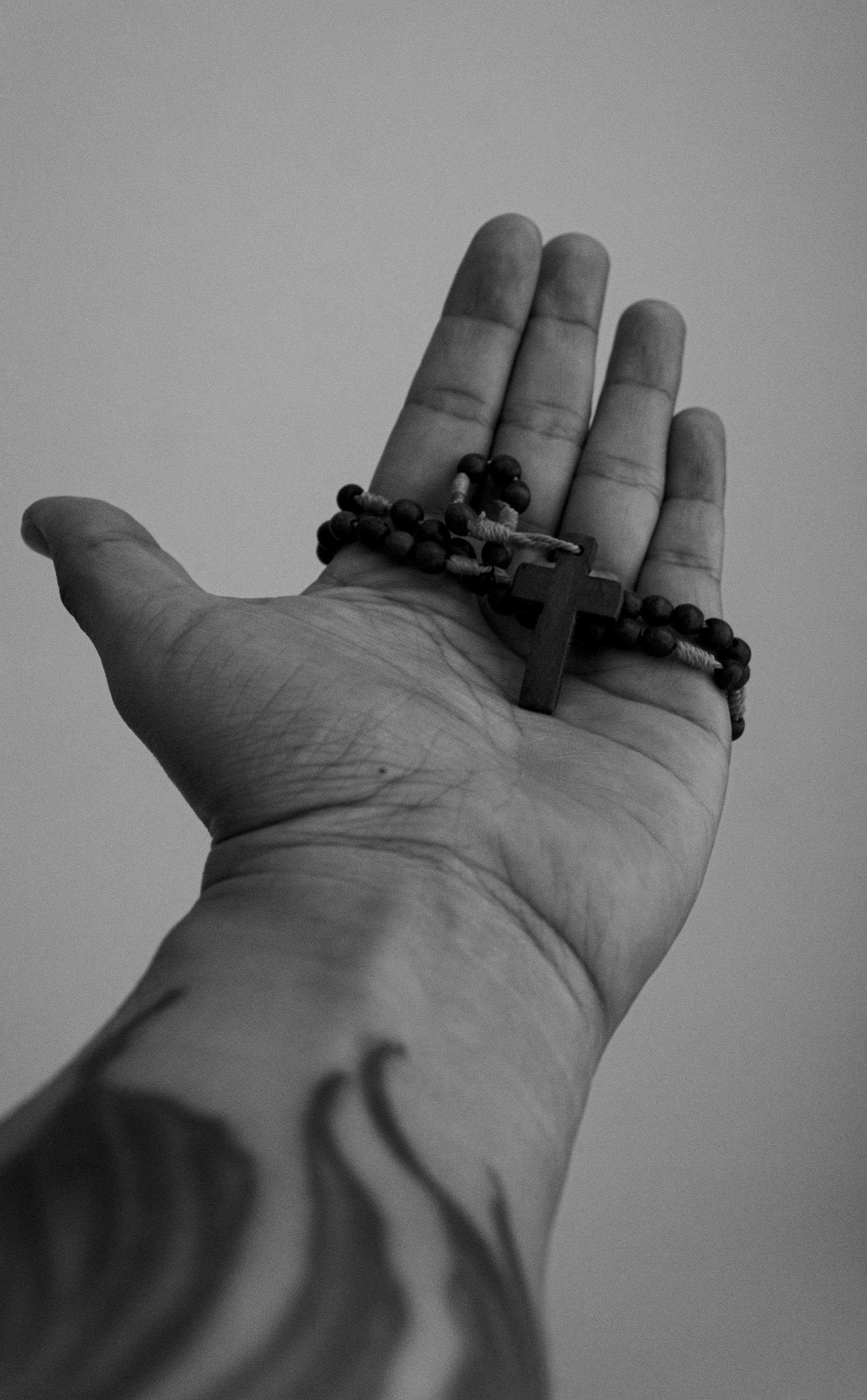
«Beware! Do not practice your righteousness in front of others to be seen by them. Otherwise, you will have no reward from your Father in heaven. So when you give to the needy, do not announce it with trumpets, as the hypocrites do in the synagogues and on the streets, to be honored by others. Truly I tell you, they have received their reward in full. But when you give to the needy, do not let your left hand know what your right hand is doing, so that your giving may be in secret. Then your Father, who sees what is done in secret, will reward you.”.
»"When you pray, do not be like the hypocrites, who love to pray in the synagogues and on the street corners to be seen by others. Truly I tell you, they have received their reward in full. But when you pray, go into your room, close the door and pray to your Father, who is unseen. Then your Father, who sees what is done in secret, will reward you.".
»When you fast, do not look somber as the hypocrites do, for they disfigure their faces to show others they are fasting. Truly I tell you, they have received their reward in full. But when you fast, put oil on your head and wash your face, so that it will not be obvious to others that you are fasting, but only to your Father, who is unseen; and your Father, who sees what is done in secret, will reward you.».
In Matthew 6:1-6, 16-18, Jesus gives us some important tips on how we should practice charity, prayer, and fasting. He doesn't want us to do these things just to show off to others, you know? The point is to have a genuine intention, because the Father above sees everything, even what we do in secret. It's a call to a more sincere faith, less of a facade.
Key Points
- True charity does not seek applause, but rather a connection with the divine, which sees what is hidden.
- Sincere prayer takes place in the silence of the heart, away from the crowds, seeking a genuine conversation with God.
- Authentic fasting is not about showing sadness, but rather about a personal and intimate surrender to the Father.
- The three practices (almsgiving, prayer, and fasting) are pillars for a rich inner life, provided they are done with humility.
- Discreet spirituality and inner transformation are valued more than the outward appearance of actions.
The Essence of Charity in Matthew 6:1-6, 16-18
Hidden Charity and Divine Reward
You know, sometimes I think about how we do things. Like, when we help someone, what is our real intention? In Matthew, Jesus talks about the importance of doing good without fanfare, without wanting to show off. It's as if He were saying, 'Don't let your left hand know what your right hand is doing.'. This makes me wonder if we aren't seeking recognition from others more than the true satisfaction of helping. The true reward, according to the text, comes from God, who sees what is hidden.
- Doing good without expecting anything in return.
- Divine reward is more valuable than human approval.
- True charity transforms both the giver and the receiver.
The central question here is motivation. Why do we do what we do? If the intention is pure, the act of charity takes on a much greater meaning.
Avoiding Ostentation in Begging
Have you ever noticed how some people insist on showing how generous they are? Like, they post everything on social media, they make a point of telling everyone what they did. Jesus criticizes this attitude. He talks about the hypocrites who sound trumpets when they give alms, just to be seen. The idea is that true almsgiving, true charity, doesn't need an audience. It's something between you and God. It's a gesture of genuine love, not a performance.
The True Justice of Charity
So what would this thing called 'true justice' in charity be? For me, it has to do with the intention of the heart. It's not about the size of the donation, but about the love that accompanies it. It's about seeing the other as a brother, as someone who needs our help, and not as a mere recipient of our kindness. It's about doing good because it's the right thing to do, because it makes us feel good too, and not to gain points in heaven or to impress others. The true justice of charity is an act of... love Pure and simple.
The Sincerity of Prayer in Matthew 6:1-6, 16-18
Prayer in the Silence of the Heart
You know, sometimes I find myself thinking about how we complicate things, right? Like prayer. Jesus says it directly: go into your room, close the door and talk to the Father. Simple as that. No audience, no show. It's a moment. intimate, Just you and Him. And it's in that silence, in that secluded corner, that the magic happens. It's where we truly connect, without masks, without pretenses. That straight talk, you know? Without needing to impress anyone. It's there that we find the peace we so desperately seek. And, honestly, I think we need that more than we realize. To learn more about prayer in secret, Click here.
In contrast to the Hypocritical Prayer
Jesus was very straightforward, wasn't he? He didn't like those people who did everything to show off. Like, the guys who prayed standing on street corners, just to be seen and praised. For Jesus, that was pure hypocrisy. He wanted to show that prayer isn't about performance, it's not about impressing others. It's about... genuine connection With God. It's about opening your heart, being sincere, without playing games. And, let's face it, who hasn't ever caught themselves wanting to show how "religious" they are? We have to be careful not to fall into that trap.
The Reward of the Father Who Sees What Is Hidden
This part is so beautiful. Jesus says that the Father, who sees what is hidden, will reward you. In other words, it doesn't matter if no one sees what you do, if no one praises or recognizes you. God is watching. And His reward is much greater than any human applause. It's a reward that comes from within, that truly fills you. It's the certainty that you are on the right path, doing the right thing, for the right reasons. And that, my friends, is priceless. It's like planting a seed and knowing that, even if it takes time, it will bloom. And the flower will be beautiful because it was cultivated in love and sincerity. And remember, charity and prayer They are important.
Authentic Fasting in Matthew 6:1-6, 16-18
Fasting Without Sadness or Pretense
You know, sometimes we find ourselves wanting to show others how dedicated we are, even in the most personal things like fasting. But Jesus teaches us something different: True fasting is not about appearances, but about... intention from the heart. He criticizes those who turn fasting into a spectacle, disfiguring their faces so that everyone can see their "sacrifice." The idea is that fasting should be an intimate practice between you and God, and not a way to seek the approval of others.
The Intimacy of Fasting with the Father
True fasting is a moment of deep connection with God. It's about turning away from worldly things to draw closer to the Father. Instead of making fasting a visible burden, Jesus advises us to take care of our appearance, to anoint our hair with oil and wash our faces. The goal is that no one notices we are fasting, except the Father, who sees in secret. It is an act of humility and sincerity, where the focus is on the relationship with God and not on the opinions of others. To experience this more intensely... Lenten spirit, The liturgy proposes three attitudes to us.
The Reward of Sincere Fasting
Jesus promises that the Father, who sees what is hidden, will reward those who fast sincerely. This reward is not necessarily something material, but rather an inner transformation, a greater closeness to God, and a peace that surpasses all understanding. Authentic fasting helps us purify our inner lives, but we must be very careful that the devil does not transform it into a source of vanity. It is a reminder that our actions should be motivated by love for God and neighbor, and not by the pursuit of recognition or admiration. It is about doing good works before the Father, "who sees what is hidden.".
Fasting, prayer, and charity are like pillars that support our spiritual life. When practiced with sincerity and humility, they draw us closer to God and help us grow in holiness. But when done with vanity and ostentation, they lose their value and become merely an empty charade.
The Three Works of Holiness in Matthew 6:1-6, 16-18

Almsgiving, Fasting, and Prayer: Pillars of the Inner Life
In Matthew, Jesus speaks to us about three essential practices: almsgiving, fasting, and prayer. They are like the pillars that support our spiritual life. The idea is that, by practicing these actions, we are seeking a deeper connection with God. These works, when performed with the right intention, help us to purify our hearts and strengthen our faith.
Beware of Vanity in Good Works
The big problem is when we leave the vanity To step onto the scene. You know how it is, right? We do something good and immediately want to tell everyone, hoping for praise. Jesus warns us about this. He says that if we do things only to be seen, we already receive our reward right here, with people's applause. And then, we lose the true reward, which is God's.
Performing Works for the Father Who Sees
The secret, then, is to do everything for the Father, who sees what is hidden. It's as if we were planting a seed in secret, knowing that God is taking care of it. We don't need an audience, nor recognition. What matters is the intention of our hearts. When we do something good without expecting anything in return, we are demonstrating pure and sincere love. And that is what truly matters to God.
It's important to remember that the true reward lies not in praise or public recognition, but in the joy of knowing we are pleasing God. May our actions be motivated by love and gratitude, and not by the pursuit of approval.
Discreet Spirituality in Matthew 6:1-6, 16-18

The Value of Hiding in Stocks
You know, sometimes we find ourselves wanting to show how good we are, how much we do. But this passage from Matthew reminds us that true value lies in what no one sees, you know? It's like doing good without expecting a pat on the back. It's about the intention behind the action, not the action itself.
Humility and Sincerity of Heart
It's easy to get lost in vanity, isn't it? Like, posting every good deed on social media. But the truth is that humility is key. Being sincere with yourself and with God, without needing an audience. Sincerity That's what counts in the end. As they say, "what the right hand does, the left hand doesn't need to know.".
Shedding the Masks of Appearance
We live in a society that highly values appearance and what people think. But this passage calls us to take off our masks, to be authentic. It's about stripping away what is superficial and connecting with what really matters. It's an invitation to... spiritual journey true.
It's a constant challenge, but it's worth it. Seeking God in silence, in discretion, without fanfare. It is there, in seclusion, that we find the true reward.
And to illustrate, consider these situations:
- Helping someone anonymously.
- Pray silently, without showing it to anyone.
- To perform an act of charity without telling others.
The Inner Transformation in Matthew 6:1-6, 16-18
In Search of Authentic Transformation
You know, sometimes we find ourselves doing things just to show off to others, right? Like helping someone just to post it on Instagram. But the truth is that Matthew 6:1-6, 16-18 talks about a... transformation that comes from within. There's no point in doing a lot of things if your heart isn't in them. It's about being genuine, you know? Like when you help someone without expecting anything in return, or when you pray in your quiet corner, without anyone seeing. That's the transformation that matters.
Looking Inward During Lent
Lent is that time to stop and think about life, right? It's like a cleansing of the soul. We ask ourselves: what do I need to change? What do I need to improve? And Matthew 6:1-6, 16-18 fits well into that vibe. It's a call for us to look inward, to see what needs attention. It's not just about giving up chocolate, you know? It's about being a better person, truly.
Sincere Return and Divine Restoration
You know when you make a really bad mistake and feel terrible? Like, really terrible? Well, the good news is that you can always go back. And it's not just about apologizing, you know? It's about truly changing your attitude. It's about showing that you learned from your mistake and that you want to be a better person. And, according to Matthew, when we do this from the heart, God is there to restore us. It's like a healing hug, you know? A new chance to start over.
It is an ongoing process of self-evaluation and change, seeking a deeper connection with the divine and with others. It is not about perfection, but about a constant effort towards a more authentic and meaningful life.
And to illustrate, take a look:
- Reflect on your motivations.
- Practice humility.
- Seek inner silence.
The Central Message of Matthew 6:1-6, 16-18
The Importance of Pure Intention
In Matthew 6, Jesus calls us to examine the why We do what we do. It's not just about practicing charity, praying, or fasting, but about doing it with the right motivation. Pure intention transforms outward actions into genuine expressions of faith. It's about aligning our actions with a heart that seeks to please God, not men. The pursuit of human recognition negates divine reward, while sincerity opens the doors to grace.
God Beholds the Silence of the Heart
The text emphasizes that God is not impressed by appearances. He sees beyond our public displays of piety, penetrating the silence of our hearts. True spirituality manifests itself in... intimacy With the Father, where there is no need for masks or pretenses. It is in this secret space that prayer gains strength, fasting becomes meaningful, and charity becomes genuine. The message is clear: God values authenticity above ostentation.
The Father's Reward for the Hidden
Jesus promises a reward for those who practice righteousness in secret. This reward is not necessarily material or immediate, but rather a profound spiritual satisfaction and the joy of knowing that we are pleasing God. The Father's reward It is confirmation that our actions, even the most discreet ones, are seen and valued. This encourages us to cultivate a life of... integrity, where our actions reflect our deepest values, regardless of who is watching.
The central message of Matthew 6 is an invitation to introspection and inner transformation. It is not about abandoning religious practices, but about purifying our intentions and seeking a more intimate and sincere relationship with God. It is a call to live an authentic faith, where humility and discretion are the pillars of our spirituality.
List of important points:
- The intention behind the actions is crucial.
- God values sincerity and humility.
- Divine reward is for those who act in secret.
Conclusion
Ultimately, what Jesus shows us in Matthew 6 is quite straightforward: what truly matters is what we do from the heart, without seeking recognition. Whether helping someone, talking to God, or fasting, the important thing is the intention. It's pointless to do a lot of good things if the only goal is to gain applause from others. God sees what is hidden, and that's what matters. So, let us strive to live a true faith, without masks, because the greatest reward comes from the One who truly knows us.
Common questions
Why did Jesus say not to show charity (alms) to others?
Jesus taught that true charity should be done in secret, without showing it to others. That way, the reward comes from God, who sees everything, and not from the approval of others.
Where did Jesus tell us to pray?
He told us to pray in a quiet place, like our room, and close the door. The important thing is to talk to God from the heart, without wanting others to see us praying.
How should we fast, according to Jesus?
Jesus taught that when we fast, we shouldn't look sad or different so that people notice. We should appear normal, as if we weren't fasting, so that only God knows.
What are the three works of holiness that Jesus mentioned?
The three works are charity (almsgiving), prayer, and fasting. They are important for our life with God.
What is Jesus' main message about charity, prayer, and fasting?
He wants us to do these things with a sincere heart, without vanity or to impress others. What matters most is pure intention and a relationship with God.
Are these teachings of Jesus important for Lent?
Yes, Lent is a special time to practice these lessons of Jesus, seeking true inner transformation and drawing closer to God in secret.
Content created with Artificial Intelligence Assistance