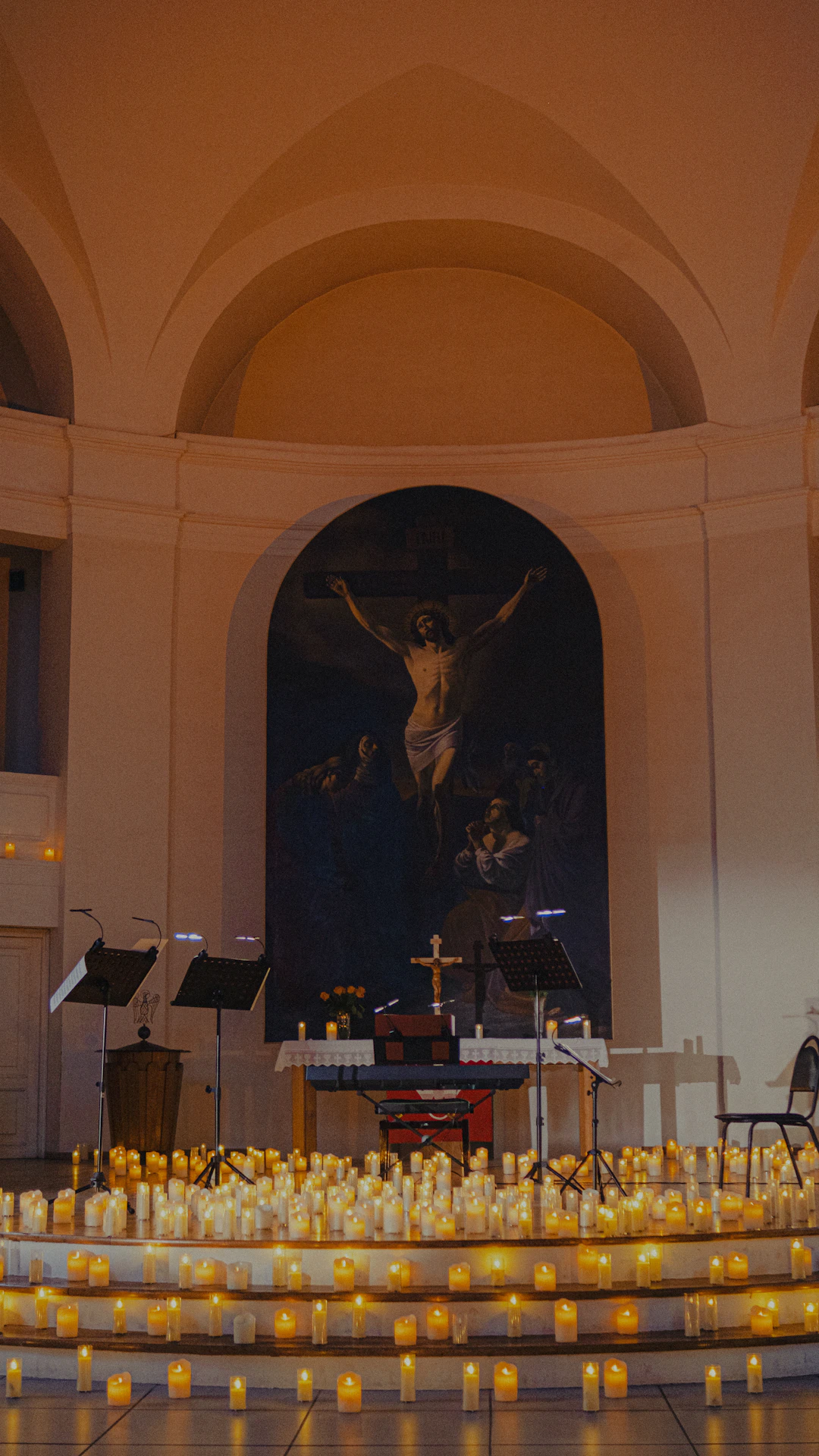
Gospel (Joe 11,45-56): Many Jews who had come to Mary’s house and seen what Jesus had done believed in him. But some of them went and told the Pharisees what Jesus had done. Then the chief priests and the Pharisees gathered the Sanhedrin and discussed, «What are we going to do? This man is performing many signs. If we let him go on like this, everyone will believe in him, and the Romans will come and destroy both our holy place and our nation.» But one of them, Caiaphas, who was high priest that year, said to them, «You know nothing at all! You do not realize that it is better for one man to die for the people than for the whole nation to perish.» He did not say this on his own, but as high priest that year he prophesied that Jesus would die for the nation, and not only for that nation but also to gather together the scattered children of God. So from that day on they plotted to kill him.
The passage of John 11:45-56 This passage marks a pivotal moment in the Gospel: after the resurrection of Lazarus, one of Jesus' most impactful miracles, the people's reactions reveal something profound about human nature—faith, fear, political interest, and rejection. This passage doesn't just recount a historical event, but invites us to reflect on how we respond to the truth when it presents itself to us.
The impact of the miracle: faith and disbelief.
The miracle of Lazarus' resurrection was no secret event. Many people were present and witnessed what happened. As a result, some came to believe in Jesus. Faith often arises from a direct encounter with God's actions—whether through extraordinary signs or transformative personal experiences.
However, not everyone reacted the same way. Some went to the Pharisees to tell them what had happened. This detail is important: even in the face of an evident miracle, there were those who chose not to believe, but to denounce it.
This shows us that faith doesn't depend solely on evidence. The human heart plays a central role. Even when faced with something extraordinary, it's possible to resist the truth when it challenges our convictions, interests, or comfort zone.
The fear of authority: when power speaks louder.
Upon hearing of the miracle, the chief priests and Pharisees convened the Sanhedrin. Their concern was not spiritual, but political: “If we let him go on like this, everyone will believe in him, and the Romans will come and destroy both our holy place and our nation.”
Here we see a striking contrast. While some see in Jesus the presence of God, others see a threat to the established system. The fear of losing power, influence, and stability leads the authorities to make a radical decision.
This reaction is extremely relevant today. How many times is the truth rejected not for lack of clarity, but for fear of the consequences? Change may require sacrifice, and that is frightening.
The prophecy of Caiaphas: truth spoken without conscience.
In this context, the high priest Caiaphas declares: “It is better that one man die for the people than that the whole nation perish.” He did not say this on his own initiative, but, as the text explains, he prophesied that Jesus would die for the nation.
It's amazing how God can use even misguided intentions to reveal a greater truth. Caiaphas spoke in political terms—eliminating Jesus to avoid problems with Rome—but his words carried a profound spiritual meaning: Jesus would die not only for the nation, but to gather into one body all the scattered children of God.
This duality teaches us that God acts even amidst human imperfection. His plans are not limited by people's intentions.
The decision to kill Jesus: the beginning of the end.
From that moment on, the text clearly states: "From that day on, they resolved to kill him." It is no longer a matter of suspicion or veiled opposition—it is a concrete decision.
Interestingly, this decision comes right after one of the greatest signs of life performed by Jesus. The miracle that restored Lazarus to life triggers a death conspiracy against the very author of life.
This paradox is profound: the light disturbs those who prefer darkness. The truth, when exposed, can provoke transformation or rejection—and, in this case, it led to extreme rejection.
Jesus withdraws: a time of preparation.
Knowing the danger, Jesus withdraws to a region near the desert, called Ephraim. This retreat is not a sign of fear, but of discernment. There is a right time for each stage of the mission.
Jesus does not give up hastily. He follows the rhythm of the divine plan, showing that even moments of withdrawal are part of the purpose.
For us, this is a valuable lesson: acting immediately isn't always the best course of action. There are times when it's necessary to step back, reflect, and wait for the right moment.
The people's expectation: who is this man?
Meanwhile, the Jewish Passover approaches, and many people go to Jerusalem to purify themselves. Among them, expectation grows: "What do you think? Won't he come to the festival?"“
Jesus is no longer an unknown figure. His presence generates questions, debates, and expectations. He becomes impossible to ignore.
This question still resonates today. Who is Jesus to us? Someone distant, a historical figure, or a living presence that transforms?
Reflections for life
This passage invites us to look within ourselves. How do we react to the truth?
- Are we like those who believed when they saw the miracle?
- Or like those who, even seeing, chose to reject?
- Are we open to transformation, or are we trapped by the fear of losing something?
John 11:45-56 shows that the greatest obstacle to faith is not the lack of signs, but the resistance of the heart.
It also reminds us that God can transform even situations of opposition into paths to fulfill His plans. The decision to kill Jesus, which seemed like a triumph of rejection, actually set the stage for the greatest demonstration of love in history.
Conclusion
The passage in John 11:45-56 is an invitation to make a decision. It is not possible to remain neutral in the presence of Jesus. His presence provokes a response—either of faith or rejection.
She teaches us that the truth can be uncomfortable, but it also sets us free. That fear can distance us from what is right, but trust in God leads us to life. And, above all, that even in the darkest moments, God continues to act.
When reflecting on this passage, we are called upon to choose: to resist or to believe, to fear or to trust, to reject or to embrace.
And perhaps the most important question is: What do we do when the truth is presented to us?
Content created with Artificial Intelligence Assistance