
Gospel (Lc 8,4-15): At that time, a large crowd gathered, and people came to Jesus from every town. Then he told them a parable: «A farmer went out to sow his seed. As he was scattering the seed, some fell along the path, and the birds ate it up. Some fell on rocky ground, where it came up, but because it had no moisture, it withered away. Other seed fell among thorns, which grew up and choked the plants. Still other seed fell on good soil. It came up and yielded a crop, a hundred times more than was sown.» When he said this, he called out, «Whoever has ears to hear, let them hear!».
His disciples asked him about the meaning of the parable. Jesus then said to them, «To you it has been given to know the mysteries of the kingdom of God, but to others it is given only through parables, so that, seeing they do not see, and hearing they do not understand.”.
»"The parable means this: The seed is the word of God. Those along the path are the ones who hear, but then the devil comes and snatches away the word from their hearts, so that they may not believe and be saved. Those on the rocky ground are the ones who hear the word and receive it with joy, but they have no root. They believe for a while, but when temptation comes, they fall away. The seed that fell among thorns stands for those who hear, but as they go on their way they are choked by life’s worries, riches and pleasures, and they do not mature. But the seed on good soil stands for those with a noble and good heart, who hear the word, retain it, and by persevering produce a crop.".
A parable of the sower is highlighted in teachings of Jesus, present in Luke 8:4-15. She shows how people receive the Word of God in different ways. This is compared to the act of sowing, a powerful image to explain the spreading of the Word. Gospel.
Understanding this parable is crucial, as Mark 4:13 shows. It is the key to interpreting biblical of other parables. It highlights how the Gospel It touches hearts in many different ways.
The Context of the Parable of the Sower
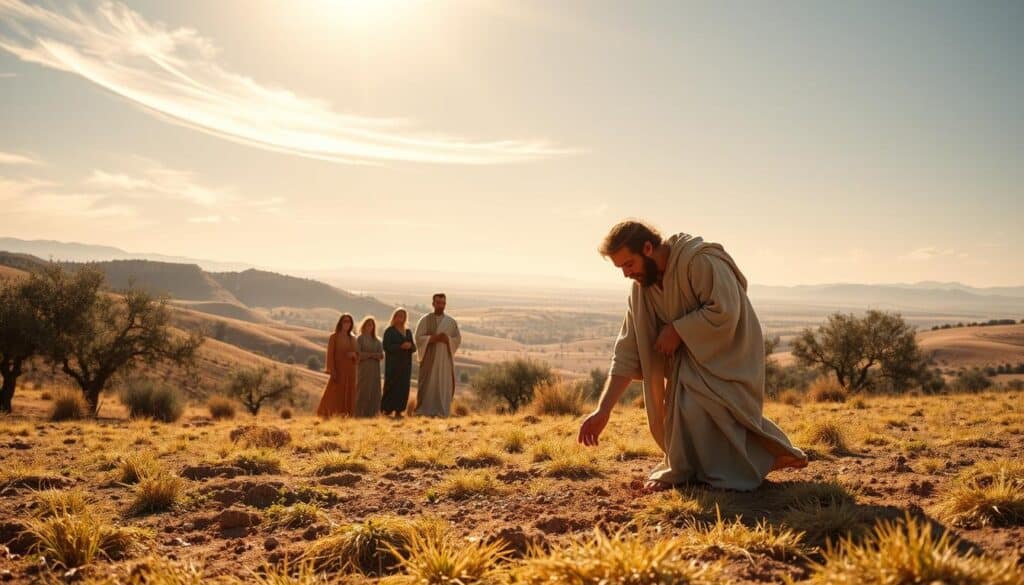
A parable of the sower This story takes place when Jesus was near the sea, surrounded by many people. The era was marked by a life primarily spent in the countryside. Sowing was a routine activity for those who listened to Jesus. This made his message easier to understand, as he used everyday language.
Jesus spoke about a sower who scattered seeds in different places. This story showed important lessons in a simple way. Using parables was an effective way to teach, but also to make people think about how they received divine teachings.
The Importance of Parables in the Teachings of Jesus
Parables are key in teaching through parables Jesus used simple stories to explain complex spiritual ideas. This made learning clear and accessible. The stories captured attention and made people think about the messages.
A parable of the sower This shows how Jesus effectively used stories. He taught about listening to and responding to God's Word. The different reactions of people to the divine message were an important point. This had a great impact and generated curiosity to understand more about the spiritual lessons.
Who is the Sower?
At parable of the sower, The sower represents all those who spread the Word of God. This story highlights the message and importance of sharing the faith rather than focusing on who spreads it. The sower is essential for spreading the faith and allowing it to grow.
Every Christian has a duty to act as a sower and carry the... Gospel Everywhere. It's not just a task for leaders. It's a shared responsibility, where everyone can change lives with the divine message.
The mission of sowing the Word calls us to action. It shows that we have an important role in the growth of God's Kingdom. This task encourages us to think about how we can sow faith and hope wherever we go.
The Meaning of the Seed
The seed, according to the parable of the sower, symbolizes the Word of God. It is fundamental to people's spiritual lives. The similarity between the seed and the Word is evident in the way both promote growth. The impact of the seed, in generating change and faith, is profound.
The Word of God as a Seed
The gospel is like a seed that, when sown in open hearts, can transform lives. Those who hear the Word have the chance to let that seed grow within themselves. This leads to... spiritual fruits and to a more intimate relationship with God.
The Impact of Seeds on People's Lives
Interacting with the seed of the Word changes people's lives. The greater the recognition and application of this seed, the more people experience positive changes. Being open to the gospel makes all the difference, highlighting the value of learning and practicing the Word regularly.
Luke 8:4-15: The Parable in Text
The text of Luke 8,4-15 It talks about the parable of the sower. It shows how people respond differently to the Gospel. Jesus uses the story of a sower to highlight the importance of welcoming the Word.
This story mentions the seed falling on different types of soil. Each type symbolizes a specific reaction to faith. The soils vary from paths to rocky places, among thorns and fertile ground.
This difference in soils shows how people accept the Kingdom of God into their lives. The chapter of Luke 8,4-15 It invites us to reflect on our response to God's call.
The Four Types of Soil and Their Reactions
The parable of the sower shows four types of soil, signifying different responses to the Word of God. They tell us how people react to the gospel. alone by the roadside It's a situation where hard hearts prevent the seed from sprouting.
The Soil by the Roadside
This soil symbolizes those who are not moved by the Word of God. Here, the rejection of the gospel is clear, as the truth does not penetrate. The seeds are then carried away, representing how Satan hinders spiritual growth.
The Rocky Soil
The rocky ground is full of stones, causing the message to be received superficially. Difficulties cause faith to be lost quickly. Without solid roots, the word fails when faced with adversity.
The Thorny Soil
The seeds in thorny soil begin to grow, but soon die. Daily problems and the pursuit of pleasure draw people away from the gospel. It represents those who allow distractions to overcome their spiritual purpose.
The Fertile Soil
The last type, fertile soil, accepts the seed completely. With open hearts, the people here make the Word flourish in their lives. These people live the teachings and reap lasting benefits.
Jesus' Interpretation of the Parable
Jesus explained the parable of the sower, showing his disciples the profound message it carries. He said that each type of soil symbolizes different reactions of people to the Word of God.
Jesus pointed out how responses to the message vary greatly. Some receive it with joy, but soon give up. Others face difficulties, but maintain their faith. Understanding the gospel is crucial. After all, only those who truly understand and accept the message can grow spiritually and bear fruit.
- O alone by the roadside: represents those who do not allow the message of the parable Enter into their hearts.
- The rocky soil symbolizes those who welcome the Word but fail to deepen their roots, becoming vulnerable to difficulties.
- The thorny ground: illustrates those who are choked by the worries and riches of this life.
- The fertile soil: portrays those who hear, understand, and produce abundant fruit through the application of the gospel.
The parable invites us to reflect on what kind of soil we are. Jesus' explanation motivates us to better understand the gospel and to sincerely receive the Word into our lives.
How the Parable Applies to Our Lives Today
The parable of the sower makes us think about how we live. It shows how important it is to see ourselves as the ground where the seed falls. It is essential to be open to spiritual growth and to accept what God tells us.
Sometimes we act like hard ground, preventing spiritual truths from entering. We need to have faith and pause to reflect on life. Understanding this makes our faith grow stronger.
In our daily lives, we see ourselves as different types of soil. We think about how the things around us influence us. Fighting against difficulties and distractions shows our willpower to follow Christian teachings.
The lessons in this parable are guides for living by faith. They encourage us to be good soil where faith can flourish.
The Fruits of the Seed in Fertile Soil
To have spiritual fruits It shows the strength of a Christian's faith. The Word of God, planted in a receptive heart, transforms life. These fruits go beyond mere actions. They demonstrate the truth of God's love.
Bearing Fruit in the Life of a Christian
Spiritual fruits They appear when the Holy Spirit is at work. Christians then demonstrate:
- Love and compassion for others.
- Feelings of happiness and peace.
- Patience, even in difficult times.
Each fruit demonstrates the power of God's Word and spreads blessings throughout the world. By harvesting these fruits, the message of the Gospel spreads. This strengthens faith and helps build a united Christian community.
The Relevance of the Parable to the Christian Community
The parable of the sower is fundamental to understanding the importance of faith in community. Jesus' preaching shows us the value of spreading faith. It also teaches us about the importance of having a heart ready to receive and spread the divine message. In this context, the Christian community plays a crucial role, creating a conducive environment for the spiritual growth of all.
When we consider the different lands in the parable, we are invited to nurture our spiritual development so that we can be productive in faith. Activities such as meetings, Bible studies, and evangelistic events help strengthen our spiritual foundation. Thus, unity in the Christian community gains strength when we work together to spread God's message.
- To prepare the hearts of the community to receive the Word.
- Developing an environment conducive to Christian teaching.
- To promote evangelization as a joint action.
These actions are essential to forming a strong and cohesive Christian community. A group that can truly make a difference in the world. The sower's message is not just for individuals, but an invitation to unite in action.
Conclusion
The parable of the sower is very important. It is in Luke 8,4-15. This makes us think about how we receive the Word of God. It is vital to reflect on this in our spiritual and personal lives.
We must apply the lessons from the parable to our daily lives. In this way, the Word of God will grow within us. The message is that we must spread the Gospel and help our community. This is everyone's duty and also a personal action.
Consider the message of the parable The sower's teaching is essential. It shows us that change begins with each one of us. Let's heed this call and make a difference. In this way, our work will help faith grow and God's love spread.
FAQ
What is the parable of the sower?
It's a story told by Jesus. It shows how different people receive God's message. This is done by comparing them to types of soil.
What is the importance of parables in Jesus' ministry?
Jesus used parables to simplify complex teachings. In this way, he made it easier to understand and apply spiritual lessons in daily life.
Who represents the sower in the parable?
The sower is the one who shares the Word of God. The focus is on the act of spreading the message, rather than on the person who does it.
What does the seed symbolize in the parable of the sower?
The seed is the Word of God. Like a real seed, it can change hearts, bringing faith and salvation to those who receive it.
What types of soil are mentioned in the parable and what are their reactions?
The story speaks of four types of soil. Each shows a different reaction to God's message, from rejection to bearing fruit.
How does the parable of the sower apply to contemporary life?
It makes us think about how we receive God's message. It encourages us to cultivate faith and avoid distractions that hinder our spiritual growth.
What fruits does the seed produce in fertile soil?
In fertile soil, the seed brings love, peace, and patience. This shows the power of the Word to transform lives and spread the Gospel.
How can we interpret the parable of the sower in a community context?
In the community, the parable highlights the duty to share the Word. It shows the importance of preparing receptive hearts for the Gospel.
What is the impact of Jesus' interpretation of the parable of the sower?
Jesus' explanation clarifies that people react differently to the Word of God. Understanding this is essential for the Gospel to bear fruit individually and collectively.
Content created with Artificial Intelligence Assistance